Dorian's Wish Ages a Portrait Instead of Him
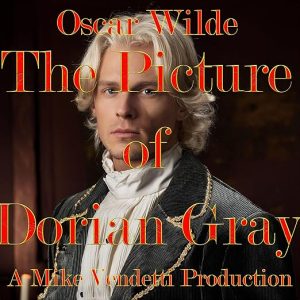
Oscar Wilde's The Picture of Dorian Gray has survived more than a century of readings, adaptations, and academic deconstruction to arrive in the audiobook narrated by Mike Vendetti still genuinely unsettling and genuinely funny in equal measure. That durability is not accidental. Wilde built the novel on philosophical premises so permanently interesting that no single era can exhaust them: what does beauty cost the person who possesses it? What does it cost the people around them? What happens when the obligation to be good is outsourced to a painting?
Dorian Gray is an aristocratic young man of extraordinary beauty who sits for a portrait by the painter Basil Hallward and comes under the influence of the brilliantly corrosive Lord Henry Wotton. Wishing, in a reckless moment, that the portrait would age in his place, Dorian finds the wish granted. What follows across ten hours and four minutes is a novel-length meditation on vanity, corruption, and the relationship between outward appearance and inner reality. Wilde's prose is so dense with wit and paradox that it demands close listening, which makes the audiobook format both a challenge and an opportunity.
Lord Henry's Elegant Talk Hides a Slow Destruction
The novel's dialogue is where Wilde is at his most electrically alive. Lord Henry Wotton delivers some of English literature's most carefully constructed provocations, and hearing those lines spoken aloud restores a dimension of performance that silent reading tends to flatten. Vendetti is particularly effective in the drawing-room scenes where Lord Henry holds court, calibrating the speaker's ironic detachment against the genuine menace beneath the wit. Reviewer RainbowReader noted on rereading how thoroughly queer the novel is and how brave Wilde was to have written it in 1890, and that reading is not merely retrospective. Lord Henry's influence over Dorian, Basil's devotion to his subject, and the destroyed friendship at the novel's center carry a weight that Vendetti's performance honors without overstatement.
What Wilde understood, and what the audiobook makes viscerally clear, is that aesthetic philosophy is not decorative. Lord Henry's theories about beauty, pleasure, and the corruption that discipline imposes on the soul are not idle parlor talk. They are the mechanism of Dorian's destruction, delivered with such elegance that Dorian, and to some degree the listener, only gradually registers the damage being done. Hearing Lord Henry's speeches in sequence across the full ten-hour runtime sharpens that slow-release effect considerably. The horror accumulates in a way that feels different from the horror of a thriller, because the danger is never external. It comes entirely from inside the circle of beautiful, witty people gathered in fashionable rooms.
Heard First, the Preface Becomes a Key
There is also something specifically valuable about encountering the novel's preface, if included in this edition, through audio. Wilde's sequence of paradoxes about art, including his famous assertion that all art is quite useless, reads on the page as witty provocation. Heard aloud before the narrative begins, it functions as a key to the entire novel: a declaration that the world of appearances Dorian inhabits is precisely what Wilde intends to destroy through the story that follows. Vendetti's measured reading of those propositions sets the right register for everything that comes after.
Chapter XI's Catalogue Divides First-Time Listeners
The novel has structural peculiarities that first-time listeners should know about. There is a long embedded section in Chapter XI that functions as an extended catalogue of Dorian's obsessions: perfumes, jewels, embroideries, church music, each described in Wilde's most extravagant register. This section has divided readers since the novel's first publication. It slows the narrative considerably, and some listeners find it self-indulgent. Others find it essential to understanding how Dorian uses aesthetic sensation to suppress the moral knowledge that his portrait is relentlessly accumulating. Vendetti navigates it with care, but if you find your attention wandering mid-audiobook, knowing this chapter is coming will help you decide in advance whether to treat it as texture or drift.
The queer subtext that reviewer RainbowReader identifies is present throughout but particularly concentrated in the early chapters and in Basil's confession to Dorian late in the novel. Wilde was writing in a cultural context that required him to encode rather than state what the relationships between his male characters contain, and the audiobook format, which renders every silence and hesitation, makes those encoded moments more present than they might be on the page.
Start Here for Your First Wilde Audiobook
Any listener who has not yet encountered Wilde in audio form should start here. The novel's theatrical DNA makes it a natural fit for the format in a way that more introverted Victorian fiction is not. Readers who came to the book in school and found it slow or too epigrammatic may find that Vendetti's performance resolves those resistances; the wit lands more readily when performed than when read. This audiobook also works well for listeners interested in queer literary history, gothic fiction, or the philosophy of aestheticism. The novel belongs to a small group of Victorian texts that feel genuinely more alive in audio than on the page, because so much of its power is contained in how lines are spoken, paused, and heard rather than in the architecture of plot. Vendetti understands this and delivers accordingly. Skip it if you need plot-driven pacing; the novel's pleasures are largely atmospheric and philosophical, and those who require narrative momentum will find the long interludes frustrating rather than enchanting.
Is the audiobook narrated by Mike Vendetti well suited to Wilde's theatrical prose style?
Yes, for the most part. Vendetti handles the novel's aphoristic dialogue with elegance and distinguishes clearly between Lord Henry's ironic drawl, Basil's earnest devotion, and Dorian's gradual moral vacancy. Occasionally the performance errs slightly toward formality where Wilde's sharpest lines benefit from a lighter touch, but the overall interpretation is faithful and intelligent.
Is this audiobook appropriate for listeners who are new to Victorian fiction?
Yes, with the caveat that Wilde's prose is denser with wit and paradox than most Victorian novelists. The audiobook format helps with that density, because hearing the sentences performed aloud gives each aphorism the rhythmic emphasis it needs to land. First-time Victorian readers may find Wilde's stylized approach easier to enter than the more documentary prose of writers like Dickens or Gaskell.