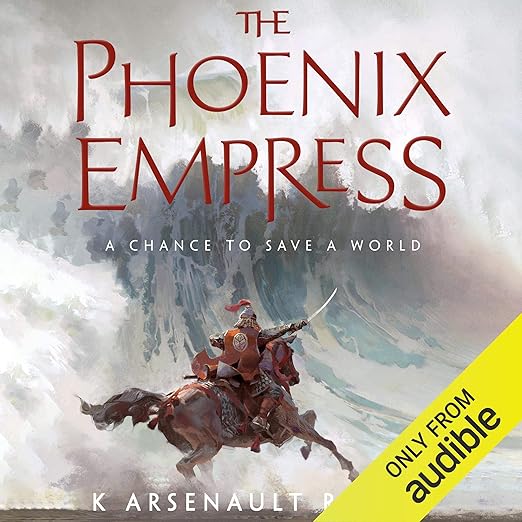
Quick Take
- Narration: Caroline McLaughlin handles the dual-timeline structure and Rivera’s ornate prose with steady authority, giving each woman a distinct emotional register without overplaying the drama.
- Themes: Queerness as heroic identity, war’s toll on divinity, reunion across impossible distance
- Mood: Lush and emotionally intense, with an undercurrent of dread
- Verdict: Rewarding for readers who loved the first book and want to stay deep inside Rivera’s world, though patience with introspection is genuinely required here.
I came to The Phoenix Empress on a long Saturday, still carrying the glow of The Tiger’s Daughter from the week before. Rivera’s first book in the Ascendant series had done something I hadn’t quite expected: it made the love between O Shizuka and Shefali feel like a weather system, something you move through rather than observe. I was cautious going in. Second books in fantasy series, especially ones built on such a high emotional register, often wobble under the weight of what came before.
Rivera doesn’t exactly steady that weight here. But she leans into it in ways that are genuinely interesting, and that lean tells you a lot about what kind of series this is trying to be.
Our Take on The Phoenix Empress
The second volume of the Ascendant series splits its narrative between two women who are thousands of miles apart and closing that distance. O Shizuka, the divine Empress, is being pushed through the horror of war by an uncle who sent her on what amounts to a state-sanctioned suicide mission. Shefali, cursed and exiled, is enduring trials so extreme they strain credibility even by the standards of Rivera’s fantastical world. What holds both threads together is Rivera’s prose, dense, lyrical, and constructed with unusual care. Reviewers have called it purely beautiful, and that’s not wrong. The question the book puts to you is whether prose beauty is enough to carry you through long stretches where the plot all but pauses.
The answer, honestly, depends on your tolerance for interior confession. This volume leans heavily on scrolls, letters, inner monologues, and historical texts as structural devices. For some readers, these feel immersive and rich. Others, as one early reviewer noted, found the repetition of this technique a drag compared to the kinetic adventure of the first book. I lean toward the former camp, but I’d be dishonest if I said there weren’t stretches in the middle that tested me.
Why Listen to The Phoenix Empress
You listen to this book for the relationship at its center. Rivera writes queer love not as a subplot or a point of progressive credentialing, but as the load-bearing architecture of the entire narrative. The love between O Shizuka and Shefali isn’t sweet or easy, it’s aching, complicated, and shot through with years of separation and transformation. One reviewer made an observation that stayed with me: that reading this as a teenager would have fundamentally reshaped how she thought about relationships. That’s a meaningful thing for a fantasy novel to accomplish.
Caroline McLaughlin’s narration is well-suited to this material. She doesn’t push for big emotional moments, she trusts Rivera’s language to do the work and maintains a consistent, composed delivery that keeps the introspective sections from feeling self-indulgent. Her ability to differentiate between the two protagonists’ voices matters here because the structural shifts between perspectives can otherwise blur together.
What to Watch For in The Phoenix Empress
The worldbuilding of Hokkaran and Qorin society that made the first book so distinctive is present here but takes a back seat. Rivera is more interested in interiority than expansion in this volume. If you came to the series for the swordplay and the world-building, you may feel the balance has shifted. The demonic threat that frames the overarching conflict feels somewhat secondary to the personal stakes until late in the book, which is both a structural choice and a risk.
One thing Rivera does exceptionally well is construct characters whose damage feels earned rather than assigned. O Shizuka’s divinity is genuinely shaken by what she witnesses in war, and that shaking is rendered with specificity. This isn’t a character who struggles abstractly, she struggles in scenes that make the stakes visceral.
Who Should Listen to The Phoenix Empress
This audiobook is for readers already invested in Rivera’s world who are willing to sit with a book that prioritizes emotional depth over plot momentum. It rewards patience and works best experienced in longer, uninterrupted stretches where Rivera’s prose rhythm can pull you under. If you haven’t listened to The Tiger’s Daughter, start there, arriving here without that context would leave you stranded. Listeners who prefer brisk pacing or plot-driven fantasy should know what they’re stepping into.
Frequently Asked Questions
Do I need to have listened to The Tiger’s Daughter first?
Yes, absolutely. The Phoenix Empress picks up directly from where the first book leaves off and assumes you know both protagonists and the world Rivera has built. Starting here without that foundation would be disorienting.
How does Caroline McLaughlin handle the dual-protagonist structure?
Well, with restraint. She differentiates O Shizuka and Shefali through subtle vocal shifts rather than dramatic performance choices, which suits Rivera’s introspective prose style. She doesn’t overplay the emotion and trusts the writing to carry the weight.
Is the LGBTQ+ romance central or does it take a back seat to the plot?
It is genuinely central. The love between O Shizuka and Shefali is the structural and emotional spine of the entire series. This isn’t a story with a romance in it, it is a romance, set against a fantasy backdrop of war and demonic threat.
Is this volume as action-driven as The Tiger’s Daughter?
No. The Phoenix Empress is heavier on introspection, letters, scrolls, and interior monologue are used extensively. Readers who loved the adventure and world-building energy of the first book may find this volume slower. The payoff is emotional rather than kinetic.