Quick Take
- Narration: J.S. Arquin is singled out in reviews as a genuine asset to the series; his consistency across the run and his handling of combat and quiet character moments alike have earned real listener loyalty.
- Themes: Power through earned progression, party dynamics under extreme pressure, the limits of rational planning against chaos
- Mood: Relentlessly tense with earned breathing room, the specific satisfaction of a dungeon floor-by-floor descent
- Verdict: An excellent installment for existing series fans that delivers on the Minkalla arc’s promise, not an entry point, but for readers already invested, fifteen hours pass very quickly.
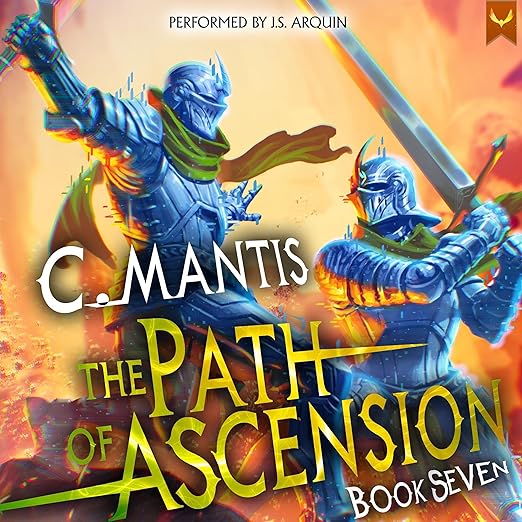
I came to The Path of Ascension series mid-way through my deep dive into the LitRPG genre, and I will admit that book seven of an ongoing series is an unusual place to write a standalone review. The honest caveat is that this entry is entirely for existing fans, C. Mantis is not writing for newcomers here, and he is not pretending to be. The opening finds Matt, Liz, Aster, and Susanne already deep inside Minkalla’s dungeon layers having just survived something that tested them to the limit, with three floors still ahead. You need to have been there from the beginning to feel what that means.
But the quality question is worth answering for anyone who is considering starting the series. The Path of Ascension sits in a particular corner of the LitRPG-Xianxia hybrid space: it looks like a dungeon-progression story from the outside, with skill systems and tier advancement and floor-by-floor structure, but its internal logic is closer to Chinese cultivation fiction than to Western game-lit. The magic system is internally consistent in a way that most entries in the genre are not, and that consistency pays dividends as the series progresses.
Our Take on The Path of Ascension 7
Book seven concludes the Minkalla arc, and the dominant question threading through it, whether the party can push through three more dungeon floors without having to advance to a higher Tier, which would have larger implications for their cultivation path, is the kind of stakes that only work when readers understand why the question matters. Mantis has spent six books building the cost structure of Tier advancement, so the tension here is not generic peril but a specific strategic dilemma with real long-term consequences either way.
One reviewer who re-reads the full series each time a new entry releases called this a great ending to the arc while noting it was slightly shorter than previous entries. That length complaint surfaced in a couple of places and is worth acknowledging, at fifteen and a half hours, it is not a short audiobook, but Mantis runs longer in earlier volumes, and some readers noticed the difference. The ending also carries progression details into book eight rather than resolving them in this volume, which generated some frustration for listeners who wanted that resolution here.
Why Listen to The Path of Ascension 7
J.S. Arquin has been with this series long enough to have developed a real feel for its rhythms. His combat delivery has the pace and intensity the genre requires, LitRPG fights can easily become tedious in audio when a narrator treats skill activation sequences as recitation rather than drama, and his differentiation between the main party members is consistent enough that listeners never lose track of who is speaking or acting in the dungeon’s crowded confrontations.
The worldbuilding around background characters and sub-stories that appeared in earlier books pays off here in ways that one reviewer found outstanding. The time skips that have characterized the series feel earned rather than convenient, and the secondary character moments that Mantis inserts between major plot beats give the fifteen hours texture rather than monotony. This is a series that has gotten better at its own craft as it has continued.
What to Watch For in The Path of Ascension 7
The ending will frustrate some listeners. The arc concludes, but the progression sequence that readers have been anticipating carries into the opening of book eight rather than landing here. This is a structural choice Mantis has made before, and based on reviews it is one of his consistent patterns, he prefers to start the next volume with major progression moments rather than end the current one with them. Readers who know this about the series will find it less disruptive; readers new to Mantis’s pacing habits may find the stop point abrupt.
A reviewer who identified this as leagues better than genre competitors like Defiance of the Fall also noted some repetitive comparative phrases and favorite descriptors that have accumulated over seven books. This is a fair observation about long-series writing generally, habits become visible over volume. It does not significantly damage the reading experience but is worth knowing for listeners who are sensitive to verbal repetition.
Who Should Listen to The Path of Ascension 7
Existing Path of Ascension series readers who have been following Matt and his party since the beginning will find this a satisfying Minkalla arc conclusion with J.S. Arquin in consistently strong form. LitRPG-Xianxia hybrid fans looking for a series with a more internally coherent magic system than most genre competitors should start at book one rather than here, with the understanding that the payoff deepens substantially over the long run.
Readers new to LitRPG or Xianxia should not begin here. Book seven of a tightly plotted progression fantasy series is not an entry point regardless of its individual quality. Start at the beginning or wait until you have.
Frequently Asked Questions
Can someone listen to The Path of Ascension 7 without having read the previous books?
No. The book drops listeners into ongoing dungeon events with character relationships, power systems, and strategic stakes that have been built over six previous volumes. Beginning here would be like watching the final act of a film without the first two. Start with book one if the series is new to you.
Does J.S. Arquin’s narration hold up over a 15-hour runtime, or does listener fatigue become an issue?
Reviews are consistently positive about Arquin’s performance over the full length. He maintains differentiation between characters and appropriate energy levels in combat sequences without flagging over the extended runtime. One reviewer specifically praised him as a great reader who adds to the series. At fifteen-plus hours, consistency of performance matters, and Arquin delivers it.
Is the ending of book 7 a satisfying conclusion to the Minkalla arc, or does it leave too much unresolved?
The arc concludes, but C. Mantis carries the progression sequence readers anticipate into the opening of book eight rather than including it here. Most reviewers found the arc ending satisfying while noting this as a minor frustration. Readers who know the author’s habit of front-loading the next volume with major progression moments will find it less disruptive.
How does The Path of Ascension compare to other LitRPG series in terms of magic system consistency?
It is widely considered among the more logically consistent series in the LitRPG-Xianxia hybrid space. One reviewer called it an outstanding example of what LitRPG should look like, specifically praising the internal consistency of the magic and progression systems. The Xianxia influence gives the cultivation logic a different architecture than pure Western game-lit, which readers either find refreshing or unfamiliar depending on their genre background.