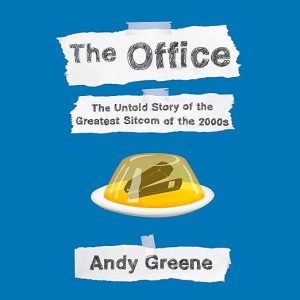
How did a low-rated American remake of a British cult comedy become one of the most-watched series in streaming history, years after its original broadcast network run ended? Andy Greene's oral history of Dunder Mifflin begins with that question and answers it across fourteen hours and twenty minutes of narration from Holter Graham. This audiobook is not hagiography, though it is clearly written with affection for its subject. It is a detailed account of how a specific creative project came into existence, nearly did not survive, and ended up reshaping American comedy in ways that its creators did not and could not have anticipated during the anxious early months of the show's first season.
A Closer Look at The Office
Greene conducted extensive interviews with the show's creators, writers, directors, and actors, and the oral history format gives this audiobook an unusual and productive texture: rather than a single critical voice analyzing the show from the outside, the story of how it was made is told largely by the people who made it, in their own words, organized and shaped by Greene's considerable editorial intelligence. The effect is something close to eavesdropping on a very long, extremely well-informed, and often very funny extended cast commentary that covers the show's entire nine-season run.
The structural choices are worth noting. Greene covers the BBC original and the complicated process of American adaptation in the early chapters, which gives listeners who may not know Ricky Gervais's version a genuinely useful foundation. The book then moves through the American series chronologically, with particular depth on the episodes and seasons that felt most creatively high-stakes. The casting process, the battle to keep the show on the air after its shaky initial ratings, the writing room culture that produced the show's best episodes: all of this receives detailed treatment that rewards sustained listening.
Holter Graham's narration holds the extended format together throughout. He navigates the constant shift between quoted interview material and Greene's connecting prose without creating confusion, and his pacing suggests a narrator who genuinely knows the material and respects it. Fourteen hours of television oral history is a significant request of a narrator, and Graham meets it without visible strain or flagging energy. He is consistent where consistency matters most: in differentiating the many voices and perspectives that Greene has assembled into a single flowing account.
The book has prompted some criticism from fans who wanted more direct contribution from the cast and fewer perspectives from writers and crew members. This is a fair observation about the distribution of voices, and Greene addresses it in the text. It does not fundamentally undermine the book's achievement, but listeners should approach it knowing that this is primarily an account of how the show was built as much as a record of the people who performed in it. The creative decisions are front and center, not the personal histories of the ensemble.
What Makes The Office Worth Hearing
Oral history is a format that audio handles better than print in many ways. The quoted voices in this kind of book are meant to be heard, and Graham's narration gives them differentiation and weight that silent reading sometimes struggles to provide across dozens of contributors. Over fourteen hours, the cumulative effect is something close to a documentary: the architecture of the show's history becomes legible, and individual decisions that seemed separate begin to connect into a larger account of creative risk, institutional resistance, and the genuinely unpredictable alchemy of ensemble television at its best.
Fans who have rewatched the series multiple times will find the behind-the-scenes material reshaping how they hear the episodes they already know well. Understanding why a scene was written the way it was, what was at stake in a specific casting decision, or how a particular creative disagreement was resolved changes the experience of the text itself. The audiobook functions as a very long director's commentary that ranges across the full run of a nine-season series.
The cultural argument about why the show has sustained such a broad audience, long after its original broadcast, receives intelligent treatment. Greene and his sources have clearly thought carefully about this question, and the answer they develop goes well beyond nostalgia or the simple mechanics of streaming availability.
Things to Know Before Starting The Office
The sections covering the network's active ambivalence about the show during its first season are among the most instructive in the book. The near-cancellation of a comedy that went on to define a decade of American television tells a specific and widely applicable story about institutional risk-aversion and the difficulty of recognizing new creative things before they have built an audience to prove their value.
The material on Steve Carell's departure and the show's subsequent seasons is handled with honesty and specificity. The attempt to find a character who could carry the show's center after Michael Scott, including the negotiations with James Gandolfini that ultimately did not produce a deal, is documented with detail that most fans will not have encountered. The show's creative response to losing its anchor is itself a genuinely interesting story about adaptation and the limits of what a writers' room can achieve through sheer craft when a show's foundational dynamic has changed.
The chapters on the writing room culture deserve particularly careful attention. The collaboration and friction that produced the show's best work, and the specific ways in which success over nine seasons changed the room's dynamics and relationships, are covered with a candor that is rare in official retrospective accounts of successful television productions.
Who Andy Greene Is Writing For
Devoted fans of the show who want to understand how it was actually built, rather than simply celebrating what it became, will find this audiobook an essential and rewarding companion. Television writers and aspiring showrunners will find the inside account of creative decision-making, network dynamics, and room culture genuinely instructive in ways that extend well beyond this particular show. Pop culture historians interested in how a modest adaptation became a streaming phenomenon with a genuinely loyal multi-generational audience will find substantial material to engage with. The fourteen-hour length rewards listeners who follow the full arc: the cumulative picture that emerges is considerably richer than any individual chapter.
Frequently Asked Questions
Does this audiobook cover the British original as well as the American version of The Office?
Yes. Greene covers the BBC original and the complicated adaptation process in the early chapters, giving valuable context for why the American version's first season was uncertain about its own identity and direction.
Is the audiobook worth listening to if I've only seen parts of The Office?
The oral history format means it works as a standalone account of how high-risk television gets made. That said, it rewards deeper familiarity with the show's episodes and characters, and the investment pays off for listeners who know the source material well.
Does the audiobook feature direct contributions from the main cast members?
Greene conducted extensive interviews, but some major cast members contribute through others' recollections rather than direct quotes. The balance leans toward writers and producers, which is worth knowing before you start so expectations are calibrated correctly.
At fourteen hours, how effectively does this audiobook sustain attention across multiple listening sessions?
Holter Graham's narration is paced to sustain engagement, and the oral history format naturally generates variety in voice and subject across the runtime. Fans of the show consistently report that the time passes faster than the length would suggest.