Key Details
- Big ideas: Close-up photography for absolute beginners, essential gear and lighting, flowers and insects and textures, results on a small budget
- Atmosphere: Brisk, encouraging, unfussy
- Worth it?: A sensible short introduction hobbled by the one thing audio cannot hand you, which is a picture.
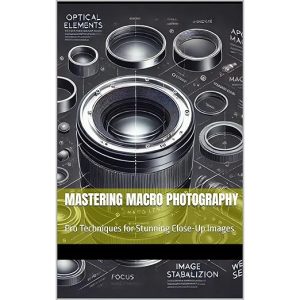
Eighty-five minutes of audiobook about macro photography is an unusual proposition before you even start, because macro is a craft learned with an eye pressed to a viewfinder and a hand moving a focus ring a millimeter at a time. The pitch here is that none of that requires expensive equipment or a technical background, that a smartphone counts, and that flowers, insects, textures and the clutter on a kitchen table are waiting in every backyard.
Describing a Blur Is Close to Describing a Color
Contents are what a beginner's guide ought to carry. Essential gear and lighting setups explained without jargon. Tips organized by subject, from flowers and insects to textures and everyday objects. Budget tricks for results that look more expensive than they were. Step-by-step examples and practical field exercises to take outdoors. Nothing on that list is exotic, and for a first encounter with close-up work the restraint is exactly the right instinct.
Most of those promises assume you can see something. Step-by-step photo examples are photographs. A lighting setup is a diagram before it is ever a sentence. Depth of field at high magnification may be the hardest idea in the discipline to convey in words, because the entire point is how little of the frame stays sharp, and describing that to somebody who has never watched it collapse through a lens is close to describing a color.
None of which makes the format useless. Audio is genuinely good at procedure and sequence: set this, check that, move closer, check again. It is good at the reasoning behind a rule, which is the part most photography books hurry past on the way to the next illustration. And it is good company, because close-up work happens outdoors, slowly, with both hands occupied, and a voice in one ear beats a book in a bag at that particular moment.
DSLR, Mirrorless or Phone, All Legitimate Starts
The gear-agnostic framing is the best thing about it. DSLR, mirrorless or phone, all treated as legitimate places to begin, which is rarer than it sounds in a field where equipment snobbery does most of the talking. Anyone who has priced a dedicated macro lens understands why beginners quit early. Budget tricks for professional-looking results is a promise this subject can actually keep, since so much of the craft is patience, light and distance rather than money.
Field exercises are where the format earns its keep. Assignments given aloud are easy to follow while your hands are busy, and a beginner crouched over a leaf with a phone has no interest in reading anything. Run it through once indoors for the concepts, then take the exercises outside and let them play while you work. For a guide this short, that is a genuinely sensible way to use it.
Length is honest about scope as well. Nobody has padded this to fill a category slot, and a beginner is far more likely to finish an hour and twenty-five minutes than to finish the four-hundred-page manual bought with good intentions. Compression costs depth, of course: gear, lighting and composition get an introduction rather than a course, and the guide never suggests otherwise.
A Voice That Assigns Emphasis by Rule Alone
Whoever buys this is buying a machine reading. The narrator field says Virtual Voice, which names a text-to-speech system rather than a person, and the usual consequences are specific enough to matter on teaching material: emphasis falls by rule rather than by meaning, numbers arrive at the same pace as everything around them, and unfamiliar terms get pronounced algorithmically. Emphasis is how a teacher signals which half of a sentence to remember, and a synthetic reading has none to give.
One written response sits on this listing, filed in Canada on July 11, 2025, four days after release, at five stars. It is warm and detailed, praising a well-structured guide that explains complex ideas without burying a newcomer in jargon, and it refers throughout to the authors in the plural while the credit line names one person. It is also posted under a name matching that credit line. Draw your own conclusion; the point worth making is that the only text here may not be independent.
Numbers make the rest of the pool legible. Three ratings averaging 3.0 pin their total to exactly nine points, and the one visible grade is a five. That leaves four points to spread across the two votes nobody wrote up: two and two, or one and three. Either way at least one buyer graded this at two stars or below, and neither silent vote went above three. The single glowing paragraph sits on top of a distinctly cooler pool.
Smartphone Shooters May Be Served Best Here
Complete beginners with a camera already in hand are the audience, and specifically the ones who have tried a close-up, got a blurry mess, and want to understand why before spending anything. The guide is pitched at that person from start to finish, and the line about seeing your own backyard differently is not merely marketing: the subjects really are outside the door, which makes this the cheapest hobby to start badly and one of the hardest to start well.
Smartphone photographers are the second group and possibly the best served, since phone macro modes have improved faster than the advice written about them. Anyone teaching a club, a class or a group of children with cameras could run the exercises directly. Gardeners and naturalists who want better records of what they find make a third audience, arriving for the subject matter rather than for the photography.
Buyers who need to see what they are being taught should think carefully. With no diagram or example image confirmed anywhere on this page, the most visual chapters arrive as description alone, and description is a poor substitute for a picture of a bee's eye at three times magnification. Anyone past the first stage of macro work will find little that is new. Save it for a phone-in-hand session outdoors, and buy something picture-heavy for the evenings.
Before You Listen
Does the audiobook come with any photographs or a PDF?
Nothing on the listing mentions a companion document, a download or any visual material at all. For a guide that promises step-by-step photo examples, that is the first thing to establish before buying, and the page gives you no way to establish it. Assume the examples arrive as description and plan to look elsewhere for images.
Is the audiobook long enough to teach anything useful?
Eighty-five minutes buys principles rather than practice: what magnification does to a frame, why light behaves differently up close, which equipment matters and which does not. That is enough to change how a beginner shoots this weekend. It is not enough to build technique, and no short guide in any format would be.
Do you need a real camera to use it?
No. The guide treats DSLR, mirrorless and smartphone as equally valid starting points and keeps the budget angle running throughout. A phone with a close-focus mode and a willingness to get uncomfortably near your subject will carry you through most of the exercises, which is the most genuinely useful thing about the pitch.