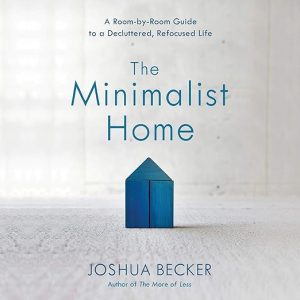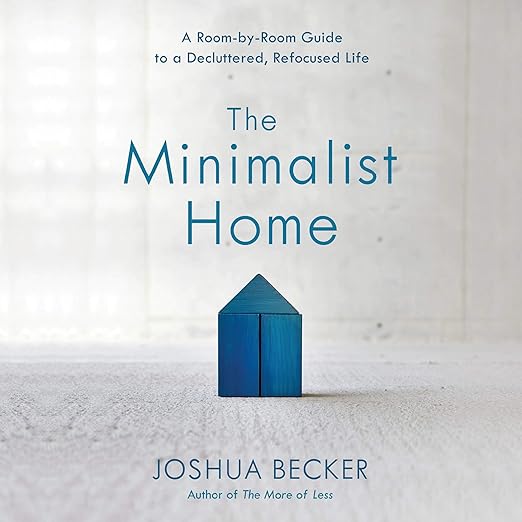
Joshua Becker has spent years building one of the more practically-oriented minimalism communities online, and The Minimalist Home audiobook reflects that background clearly. It is less interested in the aesthetic philosophy of owning fewer beautiful things and more focused on the functional argument that a home cleared of unnecessary possessions becomes a more effective base for the life you actually want to live. Becker narrates his own book, which at eight hours and five minutes is a comfortable length for the systematic, room-by-room approach he takes to the decluttering process. The USA Today bestseller status and the New York Times recognition for his earlier Uncluttered Faith give this audiobook a mainstream platform that the minimalism genre does not always achieve, and Becker uses that platform to make an argument that has more substance beneath it than the genre's aesthetic reputation might suggest.
First, the Big Picture
The central argument of The Minimalist Home is straightforward and consistently applied across every chapter: the purpose of minimizing your living space is not to create a visually spare environment that photographs well but to turn your home into what Becker calls a launching pad, a place organized around your actual values and priorities rather than around the accumulated possessions of a less examined life. That reframing is what distinguishes this audiobook from decor-focused decluttering guides. Becker is not primarily interested in what your home looks like after you have simplified it. He is interested in what you can do from it, and what you could not do before.
The room-by-room structure gives the audiobook a practical architecture that listeners can follow in real time if they choose to. Becker addresses each space, kitchen, bedroom, living room, home office, with specific guidance on how to evaluate what to keep and what to release, and with the underlying psychology of why over-accumulation happens in each particular context. The kitchen section does not simply advise clearing countertops. It examines what relationship to food and cooking the kitchen's current state reflects, and what relationship it would support if the space were organized according to genuine priority rather than accumulated habit.
Becker's self-narration carries the quality of a knowledgeable friend describing a process he has actually completed in his own home rather than an expert delivering findings from a research study at comfortable distance. He knows what the resistance feels like, the emotional weight of possessions, the guilt of releasing things received as gifts, the inertia of spaces that have accumulated for years without examination, and he addresses those resistances without dismissing them as irrational or trivial. Reviewer Christi, who was navigating a move from five thousand square feet to eleven hundred square feet when she listened, noted that Becker made the process feel logical and even enjoyable where other decluttering approaches had left her depressed and frustrated before she could get started.
The eight-hour runtime gives Becker room to address not just the practical mechanics but the underlying psychology of why accumulation happens in the first place. He is explicit that the audiobook engages with the causes of over-accumulation, not just the remedies. That dual focus, the physical process of clearing and the philosophical examination of what drives the problem, is what justifies the length and what differentiates The Minimalist Home from shorter, more prescriptive guides that deliver the what without the why. The connection between the home environment and a more fulfilling life in the world is the book's real thesis, and Becker builds toward it room by room with the patience of someone who has worked through the argument in his own life.
What to Watch For in The Minimalist Home
Pay particular attention to the sections on sentimental items and the possessions associated with particular life stages or relationships that have ended or transformed. This is where Becker's approach is most nuanced and where the audiobook offers what a room-by-room list alone could not provide. The question of what a possession actually represents versus what you tell yourself it represents is handled with the directness of someone who has worked through that reckoning personally, and the difference between those two things is often where the emotional difficulty of decluttering actually lives.
Reviewer kittyfan, who balanced between three and four stars, noted that the free step-by-step materials that accompanied the preorder were more immediately actionable than some sections of the book itself. That feedback points to something real about the audio format: Becker's practical guidance is thorough, but audio does not lend itself to the quick-reference checklist functionality that print readers can use to guide an active decluttering session happening at the same time. Listeners who want to declutter in parallel with the audiobook should plan to pause and apply rather than listening straight through and beginning the physical process afterward as a separate activity.
Is This One for You?
People facing a significant life transition, a move, a downsizing, a retirement, or simply a growing awareness that their home no longer reflects who they currently are, will find The Minimalist Home a supportive and systematic companion. Those who have tried other decluttering approaches and found them either too aesthetically focused or too emotionally demanding will respond to Becker's practical, values-grounded framework. The audiobook works well for listeners who prefer to understand the why behind a process before committing to the how. Listeners who want a quick start guide without philosophical depth should know this is a longer, more reflective treatment, and that the self-narration suits its deliberately measured pace rather than working against it.
Frequently Asked Questions
Does Joshua Becker narrate The Minimalist Home audiobook himself?
Yes. Becker narrates his own book across eight hours and five minutes. His self-narration carries the credibility of someone who has applied the process to his own home, and the conversational register suits the practical, encouraging tone of the material throughout.
How does this audiobook handle the emotional difficulty of letting go of sentimental items?
Becker addresses the psychology of sentimental possessions directly rather than treating emotional resistance as an obstacle to be overcome through willpower. He brings genuine nuance to why certain objects carry weight and how to evaluate what that weight actually represents versus what we tell ourselves it represents.
Does The Minimalist Home audiobook work as a listen-while-decluttering companion, or is it better absorbed before starting the physical process?
The audio format means you cannot quickly reference specific guidance mid-task the way a printed checklist allows. Listening straight through first to absorb the framework, then beginning the physical process room by room, is the more practical approach for most listeners.