Quick Take
- Narration: Tristan James is excellent here, his performance carries the emotional weight of the relationship between Hazard and Somers while sustaining the procedural tension of a genuinely dark mystery.
- Themes: Trauma and recovery, commitment and doubt, the violence that stays with the people who survive it
- Mood: Taut, emotionally demanding, and ultimately cathartic
- Verdict: The fifth book in the Hazard and Somerset series delivers the resolution a long series arc deserves, and it earns every moment of it.
I came to The Keeper of Bees without having read the previous four books in Gregory Ashe’s Hazard and Somerset series, which I now understand was both an error in judgment and, in a narrow sense, an interesting experiment. The book works as a standalone mystery in its procedural mechanics. It does not work as a standalone novel. By which I mean: you will understand what is happening, but you will be missing the accumulated weight of everything that has happened before, and that weight is the entire point.
Let me be clear about what the series has built. Emery Hazard is a private investigator with a history of profound trauma, a man whose capacity for feeling has been shaped, and damaged, by loss in ways that the previous books have rendered in careful, accumulated detail. John-Henry Somerset, his fiancé and a local police detective, is his counterpart in this, charming where Hazard is abrasive, socially fluid where Hazard is deliberately difficult. They are people who have chosen each other across real obstacles, and their relationship carries the gravity of that choice throughout The Keeper of Bees.
Our Take on The Keeper of Bees
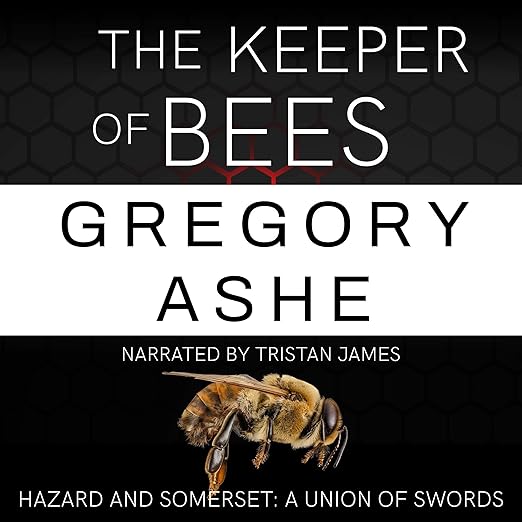
The mystery at the center of this installment is genuinely disturbing in a way that crime fiction sometimes avoids. Mitchell Martin was abducted and tortured by a sadistic killer known as the Keeper of Bees. Now he believes the Keeper has returned. When a woman is found murdered, staged in a way that echoes the Keeper’s earlier victims, Hazard and Somers are in a race to prevent more deaths against an antagonist who has, as one reviewer put it, been ahead of them the whole time. This is not a puzzle mystery in the classic sense. It is a thriller with real menace and real consequence.
What distinguishes Ashe’s handling of the material is his refusal to let the trauma be merely functional. The horror experienced by Mitchell Martin is not a plot device; it is a human reality that the book takes seriously. And Hazard’s own accumulated damage, the losses documented across the previous four books, is present in the way he moves through the investigation, the way he responds to Somers, the way he exists in the world. One reviewer described a moment from an earlier book, Hazard holding a dying man until it was over, as defining who he is, and that definition infuses every choice he makes here.
Why Listen to The Keeper of Bees
Tristan James. That is the primary reason this audiobook works as well as it does. He handles both the procedural tension and the relationship’s emotional texture with the same committed intelligence, and he finds in Hazard’s interior voice something that is difficult to describe without sounding imprecise: a kind of bleak tenderness. The contrast between Hazard’s external manner, abrasive, controlled, and his internal reality, deeply feeling, perpetually braced for loss, is audible in James’s performance in a way that elevates the writing. This is the kind of narration that makes you retroactively want to relisten to earlier books in the series.
The series is also resolved here in ways that multiple reviewers describe as genuinely satisfying, the Union of Swords arc, which has operated in the background of the previous books, reaches its conclusion in a way that justifies the patience required to reach it. One reader described it as “the most outstanding” of the ten Hazard and Somerset books they had read. That is a significant claim for a series of that length.
What to Watch For in The Keeper of Bees
New listeners: read the series in order, or at minimum read the first book. The emotional payoff of this installment depends on investments made across the preceding volumes. Starting here is possible but not advisable, and the experience of arriving at the resolution of the Union arc without having lived through the arc itself is genuinely diminished.
Readers who find MM mystery-romance a difficult genre to enter: the mystery elements here are serious and dark enough to hold up independently of genre expectations. The romance is integrated rather than decorative. If your hesitation is about the crime content being softened by the romance, it isn’t; the Keeper of Bees storyline has real stakes and real violence, handled with full attention to its weight.
Who Should Listen to The Keeper of Bees
Ideal for existing fans of the Hazard and Somerset series, for whom this is the clear place to start a relisten or to continue if they have been collecting the volumes and waiting for the arc to conclude. MM mystery readers looking for a series that handles trauma with seriousness and without sentimentality will find Ashe’s work rewarding from the first book. True crime and procedural thriller listeners who are open to the LGBTQ+ romance element will find the mystery plotting strong enough to carry them through. Listeners who need their crime fiction light or their relationships uncomplicated should start elsewhere.
Frequently Asked Questions
Can I start the Hazard and Somerset series with The Keeper of Bees, or do I need to read from the beginning?
You will understand the plot, but you will miss most of what makes the book work. The emotional payoff of this installment depends on accumulated investment across four previous books. Starting with Pretty Pretty Boys, the first Hazard and Somerset novel, is strongly recommended. The Keeper of Bees is the resolution, not the introduction.
How dark is the mystery content, and does Tristan James handle it appropriately?
The content is genuinely dark, a sadistic serial killer, real violence against victims, trauma that is treated with full seriousness rather than as plot decoration. Tristan James handles it with appropriate gravity, never sensationalizing it but also never pulling back from its weight. His performance is one of the better narrator-author matches in the MM mystery space.
What is the Union of Swords arc, and does this book resolve it satisfactorily?
The Union of Swords arc is an overarching mystery thread running through the series, involving unpunished violence and institutional failure. Multiple reviewers specifically praised The Keeper of Bees for resolving this arc in a way that feels earned rather than convenient. One described it as providing ‘adrenaline and serotonin’ simultaneously, which captures the dual satisfaction of the resolution.
How does the book balance the police procedural plot with the relationship between Hazard and Somers?
Unusually well for the genre. The Wahredua Police Department’s internal politics, the new hires disrupting the department, Somers navigating institutional change, run alongside Hazard’s investigation in parallel rather than as subplot. The relationship is present throughout without dominating the mystery mechanics. Ashe trusts the reader to hold both threads simultaneously.