Quick Take
- Narration: Todd Ethridge delivers Wolcott’s framework with professional clarity; the tone is confident without being salesy, which suits the material well.
- Themes: Alternative investing beyond the 401k, the five-phase wealth framework, aligning finances with purpose and values
- Mood: Energizing and practical, with an entrepreneurial edge
- Verdict: A focused, readable introduction to alternative investing strategy for entrepreneurs who feel stuck in the conventional Wall Street path, strongest as an orientation to a mindset shift rather than a technical investing manual.
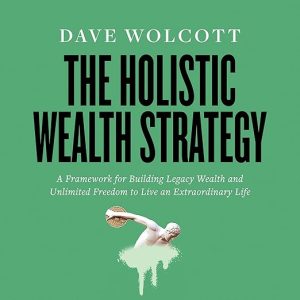
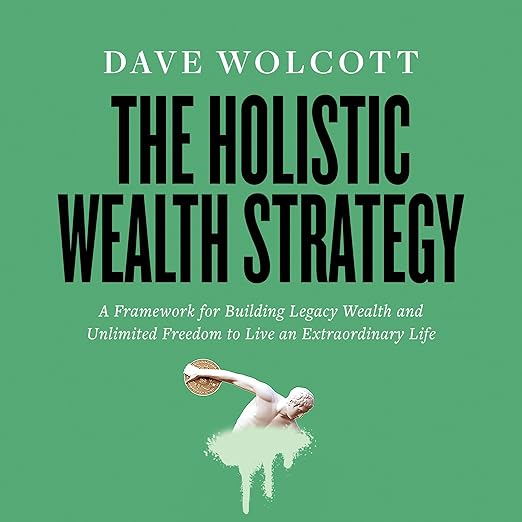
I listened to this one on a Friday afternoon, the kind of afternoon where I was sitting with spreadsheets and thinking about whether the conventional retirement advice I had grown up hearing actually applied to anyone I knew. My father, who ran a small business for thirty years, always called the 401k the only game in town. Dave Wolcott opens The Holistic Wealth Strategy by essentially arguing that this belief is where the problem begins.
That framing hooked me. Four hours is a reasonable investment in a new frame.
Our Take on The Holistic Wealth Strategy
Wolcott is the founder of Pantheon Investments, and this book grows directly from his own experience moving away from conventional market investing toward what he calls alternative assets. The central argument is that true wealth is not just financial accumulation; it is a comprehensive expression of mental, physical, and financial well-being, and that the five-phase framework he has developed allows entrepreneurs to build what he calls legacy wealth while also preserving freedom of time, relationship, and purpose. These are not new ideas in the entrepreneurial finance space, but Wolcott articulates them with enough specificity and personal grounding that the framework does not feel generic.
Reviewers consistently praise the book for making complex financial concepts accessible without oversimplifying. One noted that the author does an excellent job of explaining that the mind must be developed first, which allows you to see the possibilities and develop a growth mindset before moving into the financial mechanics. That sequencing is real. Wolcott spends meaningful time on the psychological shift required before any tactical change becomes sustainable, and that separates this from pure finance-manual territory.
Why Listen to This Audiobook
Todd Ethridge is a natural fit for this material. His narration is clean and unhurried, with the kind of authority that makes financial content feel trustworthy rather than promotional. At under four hours, the book is tight. Wolcott does not pad with filler case studies. The examples he uses, including his own trajectory, are illustrative rather than self-congratulatory.
The audio format works particularly well for the mindset sections in the early phases of the framework. Listening to these ideas while doing something physical, a walk, a drive, a morning run, allows the conceptual material to settle differently than reading it from a page would. Several reviewers mentioned rereading the book, which is a reasonable response, but for a first encounter the audio pacing is efficient.
What to Watch For in This Audiobook
The book is explicitly written from an entrepreneur’s perspective and directed at people who already have home equity, business income, or other assets to deploy. Listeners who are early in their careers or who are working to build initial savings will find the framework aspirational rather than immediately actionable. The alternative investing strategies Wolcott advocates, which include things like private equity structures and the Pantheon Investments community model, require capital thresholds that not all listeners will have reached.
The book is also more of an orientation than a how-to. You will finish it with a clear sense of a different approach and a framework for thinking about it, but you will need additional research and possibly professional guidance before implementing anything specific. That is not a criticism of the book’s purpose; it is a clarification of scope.
Who Should Listen to The Holistic Wealth Strategy
Entrepreneurs and self-employed individuals who feel constrained by traditional retirement vehicles and want a structured way to think about alternatives will get the most from this. The book is also valuable for anyone who has started to question the standard advice to maximize your 401k, invest in index funds, and wait until sixty-five, but has not found a coherent alternative framework. Listeners who are looking for specific stock picks, detailed tax strategies, or deep-dive technical investing guidance should look elsewhere. This is a philosophy and framework book first, a tactics book second.
Frequently Asked Questions
What are the five phases of Wolcott’s holistic wealth framework?
The book outlines a sequence that begins with mindset development and moves through financial assessment, strategy building, alternative asset deployment, and legacy planning. Wolcott argues that skipping the mindset phase is why most alternative investing attempts fail.
Is this book only useful for people who already have significant wealth to invest?
The strategies are most immediately applicable to entrepreneurs with existing assets, home equity, or business income. Listeners earlier in their financial journey will find the framework conceptually valuable but may not be able to act on the specific strategies right away.
How does Todd Ethridge’s narration compare to other financial audiobooks in terms of pacing and accessibility?
Ethridge brings clarity and a measured pace that suits a financial framework presentation well. His narration is professional without being stiff, which keeps the material engaging over nearly four hours.
Does the book explain what the Pantheon Investments community is, and is the content independent of it?
Wolcott does reference the Pantheon Investments community as a resource for alternative investors, and some reviewers mention it positively. The core framework and philosophy in the book stand independently of that community, though readers interested in implementation will likely encounter it as a next step.