Quick Take
- Narration: Michael Ferraiuolo brings the right playful energy to Doyle’s voice and handles the tonal range between snark and sincerity with more skill than this subgenre usually gets.
- Themes: Demisexuality and the slow build of attraction, forced proximity, freedom and captivity as metaphors for emotional vulnerability
- Mood: Warm and witty with genuine romantic tension underneath the banter
- Verdict: A standout entry in the Fortune Favors the Fae multi-author series, particularly for listeners who care about nuanced LGBTQ+ representation and slow-burn structure done correctly.
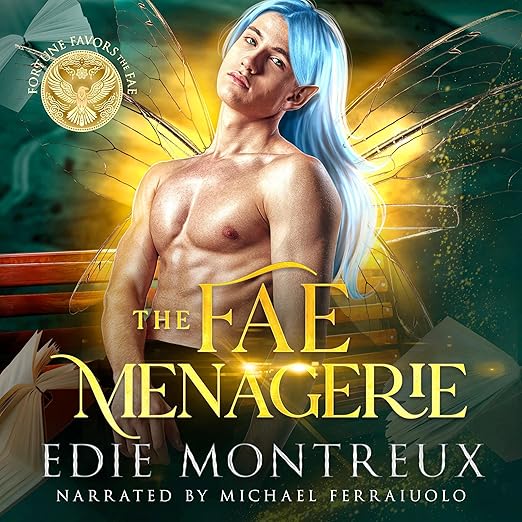
I came to The Fae Menagerie without having read others in the Fortune Favors the Fae series, which is fine by design: each book is structured to stand alone. What pulled me in was the combination of the demisexual protagonist, a detail I do not see taken seriously in romantasy as often as it should be, and the forced-proximity setup that goes considerably further than the usual meet-cute. Being trapped in a glass cage in a fae prison with the person you were supposed to assassinate is not your typical inciting incident.
I listened to this one on a rainy Thursday evening, which suited the enclosed, intimate atmosphere of the story’s central setting. The fae menagerie of the title is a prison where Doyle has been confined until he learns what love is, which is a premise that could easily become saccharine. Edie Montreux resists that pull consistently.
Our Take on The Fae Menagerie
The setup is genuinely clever: Doyle is a fae prince imprisoned for his inability to understand love, and the coin that was supposed to deliver an assassin to Parker’s door lands him in Doyle’s cage instead, pulling Parker into the fae realm with him. From that point, the story’s engine is the slow, reluctant process of two people learning each other under conditions neither of them chose. Doyle is the playboy who has never encountered an emotional bond he could not charm his way past. Parker is demisexual and has never experienced attraction that preceded genuine connection, which makes him uniquely unsuited to Doyle’s instinctive approach.
That friction is the novel’s best feature. A reviewer who identifies as demisexual describes the representation as accurate to their experience: attraction that arrives slowly, through the accumulation of trust rather than physical immediacy. That kind of inside confirmation is meaningful for a sexuality that remains underrepresented in fiction. Montreux does not simply apply the label; she builds the narrative around what demisexuality actually means for how a character experiences attraction and why Parker’s journey toward Doyle is necessarily slower and more deliberate than Doyle’s toward him.
Why Listen to The Fae Menagerie
Michael Ferraiuolo’s narration is a strong asset. He finds the comedy in Doyle’s situation without undercutting its genuine stakes, and his handling of Parker’s more introverted, skeptical voice gives the listener real contrast between the two characters. In a single-narrator format, maintaining that distinction requires specific skill, and Ferraiuolo is up to the task. His pacing on the slower romantic buildup scenes is patient without being slack, which is exactly the right call for a slow-burn structure.
The multi-author series context is worth understanding. Fortune Favors the Fae operates as an interconnected world with a magical coin that moves between storylines, each book following a different pairing and genre mode within the same world. The Fae Menagerie functions as an entry point because it establishes the coin’s mechanics and the menagerie setting, but you do not need to have read the others first. That said, readers who have already encountered the series will find additional texture in certain references.
What to Watch For in The Fae Menagerie
One reviewer flags some confusion around the wording in certain sections, noting that they needed to reread passages to follow what was happening. That observation is worth taking seriously for audio listeners specifically, because you cannot reread a confusing passage without actively rewinding. Montreux’s prose has moments of density that are fine on the page but can be harder to parse in audio form during the more action-heavy sections. This is not a pervasive problem, but the fae world’s rules and the menagerie’s hierarchy are worth tracking carefully in the early chapters.
The book’s pacing is deliberately unhurried, which is the correct structural choice for a slow-burn romance but requires patience from listeners accustomed to more rapidly developing romantic plots. If you are looking for immediate chemistry and fast payoff, this is not that book. The accumulation of emotional intimacy is the point, and the story earns its ending by taking the long route there.
Who Should Listen to The Fae Menagerie
This is an excellent listen for readers interested in male-male romantasy with thoughtful LGBTQ+ representation, particularly demisexual and ace representation that is integrated into the narrative structure rather than treated as incidental. Slow-burn enthusiasts, forced-proximity fans, and readers who enjoy fae world-building with both serious and comedic tones will find it hits multiple targets simultaneously.
Skip it if you prefer fast-burning romance with immediate attraction, or if you find intricate fae politics distracting rather than enriching. Also, listeners who prefer single-author series with consistent internal continuity may find the multi-author series format less satisfying than a more tightly controlled world.
Frequently Asked Questions
Do I need to read other books in the Fortune Favors the Fae series before listening to this one?
No. Each book in the series is designed to stand alone and can be listened to in any order. The Fae Menagerie establishes its own world and characters without requiring prior knowledge of the other titles in the series.
How accurately is demisexual identity represented in Parker’s character?
At least one demisexual reviewer describes the representation as accurate to their experience, specifically the pattern of attraction building only after a genuine emotional bond has formed. Montreux builds this into the narrative structure rather than simply applying a label.
Is The Fae Menagerie primarily romance or does it have significant fantasy plot elements?
Both elements are present and given roughly equal weight. The forced-proximity romance is the emotional core, but the fae world’s politics, the menagerie prison structure, and the threats against Parker’s life all carry genuine plot stakes that develop alongside the romantic arc.
How explicit is the content, and is this appropriate for younger LGBTQ+ readers?
The listing describes it as featuring spice alongside the slow burn, which indicates adult content. The publisher description explicitly uses the term ‘spice,’ so this is an adult romantasy title. Younger readers should be aware of that framing before picking it up.