Quick Take
- Narration: Dylan J. Locke navigates the three-timeline structure with enough vocal distinction to keep listeners oriented across wildly different settings and centuries.
- Themes: Reincarnation and fated love, queer identity across historical contexts, the cost of devotion
- Mood: Lush, erotic, and occasionally devastating
- Verdict: A genre-bending debut that earns its Booklist praise, though readers expecting a traditional happily-ever-after ending should know upfront that this is not that kind of romance.
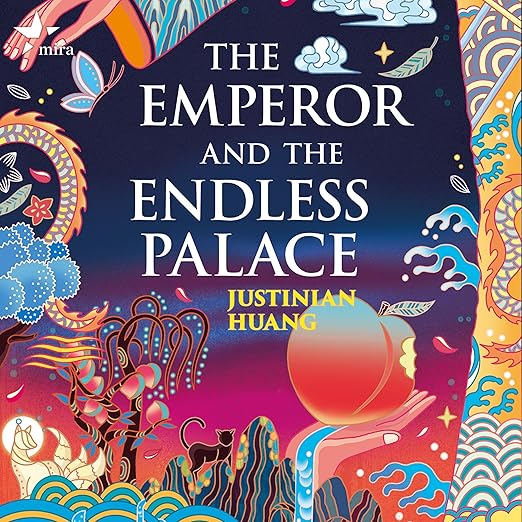
I picked this one up on a Thursday evening after a week that had left me wanting something that was not safe. Not reckless exactly, but willing. The Emperor and the Endless Palace had been described to me by a bookseller friend as literature that forgot it was supposed to be a romance and became something stranger, and that was exactly what I needed.
Justinian Huang’s debut novel operates across three timelines: a 4 BCE imperial court where a courtier is tasked with seducing a young emperor; an 1740 inn where a keeper helps a mysterious visitor with consequences neither expects; and present-day Los Angeles, where a college student meets someone who feels impossibly familiar. Two souls reincarnate across these timelines, drawn together and separated by the pressures of each era. Booklist called it a sweeping triumph in queer romance, and that description is accurate, if somewhat underselling the book’s tonal ambition.
Our Take on The Emperor and the Endless Palace
The comparison one reviewer drew to Toni Morrison and Zora Neale Hurston is extravagant but not entirely without basis. Huang writes with a density of sensory detail and a willingness to embed the erotic in the spiritual that recalls those writers’ approaches to the body as a site of meaning rather than mere pleasure. The rave scene in a contemporary Los Angeles chapter is one of the more remarkable pieces of recent genre writing I have encountered, the kind of passage that makes you stop and wonder how a debut novelist got there.
Dylan J. Locke’s narration carries significant responsibility in a book this structurally complex. Moving between ancient China, eighteenth-century wilderness, and contemporary California while keeping two recurring souls legible across their iterations requires consistent tonal calibration, and Locke manages it without making the seams between timelines feel mechanical. The shifts feel like memory rather than chapter breaks, which is exactly the effect the novel requires.
Why Listen to The Emperor and the Endless Palace
The audiobook suits this particular novel in ways that go beyond convenience. Huang’s prose is rhythmic and incantatory in places, particularly in the imperial court sections, and hearing it spoken activates a cadence that scanning it on a page might not fully deliver. The author’s note that describes this as a heart-pounding romantasy full of shocking twists and erotic thrills is accurate as far as it goes, but it undersells the melancholy that runs underneath the desire. This is a book about love that cannot be completed, and Locke’s narration understands that undertone without making the book sound like a tragedy.
For LGBTQ listeners specifically, the book offers something rare: a queer love story that takes its historical contexts seriously. The 4 BCE setting is not sanitized into modern sensibility. The dangers of the court are real and gendered and specific to their moment, and Huang does not flinch from how those dangers shape what love can look like when it must be hidden or performed.
What to Watch For in The Emperor and the Endless Palace
The most important piece of information for a potential listener is in the reviewer note that described this book as having no HEA, meaning no happily-ever-after. This is not a spoiler; it is a category clarification. Traditional romance readers who need resolution will be frustrated, and at least one reviewer noted that the ending is bittersweet but meaningfully so rather than carelessly abrupt. If you can hear the story as a tragedy of devotion rather than a failed romance, the ending works. If you need the genre satisfactions of a romance novel’s final act, this book will disappoint you.
Some reviewers also noted that the main characters can feel morally ambiguous in ways that make them difficult to fully root for. That is a feature of Huang’s approach rather than a flaw, but it is worth knowing if you prefer protagonists whose ethical footing is solid.
Who Should Listen to The Emperor and the Endless Palace
Readers drawn to literary fantasy with queer themes, unconventional structures, and historical range will find this exactly their territory. Fans of Silvia Moreno-Garcia’s mythological approach to genre, or readers who enjoyed Madeline Miller’s use of tragedy in love narratives, will likely connect with Huang’s sensibility. Traditional romance readers who require an HEA ending should read the author’s note carefully before committing. At under ten hours with Locke’s assured narration, this is a manageable listen that earns its density.
Frequently Asked Questions
Does Dylan J. Locke differentiate clearly between the three historical timelines in his narration?
Yes. Locke uses tonal shifts that track the different settings without resorting to exaggerated vocal affectation. The ancient court sections feel more formal, the contemporary chapters more immediate, and the transitions feel atmospheric rather than jarring.
How explicit is the erotic content, and is it integral to the story?
The erotic content is substantive and specific. The author’s note describes the book as full of erotic thrills, and several chapters in all three timelines include explicit scenes. This content is integral to the novel’s themes about the body as the site of memory and recognition across lifetimes.
Is this a standalone audiobook or the start of a series?
It is a standalone novel. The three-timeline structure resolves within this single book, though the ending is bittersweet rather than fully conclusive in the traditional romance sense.
How does the 4 BCE imperial court timeline handle queer love given the historical context of that era?
Huang engages the historical context directly rather than modernizing it. The dangers specific to that court environment shape how the relationship between the courtier and the emperor can exist, and that constraint is part of what gives those chapters their tension and sadness.