- Narrator: Andrew Tell narrates with a grounded, unhurried quality that suits the backcountry survival setting, he conveys Ben Davis's pragmatic competence without overdramatizing the apocalyptic stakes.
- Subjects: Survival and fatherhood, community and threat in post-collapse America, preparation versus improvisation
- Tone: Tense and methodical, the audiobook equivalent of a long trail through uncertain terrain
- Bottom line: A well-paced post-EMP survival story that rewards listeners who value character steadiness and sustained tension over spectacle.
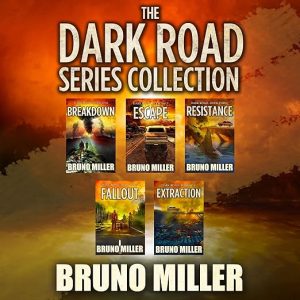
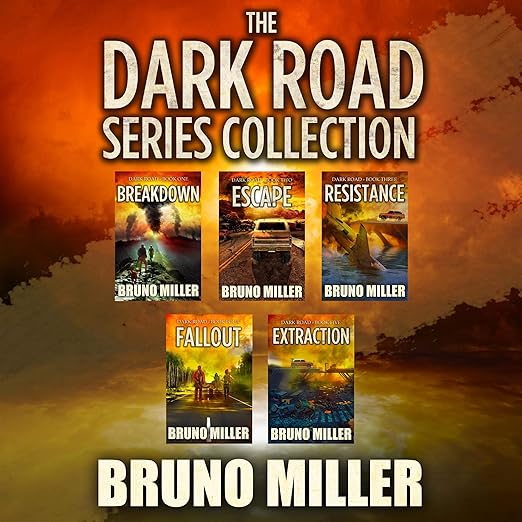
I came to The Dark Road Series Collection the way I come to most post-apocalyptic fiction: with specific questions about what the author thinks the collapse of social order actually looks like at ground level. The genre has a tendency to reach for the most dramatic version of human behavior, either noble cooperation or immediate savagery, and to skip the long, grinding middle where most real disaster experience actually lives. Bruno Miller's series, which collects all five volumes of the Dark Road story into a single twenty-hour listening experience, is more interested in that middle ground than most of its neighbors on the shelf.
The setup is clean and functional: Ben Davis, a former military man with genuine wilderness skills, is in the backcountry of the San Juan Mountains with his teenage son Joel and their dog Gunner when high-altitude nuclear detonations create an electromagnetic pulse that disables modern electronics. They are miles from home in rough terrain with no way to know what remains of civilization. The novel's central project is the long walk back, and Miller treats that walk with a fidelity to logistics that readers of the genre will find either reassuring or occasionally pedantic depending on their tolerance for procedural detail. This is deliberate pacing, not padding: Miller wants you to feel the weight of the journey before you feel its resolution.
A Closer Look at The Dark Road Series Collection
One reviewer made a point that is worth taking seriously: these five books do not function as a true series but rather as one novel distributed across installments. This collection format is therefore probably the ideal way to experience the story, the pacing that might feel awkward waiting months between individual releases works naturally when all five parts are available at once. The narrative does not bounce between storylines or multiple casts of characters. It follows Ben, Joel, and Gunner with consistent focus, which allows for genuine character development across the twenty hours without the disorientation that comes from complex multi-POV post-apocalyptic storytelling. The father-son dynamic is the emotional engine of the whole enterprise, and Miller gives it room to develop rather than treating it as background texture.
What Makes The Dark Road Series Collection Worth Hearing
Ben's military background is central to his competence and to one of the collection's more interesting tensions. Reviewers with military or survival experience noted specific choices that rang false: the operational security lapses, the conspicuous fire in bandit territory, the insufficient radio discipline. These are fair criticisms, and Miller does not appear to have consulted deeply with tactical practitioners. But the reviewers who raised these objections also generally concluded that the writing style and storytelling quality more than compensated. One reviewer described the experience as so realistic it pulls you in, which speaks to the emotional and experiential texture being more successful than the tactical precision. The stakes feel genuine even when the specific decisions might not be optimal by real-world standards. This is the bargain most genre fiction makes, and Miller's version of it is more honest than most about what it is prioritizing.
Things to Know Before Starting The Dark Road Series Collection
Sustaining consistent character voices across twenty hours of a single continuous narrative is a different challenge than handling an episodic collection, and Andrew Tell manages it well. Ben's voice maintains a steady competence throughout that matches the character, he does not become more dramatic as the danger increases, which reflects the psychological reality of experienced people in difficult situations. The dog Gunner is handled with appropriate restraint; Miller writes Gunner with affection and practicality, and Tell's narration honors both qualities without sentimentalizing. The 4.6 rating across 475 reviews reflects a genuinely satisfied audience that found the story delivered on what its premise promised: a grounded, character-led account of survival in a collapsed world, with the complete story arc available in a single listen.
Who Bruno Miller Is Writing For
The post-EMP survival genre is crowded, and many of its entries either repeat the same beats without variation or veer into territory that strains credibility by escalating the threats beyond anything emotionally manageable. Miller's Dark Road series finds a more sustainable register: the threats are real and the violence is present, but the book stays focused on Ben and Joel's relationship and the incremental decisions that either build or erode trust between them. One reviewer described the story as so realistic it pulls you in and noted the unsettling accuracy of depicting a world where common sense has vanished and law has collapsed among certain groups. The 4.6 rating across 475 reviews reflects an audience that appreciated the series staying in that emotionally grounded register rather than escalating toward spectacle. For listeners who have worked through the obvious landmarks of the genre and want something that takes the human dimensions of post-collapse survival as seriously as the tactical ones, this collection makes a strong case for itself over its twenty hours.
Good to Know
Is this collection the complete Dark Road series, or are there additional books not included?
This collection includes all five books of the original Dark Road series. However, at least one reviewer noted that sequel opportunities exist beyond the collection and that additional books may have been published since the collection was released. The collection ends at a natural stopping point but with clear possibility of continuation.
How accurate is the EMP survival scenario, does Miller research the technical details carefully?
Miller gets the broad strokes right: the communications blackout, the failure of modern vehicles, the return to human and animal power. Some technical details drew criticism from reviewers with specific knowledge, including the depiction of vehicle fires being more common than they would likely be in an actual EMP event. The series prioritizes dramatic plausibility over technical precision.
Is this a free audiobook on Audible, and how does the collection pricing compare to buying the books individually?
Yes, this collection is currently listed at $0.00 on Audible, making it a free audiobook for members. The collection format at twenty hours represents significant value for listeners who want the complete story. Confirm current pricing on the Audible listing, as promotional pricing can change.
Does the series include zombie or supernatural elements, or is it strictly realistic post-collapse survival?
The Dark Road Series Collection is strictly realistic post-EMP survival fiction with no supernatural or zombie elements. The threats are human antagonists and environmental challenges. Reviewers specifically noted this as a distinguishing feature: one described it as a good post-EMP journey with all the elements of the genre except zombies.