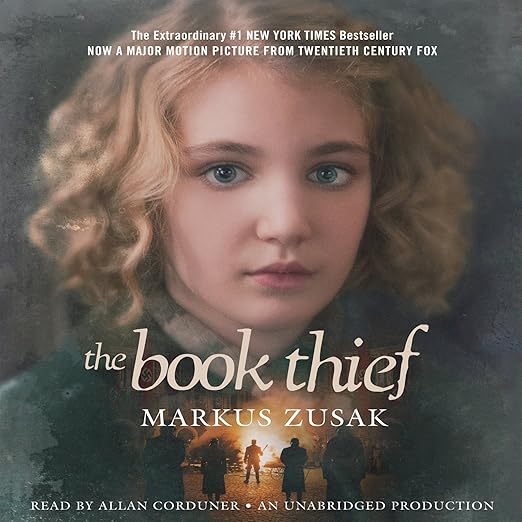
Listening Library put this audiobook out in September 2006, and the five written responses underneath it span more than sixteen years and four marketplaces. Not one of them names the reader, the running time, or the act of listening. What they describe instead is a copy bought on a Kindle, a printed page count, a parcel that arrived ahead of schedule, and passages spoken out loud in a room. The recording runs 13 hours and 56 minutes. The page selling it is, in every readable particular, a page about a printed book.
Three Youth Labels, One Complaint About the Shelf
Easily the most engaged response on this listing is also the one arguing with the shelf it sits on. Its headline calls the novel a piece of literature that "doesn't belong in the Teen section," and this record files it under children's audiobooks and under teen and young adult at once, with a tag for education and learning stacked on top. Three youth-facing labels, and a customer complaint about exactly that, sitting side by side without anyone at the store noticing.
What makes the complaint worth taking seriously is the material the copy itself advertises. Nineteen thirty-nine, Nazi Germany, a foster girl outside Munich who steals when she cannot resist, an accordion-playing foster father, books shared with neighbors during bombing raids, and a Jewish man hidden in the basement. That is not an argument against young listeners; plenty of thirteen-year-olds should hear it. It is an argument against buying blind off a children's category, which is what the shelving invites a grandparent to do. The publisher's own copy makes the point again from the other direction, quoting a line that puts the novel on the same shelf as Anne Frank's diary. That is a shelving claim of an entirely different order from the one this record acts on, and both are printed on the same page.
That same response opens by explaining it bought the book on a Kindle and now wishes it owned a paper copy to pass around. So the reader on this page who thought hardest about the novel was holding neither of the two things being sold, and said so in the first sentence.
Corduner Reads All of It, Alone
Nobody on this page set out to argue for the audio edition, and a response from 2009 does it anyway, better than the publisher's copy manages. It calls the prose, at times, "more poetry than prose," then adds a detail worth pausing on: "I frequently found myself reading passages of the elegantly written narrative aloud." Somebody who owned the text kept converting it into speech anyway. That is the entire argument for an audio edition of this novel, made by accident, by a customer, nine years into the file's life on this page.
Length works in the same direction. Close to fourteen hours is a long stretch to spend with a narrow cast, and this novel is built for exactly that: one street, one basement, a handful of neighbors, and a girl acquiring words a stolen volume at a time. Material that rewards accumulation rewards audio, because the format makes leaving harder than staying.
Then look at what the story asks of a performer. The copy states the premise flatly: when Death has a story to tell, you listen. The whole novel is spoken from a vantage no character in the house occupies, and it has to sit on top of a girl learning to read, a father with an accordion, neighbors in a shelter, and a man who cannot come upstairs. Allan Corduner reads all of it, alone. The demand is a register that stays outside the story without going cold, sustained across a book that keeps cutting between a doomed street and the thing watching it. Whether that lands is a question this page cannot answer for you, because nobody who bought it has written a word about the performance.
Reviewers Measure Pages, This Page Sells Reputation
Australia supplies the sharpest practical warning. A response filed there measures the book the way readers measure books, saying the story flew by and felt much shorter than its "500+ pages." Useful sentence, unusable unit. Nobody buying here receives pages. The comparable figure is a running time, and the two are not interchangeable for someone deciding whether they have the patience for a long, mournful, deliberately slow-building novel about a child in a war. The same response also notes that the story being told by Death struck it as clever and worked, which is the closest anything on the page comes to describing the book's actual delivery.
Worth knowing too how thin the evidence base is: five written responses, filed from four different marketplaces, on a record that has been on sale since 2006. Two decades of availability, and a column a buyer can read in three minutes.
Sales copy is the second thing to watch. It leads with promotion, cycles through a film, a PBS nomination and two press quotations, and reaches the plot only in its fifth paragraph. It never mentions the file, the reading, or the length. For a novel this well known the copy is probably redundant anyway, but a first-time buyer should notice that the page is selling reputation rather than a product.
Sad to Have Lost Them All
Buying makes sense if you want a long, patient, character-heavy war novel and you are content to be carried by one voice for the duration. It suits a listener who has time rather than one grabbing twenty minutes at a stretch, because the payoff is accumulation. A response from Canada puts the appeal exactly right, describing the ending as a loss: "then the book was done and over and I was sad to have lost them all." People do not say that about plots. They say it about company. It also suits a household listening together, provided the youngest person in the room is old enough for what the copy describes.
Pass if you are shopping off the children's category for a young child, because the copy tells you plainly what is inside and the shelf does not. Pass too if you want a companion text, a foreword or any supplementary material, since none is advertised anywhere on this record. Pass as well if the film sent you here and you want the film's shape: the copy mentions a motion picture and then says nothing about how this recording relates to it. And be honest about the commitment before you start, because the responses that love this book hardest are the ones that stayed with it past the slow opening stretch.
Before You Listen
Is this audiobook the complete novel or an abridgment?
The listing never says. No field carries the word unabridged, and the description skips the format question entirely. What you get is a runtime, 13 hours and 56 minutes under Listening Library, and a reader credit. For a novel of this length that figure is consistent with a full text, but the page stops short of confirming it.
Why is one of the reviews about a package delivery?
A five-star entry filed in Brazil grades a shipment: a special edition, an international order, and arrival well ahead of the promised date. Its opinion of the book is that it seems to be a good one. Those five stars are being awarded to a courier, and they sit in the same column as everything else.
What does this audiobook listing tell you about which edition of the text was recorded?
Nothing. You get a publisher, a September 2006 release date, a runtime and a reader's name. No edition statement, no foreword, no note about supplementary material. If you need a specific text, this page cannot confirm you are getting it, and none of the written responses settle the question either.