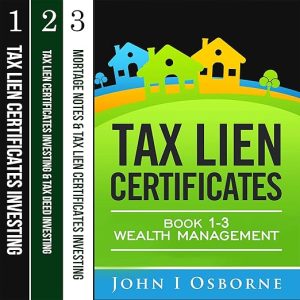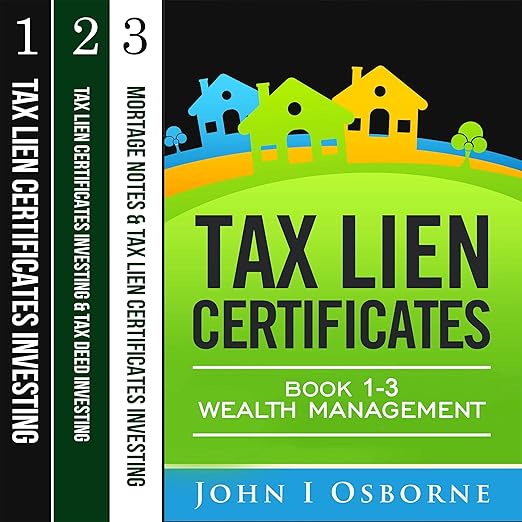
Tax lien certificates occupy a corner of the investment landscape that receives almost no coverage in mainstream personal finance media despite offering returns that, under the right conditions, can substantially outperform conventional fixed-income instruments. John I Osborne's three-in-one Wealth Management bundle approaches this subject with the kind of state-level regulatory detail that distinguishes a serious investing guide from a general enthusiasm pitch. Kelly Libatique narrates this 4-hour-and-2-minute audiobook, and her clear delivery makes the procedural material navigable without sacrificing accuracy for readability.
The three books bundled here, covering core tax lien strategies, the combination of tax lien and tax deed investing, and the addition of mortgage notes to the portfolio mix, are designed to build on each other. The first establishes the fundamental mechanism: when property owners fail to pay their taxes, municipalities sell those tax obligations as certificates to investors who then earn interest, guaranteed by state law, until the debt is paid. The second extends that framework to tax deeds, which are what investors receive when the redemption period expires and the property itself transfers. The third adds mortgage notes as a complementary asset class for investors already comfortable with the lien and deed mechanics.
State-by-State Rules and the Honest Risk Section
The most valuable section of this audiobook is the state-by-state breakdown of where tax lien sales are conducted and what the conditions are in each jurisdiction. This is information that most general investing books either omit or treat superficially, and it is precisely the information that determines whether a tax lien strategy is viable in any given investor's geography. Some states do not conduct tax lien sales at all; others offer certificates with very short redemption windows that favor investors, while others impose conditions that make the risk-return profile less attractive. Osborne covers these distinctions in enough detail to give listeners a framework for their own due diligence rather than a generic encouragement to find good deals.
One reviewer specifically noted that this guide offered more detail than competitors who only provide a pep talk with no discussion of risks, and that observation is accurate and important. The risk section is honest about what can go wrong: environmental liens, title complications, properties in jurisdictions with weak redemption enforcement, and the possibility of overpaying at competitive auction. This is the content that distinguishes an educational resource from a promotional one. Libatique delivers it with the same clarity she brings to the more optimistic material, which is the correct approach for instruction that listeners need to hear without the narration skimming over the unfavorable parts.
Libatique Paces the Fifteen-Step Purchase Process
The 15-step process for purchasing a tax lien certificate is the actionable core of the audiobook and the section listeners are most likely to return to. Osborne walks through due diligence, bidding mechanics, documentation requirements, and post-purchase management in enough procedural detail to give a first-time investor a genuine framework for action rather than just an orientation to the category. Libatique's pacing through this section is deliberate without being slow, which is the correct approach for instructional content where listeners may need to pause and note details before proceeding.
The mortgage notes addition in the third bundled book is the section most likely to expand a listener's thinking beyond the initial tax lien premise. Mortgage notes are first-lien debt instruments that trade at a discount when borrowers are in distress, and their risk-return profile complements tax lien certificates in ways that Osborne explains through comparison rather than abstraction. For listeners who came in primarily interested in tax liens, this section opens an adjacent strategy that uses the same analytical and due-diligence skills they have already developed from the first two books.
Repetitive Setup, but a Checklist Worth Replaying
One reviewer flagged repetition across the three bundled books, and that is a fair observation. Because the three titles were originally published separately, some foundational concepts are re-explained at each opening. Listeners who are covering all three books in sequence will encounter this more than those who are using the audiobook as a reference to specific sections. The repetition is not so severe as to undermine the content, but it is worth knowing that the bundle format does not eliminate the overlapping setup material that independent publications require at each entry point.
Pay attention to the due diligence checklist in the first book. Osborne's emphasis on title search, environmental assessment, and property condition verification before bidding at auction is the material that separates investors who consistently profit from those who acquire certificates that become expensive problems. The list is practical and comprehensive, and it is the section most worth re-listening to before attending a first auction for any listener who is seriously considering acting on this strategy.
Suited to Investors With Some Real Estate Background
This audiobook is most useful for listeners with a basic understanding of real estate or fixed-income investing who want to understand how tax lien certificates work and what due diligence is required before participating. Complete beginners to investing may find the regulatory and procedural detail dense on first listen; the audiobook rewards listeners who come in with at least a framework for understanding interest rates and property valuation. Experienced real estate investors looking to diversify into paper assets will find the mortgage notes section particularly relevant. Listeners who are geographically concentrated in states that do not conduct tax lien sales should note that the strategies here require either operating in the right jurisdictions or doing so remotely, which Osborne addresses directly as a viable approach.
A Few Questions About Tax Lien Certificates
Does this audiobook explain what tax lien certificates are from scratch, or does it assume prior investing knowledge?
The first book in the bundle establishes the basic mechanism of tax lien investing from the ground up. Prior real estate or investing knowledge is helpful but not required, though listeners with no financial background may want to supplement with a general personal finance foundation before applying the strategies described.
Is this audiobook relevant if I live in a state that does not have tax lien sales?
Osborne covers which states permit tax lien sales and which do not. Investors in non-lien states can still participate by operating remotely in lien-friendly states, and the third bundled book's coverage of mortgage notes is applicable regardless of geography.
How does Kelly Libatique's narration handle the regulatory and procedural detail in this audiobook?
Libatique maintains a clear, measured pace throughout the more technically dense sections, which suits instructional content well. The deliberate delivery gives listeners time to process the state-specific regulatory information without the narration rushing past details that require comprehension.
Does this audiobook cover what happens if a property owner never redeems the tax lien certificate?
Yes, the bundle addresses the tax deed process that occurs when redemption periods expire, including how investors receive title to the property and what that process requires. The risks and considerations associated with property acquisition through this mechanism are covered in the second bundled book.