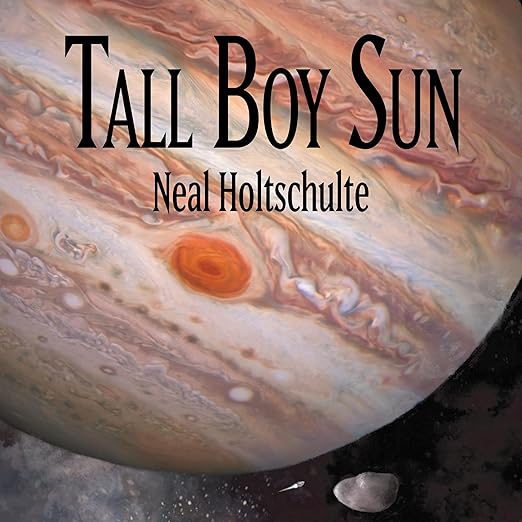
- Performance: Neal Holtschulte self-narrates with a naturalistic, unhurried cadence that suits a flawed protagonist navigating a messy life, though the intimacy occasionally softens where a professional might add more edge.
- What it covers: Addiction and redemption, family estrangement, loyalty between duty and survival
- Feel: Character-driven and quietly tense, with a working-class texture that distinguishes it from glossier space adventure
- Our call: A character-first SF adventure that trades spectacle for psychological honesty, best suited to listeners who want their space opera to feel emotionally real.
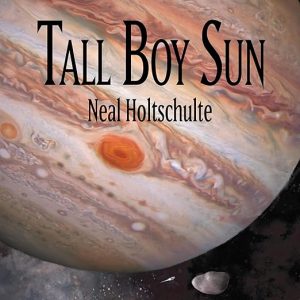
Space opera has an addiction problem of its own, and it is the addiction to competence. Heroes in the genre tend to be exceptional: ex-special-forces, gifted engineers, prodigies who just need the right mission to unlock their potential. Neal Holtschulte's Tall Boy Sun opens by doing the opposite. Sol Linocass mucks out clogged valves at an insect protein farm. He has a chronic drinking problem. He has an ex-wife and children who have moved on from him. He dreams about the stars from a position of total professional and personal failure. That is a genuinely unusual starting point for a space adventure, and Holtschulte earns real credit for sustaining the authenticity of Sol's limitations throughout a narrative that puts him under escalating pressure.
The plot kicks in when Sol discovers a faster-than-light drive blueprint and suddenly becomes interesting to shadowy intelligence operatives and space pirates who want the technology for themselves. He runs to his sister Trudy and her crew. What follows is a double-agent thriller dressed in science fiction clothing, with Sol balancing loyalties to his family, to the crew that has reluctantly taken him in, and to whoever is applying the most immediate pressure at any given moment. Reviewer Marian Schifani described it as a messy life, love and redemption story wrapped in an intriguing story set in space, which is precisely the register the book is operating in.
The book's greatest strength is also its most unusual quality in the genre: Sol does not get magically competent when the stakes rise. His drinking remains a liability. His irresponsibility creates real problems that the plot has to work around rather than paper over. The redemption arc, when it comes, feels like something he has worked toward rather than something the narrative grants him as a reward for enduring the story. That is a more honest kind of character development than most SF delivers, and it is worth calling out explicitly.
Holtschulte published this as the second novel following Crew of Exiles, and the craft shows in the integration of worldbuilding. You understand the political landscape and technological rules through Sol's experience of them rather than through dedicated exposition chapters. The insect protein farm as Sol's baseline reality is a particularly sharp detail, grounding the speculative elements in an economic logic that feels genuinely thought through. It is the kind of opening image that tells you immediately what kind of science fiction this is going to be: character-first, economically grounded, interested in the people the future leaves behind rather than the ones it elevates.
What Makes Tall Boy Sun Worth Hearing
Holtschulte narrating his own work creates a particular kind of intimacy that professional narrators sometimes cannot manufacture. You hear the author's intended rhythm, the exact cadence of Sol's self-deprecating interior voice, the pauses that in professional narration might be tightened for efficiency but here carry the weight of a man not quite trusting his own decisions. The limitation is that some scenes, particularly the confrontations with the shadowy forces hunting Sol, might benefit from the sharper vocal contrast a specialist performer would bring. For a character-study-first novel in SF clothing, though, the self-narration choice creates more advantages than limitations.
Things to Know Before Starting Tall Boy Sun
The structural tension between Sol's loyalty to Trudy's crew and his obligations to forces threatening his family is the book's genuine engine, not the FTL blueprint MacGuffin. Watch for how Holtschulte handles Sol's moment of decision mid-narrative: it is the moral center of the book and the scene that most clearly demonstrates whether this is a story about a man redeeming himself or one about a man discovering what he was always capable of. The answer is more ambiguous and more interesting than either option alone would be, and it is where Holtschulte earns the character work he has invested in throughout.
Who Neal Holtschulte Is Writing For
SF listeners who have tired of invulnerable protagonists and want a space adventure rooted in recognizable human failure will find this rewarding. This is not hard SF, and it is not military SF: the science is backdrop, not foreground. If you need combat sequences and tactical precision, look elsewhere. If you want a genuinely flawed, alcoholic starship mechanic stumbling toward something like grace across 10.5 hours, this delivers that with more authenticity than the genre usually attempts.