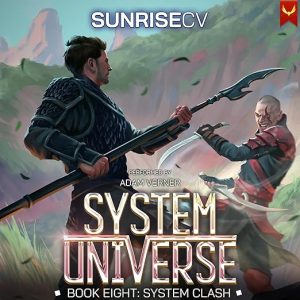
How do you speak a status window out loud? This audiobook is the eighth volume of SunriseCV's System Universe, a series its own description files under LitRPG, Isekai and Slice of Life, and LitRPG is a form built partly out of things that happen on a page rather than in a sentence: notifications, stat readouts, level-ups, the interface a character is reading while everybody else is fighting. Twenty-five hours and twenty-seven minutes of it lands here, and Adam Verner has to make a boxed message sound like a boxed message using nothing but a voice.
What We Made of It
Housekeeping comes before heroics here. Alanah has ascended, which leaves Derek with a favor still owed to Dave and a stretch of quiet in which to put his affairs in order. He spends it making Cydaria safe for the people he cares about, seeing Thomas off to the Academy, sorting crafting materials for Brandi and generally behaving like somebody tidying a house before a long trip. Only then does the adventuring resume, across another continent, through Alanah's birthplace at Linderis, into the Echoing Abyss and up against the Echoing Willow, the world boss that has haunted the Dawn Siren's dreams since childhood.
That structure is the series in miniature, and it is why the Slice of Life tag in the description is doing real work rather than decorating the pitch. A sizable share of these pages is not combat at all. It is errands, friendships, crafting and logistics, punctuated by set pieces. Readers who came for constant escalation will find the rhythm strange; readers who came because they like spending time with these people will find it the whole point.
Reactions on the page are warm and unusually specific about structure. Steinbach describes several threads that had been moving quietly in the background finally paying off, and one character in particular getting a payoff worth waiting for. ranB, who admits the earlier volumes were a good ride through unchallenging territory, thinks the plot has started growing richer here. Josh and Amanda H. simply want the next one and single out Silvi as comic relief. Steinbach and ranB are both describing a turn in the series rather than another installment.
Dissent, such as it is, comes from the four-star notice, which calls the book a popcorn read and means it as praise. That response credits the volume with closing out an early arc without stalling, tying off the loose enemies and dangling plot threads while leaving one mystery open, then adds that this is not a masterwork of English writing and that nobody came for one. It is the most clear-eyed sentence anywhere on the listing.
Why System Clash Works as an Audiobook
Adam Verner holds the credit, and the genre hands this reading a problem that has nothing to do with character voices. LitRPG prose is typographical: system messages, quest text and numerical readouts are set apart visually, and a reader's eye absorbs them as interruptions without confusing them with the story. Spoken aloud, that distinction has to be manufactured, message by message, using pitch, pace and pause alone, across a recording that runs past twenty-five hours. If you sample this one, find a passage where the System speaks and listen for whether it arrives as a different kind of text.
What makes the length worth it, for the right buyer, is exactly the leisureliness that would sink a thriller. A full day of listening buys a lot of Cydaria: the tidying, the crafting, the friendships and the long approach to a boss fight that has been waiting since a character's childhood. No notice here complains about pace, which on a book this long is the compliment that matters.
What Might Not Land
This is book eight and behaves like it. The description opens by recapping the previous volume in detail, from the ascension through the Echoing Abyss to a keepsake recovered, on the reasonable assumption that anybody reading it has been present for the first seven. Entry point disputes are live on this very page: one five-star response argues directly with another poster who stopped at book six, pointing out that the books have been improving as the author writes. Whichever side you find persuasive, the underlying fact stands, which is that this is the eighth entry and nothing here is designed to catch anyone up.
Numbers on this listing are a mess and should be discounted rather than interpreted. Three ratings sit behind a displayed average of 4.8, which no combination of three whole-star grades can produce, and five written notices sit beside those three ratings on the same page. The rating counter is a sample too small to mean anything and too small even to be internally consistent; the written notices are the only real evidence here, and they are what a buyer should read.
Not one of those five says anything at all about the recording. On a book of this size, that silence is worth naming, because the decision a listener is actually making, whether to spend a full day of attention on this reading rather than on the text, is a decision nobody on this page has reported making. Three of the five notices also predate the January 2026 audio release, and one of them describes finishing the book in a single sitting, which no listener at this runtime is doing. That pool is reacting to the written version.
Who Should Listen to System Clash
Series readers should stop reading reviews and go buy it. What the page reports, across two separate notices, is that book eight recovers ground book seven lost, ties off an arc and sets up the next, and that a long-running structure is finally showing its shape. Anyone who enjoys crunchy progression fantasy with a low-conflict domestic streak, and who wants a very large amount of it in one purchase, is the target here.
Avoid it if you have not read the first seven volumes, if you want tight plotting, or if the prospect of listening to numbers, notifications and inventory management for a full day sounds like work rather than pleasure. The four-star notice is honest about the prose, and anyone who needs sentence-level craft should take that warning seriously.
Where I land is that the format question here is genuinely open. LitRPG in audio can be a considerable pleasure, since a good reader turns the system text into something like a second character, and it can also become a wall of spoken statistics. Sample the interface passages, not the dialogue, and decide from there.
Can I start the System Clash audiobook at book eight?
Not sensibly. The description spends its opening recapping the previous volume, assumes you know who Alanah, Derek and Dave are, and treats the Echoing Abyss as shared history. One reviewer even argues the point directly with somebody who stopped at book six. Begin at book one.
How does LitRPG system text work in an audiobook?
It has to be acted rather than displayed. Status windows, stat blocks and quest notifications are set apart visually in print, so the reading must signal them through pitch, pause and pace instead. Across a recording of this length, that choice shapes the entire experience.
Can the 4.8 average from three ratings be trusted?
No, because the figure cannot be right. Three whole-star grades cannot average 4.8 under any combination, and five written responses sit beside those three ratings anyway. Treat the counter as broken, ignore the average entirely, and read the written notices, which are detailed and useful.
How much of the book is combat?
Less than the cover suggests. The description gives real space to making a city safe, seeing a character off to an academy and gathering crafting materials before any adventuring resumes, and the series is filed under Slice of Life alongside LitRPG. Expect long companionable stretches between set pieces.