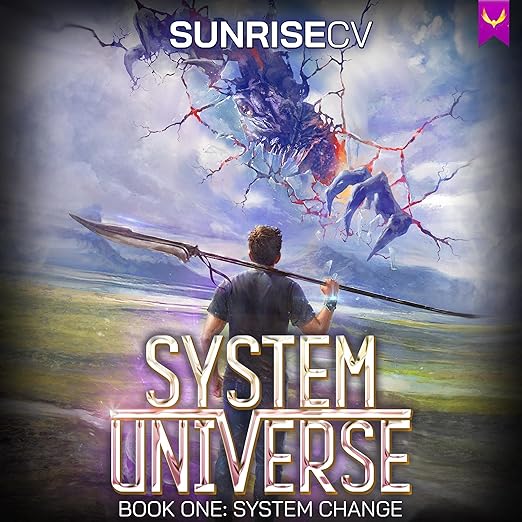
System Change: A LitRPG Adventure opens on Earth, but not the Earth of the genre's standard apocalypse. When the System came and cute bunnies became savage killing machines and Invaders arrived to claim the newly habitable planet, Derek did not panic or scramble to form alliances or race anyone for resources. He owned a cabin. He occasionally came into town for a drink and light conversation. He mostly kept to himself. After System Integration, that did not change much: he only got stronger. That character premise, an overpowered loner who has adapted to the apocalypse by leaning harder into his existing nature rather than being dramatically transformed by it, is the first of several things that distinguish this audiobook from the crowded LitRPG field. At 12 hours and 29 minutes, narrated by Adam Verner, System Change takes its time with that premise and earns the space it uses.
SunriseCV built a following in the online LitRPG fiction community before this audiobook release, and the translation to audio benefits significantly from Adam Verner's casting choices. Derek is not the kinetic, quippy, endlessly reactive protagonist that dominates many systems-and-stats narratives. He is laconic, precise, and has a settled relationship with solitude that most characters in this genre treat as a wound awaiting healing or a weakness awaiting exploitation. Verner reads that quality without embellishment, which is the right call: Derek's voice should sound like someone who does not need to be interesting to others because he is genuinely not interested in others, and forcing warmth into that register would undermine the character from the first chapter.
One reviewer described System Change as a different and very enjoyable LitRPG novel, specifically for readers growing tired of the usual entries in the genre. The description is nothing special, they noted accurately, but the execution departs from convention in ways that matter for the listening experience. The combination of LitRPG apocalypse, isekai, and slice-of-life elements is identified in the synopsis itself, and that hybrid actually functions in the narrative rather than being a genre label applied retrospectively to claim broader appeal. The slice-of-life quality, Derek's competence in the absence of manufactured drama, and the unhurried accumulation of capability without the genre's usual frantic energy, is the element that makes this first book distinctive among its peers.
Another listener has read the book three times, each time finding it as fun, engaging, and exciting as the first. That response is worth noting for its specificity: LitRPG series are often front-loaded with novelty that fades on rereading, and the repeated revisiting suggests that SunriseCV has built something with genuine texture and character investment rather than just a compelling opening hook. The mathematics criticism, that stat calculations do not always add up precisely in the early sections, is a genuine minor irritant for listeners who engage closely with the numerical systems that LitRPG fiction uses as core grammar, and it is documented clearly enough that buyers should factor it in.
Why It Works in Audio
Adam Verner's narration suits the book's deliberate pacing in ways that matter specifically for the audio experience. LitRPG audiobooks can be testing in the hands of narrators who push the stats-and-leveling sections into a breathless clip, treating numbers as action beats. Verner resists that impulse consistently. The system notifications, level-ups, and attribute checks land at a pace that allows the listener to process them without losing the narrative thread, which is a specific technical skill that not all audiobook narrators bring to stat-heavy genre fiction. The patience of his delivery is the right choice for a protagonist defined by patience.
The 12-hour runtime is appropriate for a first volume in a series designed to build an entire universe over multiple entries. The worldbuilding in System Change is cumulative rather than front-loaded: the System Universe is revealed through Derek's experience of it rather than through orientation-session exposition dumps. For listeners who prefer environmental storytelling and character-led discovery over extensive preamble, this approach will feel natural and respectful of their engagement. The transition from Earth to the new world that occurs in the book's second half opens a significantly larger scope that the System Universe series will continue to develop.
Things to Know Before Starting System Change: A LitRPG Adventure
This is the first book in the System Universe series and functions as an origin story for Derek's trajectory from established Earth loner to something considerably more. The plot of this first volume resolves sufficiently to be a satisfying listening experience, but the universe SunriseCV is building clearly extends well beyond what any single installment can contain. Listeners drawn in by this first entry should know they are entering a series designed for investment across multiple volumes rather than a standalone narrative that closes completely.
The internal math issue raised by one reviewer is a genuine minor irritant for listeners who engage closely with the stat systems that LitRPG fiction uses as a core grammar. If precise numerical consistency is important to your enjoyment of the genre, the early sections where this most visibly occurs may briefly pull you out of the story. Most readers have found this an ignorable annoyance alongside the genuine pleasures the book offers, and the reviewer who raised it described the overall experience as very enjoyable despite the frustration.
Who Will Get the Most From It
LitRPG listeners who have grown tired of hyperkinetic protagonists and power-fantasy narratives with little interior life will find Derek's particular brand of quiet competence a genuine and distinctive relief. Fans of isekai who want the genre's sense of discovery and world displacement without the more generic protagonist tropes will appreciate where the book goes after its Earth sections conclude. Listeners new to LitRPG who want to understand the genre's appeal without starting with its most chaotic or numerically overwhelming examples will also find this a surprisingly accessible entry point. Those who prefer the genre at its most frenetic, with rapid leveling, constant conflict, and a protagonist perpetually on the edge of catastrophe, should calibrate their expectations accordingly before the first chapter.
At a Glance
- Narration: Adam Verner is well-cast for the solitary Derek, handling the laconic loner-in-a-system-changed-world voice with dry, unhurried confidence.
- Themes: Self-reliance versus community, isekai transition, gamification of survival
- Mood: Immersive and slow-burning, with bursts of action that reward patient listeners
- Verdict: An audiobook that delivers a genuinely fresh spin on the LitRPG apocalypse premise, particularly for listeners who are tired of the genre's more frenetic character types.