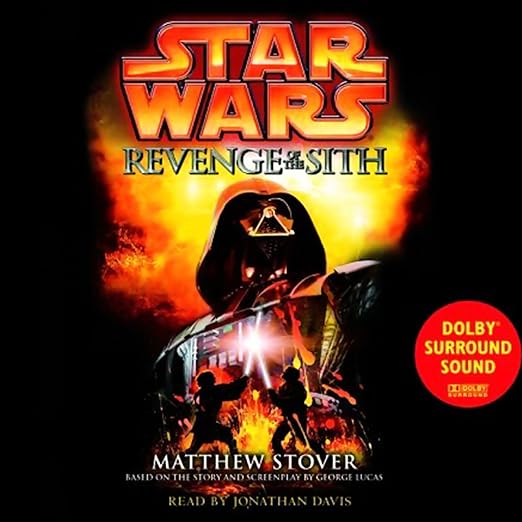
Quick Take
- Read by: Jonathan Davis delivers a commanding performance that honors the novel's rhythmic prose without impersonating the film cast
- At its heart: The psychology of corruption and choice, the failure of institutions to protect those who serve them, love as vulnerability
- Vibe: Dark and gathering, building toward tragedy with genuine emotional weight
- Short version: For Star Wars fans who found the film's portrayal of Anakin's fall emotionally underpowered, this audiobook offers the interior depth the screenplay could not provide.
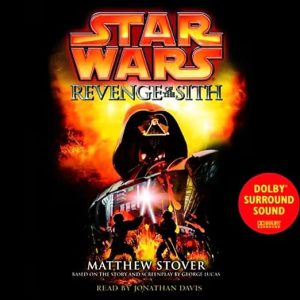
Matthew Stover's novelization of Revenge of the Sith reached me first as a recommendation from a film scholar who argued it was the most psychologically sophisticated Star Wars text ever written. That claim lodged itself in my memory for years. When Jonathan Davis's audiobook performance of the novel came across my desk, I made a point of listening to it alongside a rewatch of the film. What I found was that the comparison does not diminish the audio version. It elevates it. The novel, and by extension this audiobook, does something the movie genuinely cannot: it gets inside Anakin Skywalker's head at the moment of his greatest failure, and the result changes how you read the entire prequel trilogy.
Stover's novelization is based on George Lucas's screenplay but expands substantially beyond what appears on screen. The Clone Wars are still ongoing when the story opens, Anakin is secretly married to Padme Amidala, and Darth Sidious is drawing tight the trap he has spent years building. The audiobook, running at five hours and two minutes, compresses the novel's considerable interior monologue into something kinetic and emotionally urgent. This is the third entry in the Star Wars Movie Novelizations series, and while it functions as the culmination of the prequel arc, the audiobook stands reasonably well on its own for any listener familiar with the film's events.
Is Star Wars Episode III: Revenge of the Sith Worth Your Time?
Jonathan Davis is one of the most reliable audiobook narrators working in genre fiction, and his performance here ranks among his best Star Wars work. He handles the novel's shifting registers, from the action sequences of the opening space battle to the increasingly claustrophobic psychological sections as Anakin moves closer to his choice, with genuine command. Davis does not impersonate the film actors, which is the right call. He creates his own vocal interpretation of these characters, and the result is a listening experience that feels distinct from the movie rather than derivative of it. Reviewers who came to the audiobook already familiar with Stover's prose noted that Davis honors the rhythmic, almost incantatory quality of certain passages, including the famous opening chapter that describes Anakin and Obi-Wan as something beyond human. That opening alone justifies the audiobook format for this particular text.
The Best Parts of Star Wars Episode III: Revenge of the Sith
Stover's contribution to the Star Wars novelization canon is exceptional precisely because he takes the prequel's dramatic premise seriously. The film version of Anakin's fall was always hampered by the screenplay's inability to make the emotional logic feel earned. Stover solves this problem by giving Anakin a fully realized internal life: his love for Padme, his fear of loss, his resentment of the Jedi Council's condescension, and Palpatine's manipulation of every one of these vulnerabilities. Listeners who have only experienced the story through the film will find the audiobook reframes the central tragedy in ways that stay with you long after the final chapter. One reviewer described the novel as the definitive version of the story, and that claim has genuine merit. The audiobook format suits this material particularly well because Stover's narration is designed to be heard as much as read. Some of the most striking passages have a spoken-word quality that Davis brings out with precision and emotional intelligence.
Before You Commit to Star Wars Episode III: Revenge of the Sith
Listeners entering from the film will notice immediately that Stover has added substantial material that does not appear on screen, including a more developed treatment of Anakin's relationship with Count Dooku, extended Clone Wars context, and interior sequences that dramatize Palpatine's seduction of Anakin as a slow-motion psychological operation rather than a single persuasive conversation. The audiobook's pacing in its first half is slightly faster than the emotional weight of the material might suggest, but this compression works in favor of the format. By the time the Order 66 sequence arrives and Anakin's transformation completes, the audiobook has built genuine dread. One caveat worth noting: the runtime of just over five hours reflects a compressed adaptation rather than an unabridged reading of every page of the full novel. Listeners should approach it as a performed audiobook experience rather than a complete text equivalent, and adjust expectations for the density of interior content accordingly.
Should You Listen to Star Wars Episode III: Revenge of the Sith?
Fans of the prequel trilogy who have wanted to understand Anakin's turn to the dark side with more psychological depth than the film provides will get exactly that here. Listeners who enjoy Jonathan Davis's genre work and want to hear him at his most textually rich will find this a strong entry. General science fiction fans who appreciate novelizations that add genuine literary value to their source material, rather than simply transcribing the screenplay, will find Stover's version rewarding and distinct. Skip this audiobook if you have no familiarity with the Star Wars universe and expect a self-contained story; the novel assumes knowledge of the broader galactic conflict and its major players. It works best for listeners who have at least seen the film, and it rewards those who return to it after watching the prequel trilogy again with fresh eyes. Science fiction listeners who value novelizations as literary objects rather than tie-in products will find Stover's version one of the rare examples that justifies the format on its own terms.
Is this audiobook worth listening to if I've already seen the film multiple times?
Reviewers who know the film well consistently describe the audiobook as the version that finally makes Anakin's turn emotionally coherent. Stover's interior monologue and expanded scenes add psychological depth the film's visual format cannot provide. Multiple reviewers called it the definitive version of the story.
How does Jonathan Davis handle the audiobook narration for characters so associated with specific film performances?
Davis creates his own vocal interpretations rather than impersonating the film actors, which reviewers found to be the right choice. His delivery honors the novel's more literary passages, including Stover's famous chapter-opening descriptions, with precision and emotional control throughout.