Quick Take
- Narration: Kevin Hung-Liang reads clearly and without affectation, though the writing’s unevenness occasionally makes even competent narration feel choppy.
- Themes: Masculinity and emotional intelligence, self-esteem without external validation, moving through shame
- Mood: Well-intentioned and motivational, uneven in execution
- Verdict: The book addresses a real gap in men’s emotional wellness literature, but writing quality issues flagged by critical reviewers are genuine enough to temper the recommendation.
There’s a real problem that this book is trying to solve, and I want to start there. The self-help section has historically been written by women for women, with men either excluded or repositioned as supporting characters in someone else’s growth narrative. A book specifically designed to address self-esteem, emotional intelligence, and the internal costs of traditional masculinity for male readers fills a genuine gap. That recognition makes it harder to report that this particular title doesn’t quite deliver on what it promises.
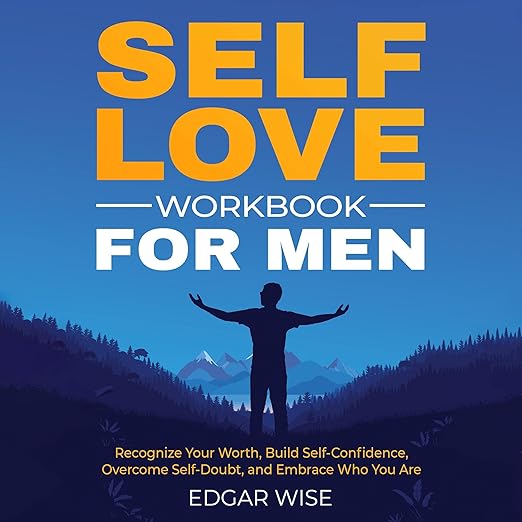
Self-Love Workbook for Men arrives as Book 2 in a series called Mental and Emotional Wellness for Men by Edgar Wise. It runs just over three hours, which is short for its stated ambitions. The synopsis is candid about what it’s attempting: helping men build self-worth without relying on external validation through achievement, sex, or financial status; learning to accept flaws rather than perform competence; developing compassion toward themselves and others. These are genuinely valuable goals. The question is whether the book achieves them.
The Gap Between Intention and Execution
One critical reviewer noted that the text feels choppy and in need of basic editing, with dialogue sections that don’t ring true and masculinity descriptions that lean on stereotype rather than nuance. That assessment aligns with what I found. The book cycles through its ideas at a pace that sometimes feels like a list being read rather than an argument being made. The workbook exercises, which the title prominently promises, are present at the end of each chapter but are slim enough that calling this a workbook is, as the same reviewer pointed out, a meaningful overstatement. In audio format, workbook exercises have their own inherent limitations since you can’t write in a book you’re listening to. But even allowing for that, the depth of the reflective material is limited.
What the book does offer, and where it earns its better reviews, is a basic dismantling of the emotional suppression model most men were handed growing up. The argument that men need emotional vocabulary and self-compassion as much as anyone is made clearly and without condescension. Readers who haven’t encountered this framing before will find genuine value in it, even if the presentation is rougher than it might be.
Kevin Hung-Liang and the Narration Question
Kevin Hung-Liang’s narration is neutral and clean. He doesn’t oversell the material or introduce warmth the writing hasn’t earned. In a stronger book, that restraint would be a virtue. Here it means that the writing’s weaknesses are fully audible without a charismatic narrator smoothing them over. For listeners who find the content useful regardless of craft, that won’t be a deal-breaker. For those who need the prose itself to hold them, the three hours and fifteen minutes may feel longer than they are.
Where This Sits in a Crowded Field
The men’s emotional wellness space has become more populated in recent years. Works by Terry Real and others who write about relational empowerment and vulnerability for men have raised the bar considerably. Self-Love Workbook for Men is a shorter, simpler entry point, which isn’t inherently wrong. A book that reaches men who wouldn’t pick up a 300-page therapy-adjacent text has its own value. But the uneven writing means I’d hesitate to recommend this as a first or primary resource without flagging the limitations clearly.
Who Should Listen
Men who are early in their journey with emotional self-awareness and who want a brief, accessible introduction to self-compassion and masculinity critique may find this useful as a starting point. Readers who’ve already done significant work in this area, or who need polished and substantive writing to stay engaged, will likely find it frustrating. If you’re buying this for yourself or recommending it to someone else, knowing that the workbook element is lighter than the title suggests will help calibrate expectations.
Frequently Asked Questions
Is this actually a workbook with substantive exercises, or is it more of a narrative self-help book?
It includes exercises at the end of each chapter, but they’re fairly minimal. One critical reviewer explicitly flagged this: the title overpromises on the workbook element. In audio format, written exercises have limited utility anyway, so the practical reflection components are lighter than you might expect.
Do you need to listen to Book 1 in the Mental and Emotional Wellness for Men series first?
No. Book 2 is self-contained and covers self-esteem, self-compassion, and emotional awareness as standalone topics. There’s no narrative continuity requiring familiarity with Book 1.
How does this book handle masculinity: is it critical of traditional masculine norms, or does it work within them?
It’s gently critical. The premise is that traditional masculine conditioning, meaning the suppression of emotion and reliance on external validation, is actively harmful to men. But the tone is not confrontational. It frames the shift toward self-compassion as expansion rather than rejection, which will land better with readers who aren’t already hostile to conventional masculinity frameworks.
Are the critical reviews about writing quality a significant problem for audio listeners specifically?
Yes, potentially more so than for print readers. The choppiness one reviewer flagged is something a print reader can skim past; in audio, you hear every awkward transition. Kevin Hung-Liang’s narration is competent but can’t edit the underlying text. Listeners who are sensitive to prose quality should factor that in.