Before You Press Play
- Performance: Foley takes the microphone for his own story, and a memoir built on timing needs exactly that.
- What it covers: forced retirement and chronic injury, the professional Santa subculture, fatherhood, reinvention after fame
- Feel: Warm and self-mocking, with a genuine ache underneath
- Our call: A Christmas memoir wearing a wrestling jacket, and it earns the sentiment it asks for.
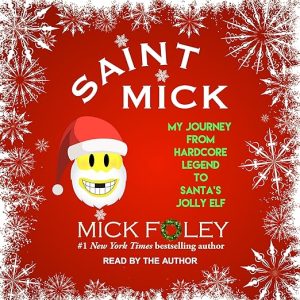
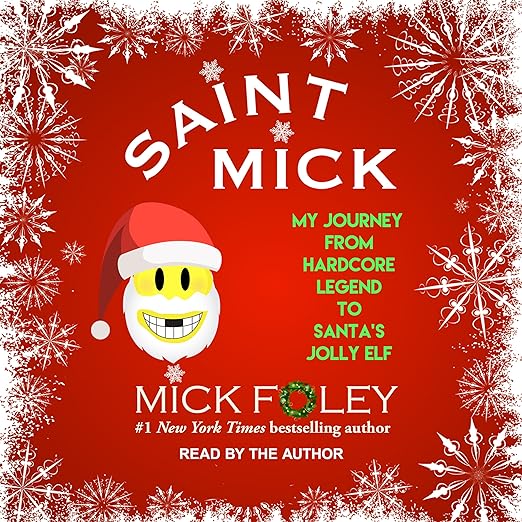
A wrestling memoir about Santa Claus sounds like a stunt, and this audiobook is not one. Mick Foley spent a career taking punishment for an audience, the bill came due in a neurologist's office instead of a ring, and what he did next was become Santa: not dress up, as the copy insists, but become. Five hours and thirty-one minutes, read by the man it happened to. The book that comes out of that premise is funnier and sadder than the cover suggests, and it is the rare sports memoir where the third act involves a beard, a red suit and a line of children.
The Wrestling Career Is the Runway, Not the Flight
Christmas is the through line, and one five-star entry reports finishing the whole thing in a single sitting, promising that you will laugh, smile and maybe get a little misty while Foley works through his love of everything Yuletide alongside some considerably heavier subjects. That is an accurate account of the tonal range. The heavier material is the forced end of a career and the medical reason for it, and Foley treats both without self-pity, which is harder to do in your own voice than on the page. The comedy is the same comedy that made him famous, self-deprecating to the point of masochism, and it lands.
Filed under sports, tagged sports, and mostly not a sports book: that mismatch is the one piece of housekeeping worth flagging before you buy. The wrestling career is the runway, not the flight. What the book actually documents is the Santa subculture, an organized world with standards, etiquette and its own capacity for scandal, entered by a man who worried about being thrown out of it for letting his Santa get run over by a car on television. A listener arriving for hardcore wrestling stories will get some, and then will get a memoir about Christmas.
Why Foley Had to Read His Own Pauses
Retirement is the wound underneath all of it, and the most perceptive response on the page says so directly: Foley always wore his heart on his sleeve, the diagnoses shook him to his core, and losing the nightly roar of thousands of people left a hole that had to be filled with something. Put that way, the Santa project stops being a novelty and becomes a straightforward account of what a performer does when the performing stops. Anyone who has watched a parent or a colleague retire badly will recognize the shape of the problem long before the red suit shows up.
Norah Jones turns up as the unlikely elf, which is the kind of detail the description leads with for good reason, and the book is full of them: the drastic measures taken to preserve the magic for his own young children, the travels to meet children who needed some, the internal politics of a community that takes its craft seriously. Five and a half hours is exactly the right length for this. Long enough for the medical story and the Christmas story to connect, short enough that the sentiment never has time to curdle into a lecture about the meaning of the season.
Foley reads his own memoir, which for material built on a performer's timing is the casting that counts. The jokes are constructed the way a promo is constructed, with the self-mockery landing on a beat, and the serious passages concern his own body and his own children. Nobody else was going to get the pauses right in the section about the neurologist. Whatever you think of the writing, the decision to put the author behind the microphone is the correct one here.
Santa's Existence Gets Settled Gently and Irrefutably
Facts are not really the point, and one response makes the case explicitly by quoting a line from another author about never letting the facts get in the way of the truth, then arguing that the existence of Santa is settled gently and irrefutably in these pages. If that framing charms you, this book is going to work. If a sincere adult argument about Santa Claus makes you want to leave the room, no amount of wrestling anecdote will save the experience for you. The sentiment is unironic and it is load-bearing.
Counting the written column is worth a moment too. Five entries are attached to this record, and the lowest of them is a four-star note reporting that the book was bought as a gift and that the recipient is enjoying it, which grades a transaction and not a text. That leaves four substantive responses supporting a 4.7 average across eighty-seven grades, all of them from people who already knew who Foley was. Not one of them says a word about the recording, so weigh the enthusiasm accordingly.
The Neurologist's Office as the Whole Book's Hinge
Wrestling fans of a certain vintage will need no persuading, and they are not the only audience. The book suits anyone who likes a career-ending story told with jokes, anyone curious about the professional Santa world as a genuine subculture, and parents looking for a Christmas listen that has adult weight without being cynical about the holiday. December is its natural season, and five hours means you can finish it in the week before the twenty-fifth without losing an evening.
Give it a miss if you want the hardcore years in detail, since the ring material is background to a different story, and give it a miss if sincerity about Christmas reads to you as saccharine. What stays with me is the neurologist's office as the hinge of the whole book: a career that ended in a diagnosis, and a man who went out and found several thousand more children to perform for.
How much wrestling is actually in this audiobook?
Less than the sports filing suggests. The career supplies the opening premise and the medical diagnoses that end it, but the bulk of the book covers becoming Santa, the community around that work, and the children Foley meets. Treat the wrestling as context for a Christmas memoir instead of the subject.
Does the audiobook explain the Santa Ambassador role?
It does, at length. One response arrived from a documentary about that world and wanted the backstory, which is precisely what the book supplies: the training, the etiquette, the standards of the Santa community, and the reasons a former wrestler took the work seriously enough to worry about being expelled from it.