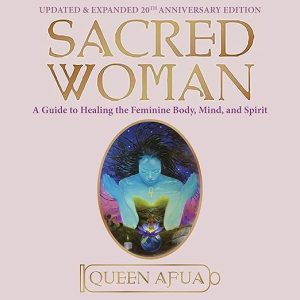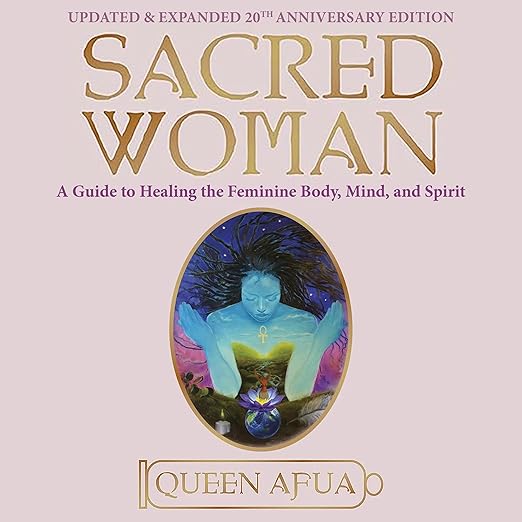
Quick Take
- Narration: Camille Mazant narrates the main text with care and presence; Queen Afua’s own introduction adds immediate authority and intimacy to the recording.
- Themes: Ancestral healing, womb wellness, KMT temple teachings and feminine spirituality
- Mood: Ceremonial, deeply personal, and demanding of the listener’s active participation
- Verdict: Not background listening, Sacred Woman requires and rewards genuine engagement from readers ready to work.
I finished the introduction to Sacred Woman late on a Sunday evening and sat with it for a while before moving on. Queen Afua narrates it herself, and her voice carries the kind of weight that makes you feel the difference between reading about a tradition and being spoken to by someone who has lived inside it for decades. The main text, narrated by Camille Mazant, holds that register throughout the 28-hour runtime, which is an accomplishment. This is a long audiobook, and it earns its length.
Sacred Woman is not easily categorized. It draws on KMT temple teachings, ancestral African healing practices, plant-based medicine, affirmations, and rites of passage frameworks to build what Queen Afua describes as a blueprint for healing women’s bodies and souls. Jada Pinkett Smith is quoted in the synopsis describing it as one of the first books that helped her start practices focused on body and spirit as one. That framing is accurate: this is a book that treats the physical and spiritual as inseparable, and it asks readers to engage with both simultaneously.
Our Take on Sacred Woman
The architecture of the book is ceremonial rather than linear. Queen Afua moves through gateways, each addressing a different dimension of the self: the womb, the mind, the voice, the relationships we call in, the spaces we inhabit. Within each gateway she offers meditations, affirmations, dietary guidance, and ritual practices. This is not a book you consume; it is a book you work through, ideally slowly and with intention.
One reviewer noted that the soul has to be ready to do this work, and I think that observation is the most useful orienting note for prospective listeners. Sacred Woman does not work as ambient listening or as casual self-help. Its demands are substantive, and the rewards correspond to the effort brought to it. Several reviewers described feeling blown away by the third chapter, with one noting she had never considered these dimensions of her own body and spirit before encountering the text. That response points to the book’s capacity to open territory that mainstream wellness culture rarely addresses.
Why Listen to Sacred Woman
The audio format serves this book well in specific ways. Affirmations are meant to be spoken and heard, not silently read. The meditations that appear throughout the gateways have a different texture when delivered by a narrator who treats them as invocations rather than as text. Camille Mazant clearly understood the material she was working with, and her pacing reflects that understanding. Queen Afua’s presence in the introduction, brief as it is, anchors the entire recording in the source of the work.
The companion PDF, available with the Audible purchase, includes material that supplements the audio. Given the density of practical instruction across the gateways, having access to written versions of the affirmations and ritual guidance is genuinely helpful for listeners who want to implement what they hear.
What to Watch For in Sacred Woman
The theological framework here is specific. The book works within KMT tradition and a cosmology centered on Black feminine spirituality and ancestral lineage. This is not a generic wellness framework, and it is not intended to be. Listeners outside that lineage can engage thoughtfully and learn a great deal, but the book speaks most directly and most powerfully to its intended audience. Some of the dietary guidance is specific and potentially challenging for listeners managing health conditions, and it is worth noting that this is not a substitute for medical care.
At 28 hours, this is a significant commitment. The gateway structure means there are natural pauses built in, and treating it as a practice rather than a title to complete quickly is probably the more useful approach.
Who Should Listen to Sacred Woman
Women who have been drawn to ancestral healing practices, African spiritual traditions, or holistic approaches to womb and feminine wellness will find this one of the most substantive audio companions available. Those looking for a quick self-help listen or a non-denominational wellness overview should look elsewhere. This book rewards readers who arrive ready to be changed by it.
Frequently Asked Questions
Does Camille Mazant’s narration work for material this ceremonial in nature?
Yes, Mazant handles the meditations, affirmations, and ritual passages with real attentiveness. Queen Afua narrates the introduction herself, which sets the tone and authority for everything that follows. Together they create a recording that feels like a guided practice rather than a performance.
Is this book only for Black women, or can others read it meaningfully?
The book is explicitly rooted in KMT tradition and speaks most directly to Black women’s ancestral healing. Others can engage respectfully and learn from it, but they should approach it as guests to a tradition rather than as its primary audience.
How does the gateway structure work in audio format?
Each gateway covers a different dimension of healing and includes meditations, affirmations, dietary practices, and ritual guidance. The audio format works well for the affirmations and meditations, which are meant to be spoken and heard. The companion PDF helps listeners track the practical instructions that benefit from a written reference.
Is Sacred Woman a single read-through book or something to return to over time?
Multiple reviewers describe it as a long-term practice companion rather than a linear read. Its structure is designed for repeated engagement, and the rituals and affirmations are intended to be practiced, not simply listened to once.