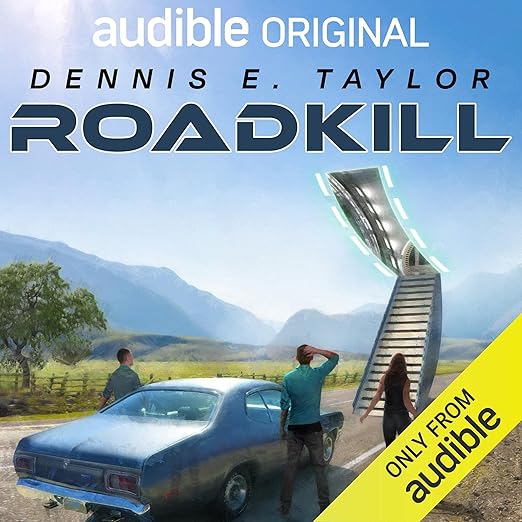
- Read by: Ray Porter is completely at home with Dennis E. Taylor's comedic science fiction, delivering the snappy dialogue and the AI character Sheldon with the dry wit the material demands.
- At its heart: Reluctant heroes, alien conspiracy, found family
- Vibe: Fast, funny, and surprisingly warm
- Short version: Taylor and Porter together have produced something that scratches the same itch as the Bobiverse series while standing entirely on its own terms.
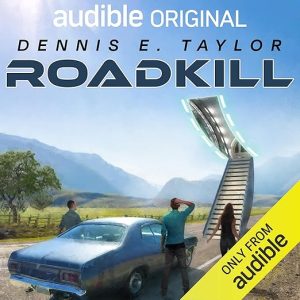
Dennis E. Taylor and Ray Porter are, at this point, one of science fiction audio's more reliable creative partnerships, and Roadkill is proof that the collaboration can survive a completely different kind of project from the Bobiverse. Jack Kernigan is twenty-something, recently expelled from MIT, back home in Ohio working for the family delivery business, and living what the audiobook cheerfully describes as a bad life. Then his truck hits something large, invisible, and emphatically not from this planet, and what begins as a particularly humiliating workday becomes a race to prevent the end of the human race. This audiobook delivers that premise with the same comedic timing and genuine warmth that made the Bobiverse series so satisfying to listen to.
Porter is the right narrator for this material, and not simply because he is already established as Taylor's voice in readers' minds. He understands how to deliver comedy that lives in understatement, where the funniest line arrives in the same flat tone as the surrounding drama. The AI character Sheldon, described in the synopsis as rather snippy, is exactly the kind of character that can either make or break an audiobook depending on the narrator's timing. Porter makes it work. Sheldon lands as genuinely funny without tipping into the tiresome wise-cracking AI archetype that has become a cliche in the genre.
For listeners coming from the Bobiverse series, the natural question is how this compares. The honest answer is that it's different in ways that matter. Bobiverse is vast in scope, concerned with centuries of human expansion, the philosophical questions of consciousness and identity, and the deep structure of galactic civilization. Roadkill is a tighter, more contained story: three young people, one conspiracy of galactic proportions, and the question of whether wit and caffeine can substitute for actual competence when the fate of a species is involved.
Taylor's comedy is at its best here when it is treating the premise seriously. The alien threat is not played for camp, and the stakes are handled with enough genuine weight that the humor doesn't undermine the tension. One reviewer described it as fun, fast-paced, witty, and cheesy at times, which is accurate, but the cheesiness is earned rather than lazy. Taylor knows exactly how ridiculous his setup is and leans into that self-awareness without letting it collapse into parody. Another reviewer who had dropped whatever they were reading to start this one described flying through it, which is a useful index of the audiobook's pace.
Why Roadkill Works as an Audiobook
The audiobook format is particularly well-suited to Taylor's dialogue-heavy, quip-rich prose. Reading Roadkill on the page, the jokes land, but Porter's delivery adds a dimension of comic timing that the text alone can suggest but not fully execute. Sheldon's observations about human inadequacy, Jack's internal negotiations about being in over his head, Natalie and Patrick's reactions to increasingly improbable situations, all of it plays better when heard than when read.
At 8 hours and 58 minutes, this is a single-weekend audiobook, and the pacing supports that kind of concentrated listening. Taylor doesn't waste chapters on setup, and Porter's delivery keeps the energy consistent across the full runtime. The three leads, Jack, Natalie, and Patrick, are given enough interiority that the listener actually cares whether they survive, which is not something every action-adjacent SF novel manages. The friend dynamic is observed with genuine affection, and it is what elevates the audiobook above pure genre exercise.
Weak Spots in Roadkill
The social media influence angle that one reviewer described as heavy use of the social-media-controls-the-world meme is present, and listeners who find that particular contemporary anxiety overcrowded in fiction may notice it. Taylor uses it as a piece of the conspiracy infrastructure rather than as a primary thematic concern, so it functions as texture rather than thesis. Whether that is sufficient will depend on the listener's tolerance for the motif.
The conspiracy theory territory the book enters in its second half is also worth knowing about in advance. The plot requires some suspension of disbelief about how governments and global institutions work, which is a standard genre convention rather than a Taylor-specific failing, but listeners who prefer their science fiction to engage more rigorously with institutional reality will notice the corners being cut. Taylor's strength has always been character warmth and comic momentum rather than political realism, and Roadkill operates squarely within those strengths.
This is a standalone novel with no sequel obligations, which is its own argument for picking it up. The story resolves completely and the ending is satisfying without being tied to a franchise structure that might dilute it.
The Right Listener for Roadkill
Bobiverse fans are the obvious audience, and they will find a familiar sensibility delivered with characteristic Taylor craft. Listeners who enjoy comedic science fiction in the vein of John Scalzi or Douglas Adams will feel at home, though Taylor's comedy is warmer and less satirical than either of those comparisons suggests. Anyone who has wanted a science fiction audiobook that is genuinely funny without sacrificing stakes should find this exactly what they are looking for.
Listeners expecting the philosophical depth of the Bobiverse series should adjust expectations: this is a lighter, faster book with different ambitions. But within those ambitions, it is executed with considerable skill, and Ray Porter's narration ensures it is a pleasure to spend nine hours in Jack Kernigan's chaotic orbit. For listeners who have been looking for something with Taylor's specific combination of wit and warmth in a more self-contained package than the Bobiverse provides, Roadkill is precisely that book.
Questions Listeners Ask
Does Ray Porter narrate the Roadkill audiobook?
Yes, Ray Porter narrates. His familiarity with Taylor's voice and comedic timing, developed through the Bobiverse series, translates well to this different kind of story. His delivery of the AI character Sheldon is a particular highlight.
How does Roadkill compare to Dennis E. Taylor's Bobiverse audiobooks?
Roadkill is lighter and more contained than the Bobiverse series. It doesn't share the grand multi-century scope or the philosophical questions about consciousness that define that series, but it delivers the same comedic warmth in a faster, more accessible package.