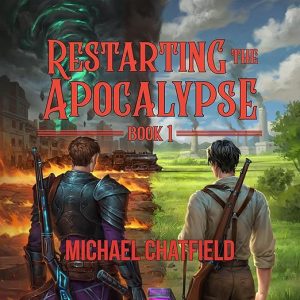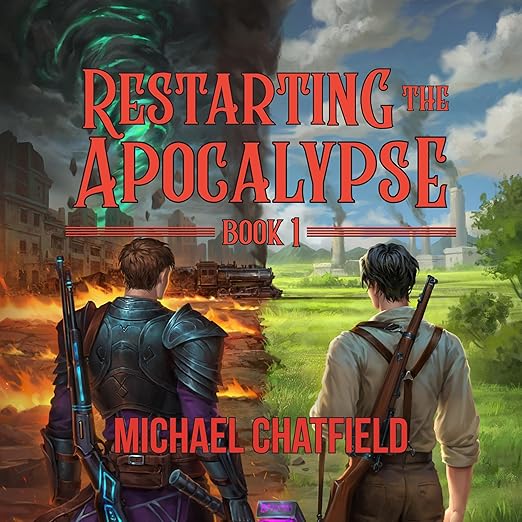
The regressor subgenre of LitRPG has a particular problem: it is hard to make characters feel genuinely at risk when they already know how everything goes wrong. Michael Chatfield's Restarting the Apocalypse solves this by grounding the time-sent veterans in something that does not transfer across the reset. Len and Rick have tactical knowledge and combat experience and the full map of the apocalypse, but the system is initializing fresh, mana is just starting to spread, and the social and political structures they need to influence are still intact and resistant to two strangers who know too much. The knowledge is an asset, but it is not a cheat code.
I picked this one up on a long run, a sixteen-hour audiobook is perfect for week-long morning commutes, and found myself thinking about it during work hours, which is usually the sign that a book has done something right. The buddy dynamic between Len and Rick is the engine of the book. They have fought together, lost together, and buried the same friends. Their shorthand is the kind you can only develop through shared catastrophe. Chatfield, who built a similar dynamic in his Ten Realms series, clearly understands that two competent people working together is inherently more interesting than one person being exceptional alone.
A Closer Look at Restarting the Apocalypse
The book's greatest strength is its insistence on consequence. The synopsis is explicit: no cheats, no plot armor, just two men fighting to rewrite the end of the world. That is not just marketing language, it reflects a genuine structural commitment. When Len and Rick make a choice, they live with the outcome. The crafting system, which one reviewer singled out positively as a steampunk-inflected element that adds texture to the worldbuilding, requires actual investment rather than instant gratification. The progression feels earned.
One reviewer noted editing issues and suggested the book needed more work before release. Others found it a solid read that worked despite rough edges. On audio, the narration provides some insulation from manuscript-level problems, and the story's bones are strong enough that structural weaknesses in the prose become less distracting.
What Makes Restarting the Apocalypse Worth Hearing
Gary Furlong is a steady, reliable presence in LitRPG audio, and he is the right choice for this material. He keeps Len and Rick distinct without exaggerating the contrast between them, they are both veterans, both competent, both formed by the same catastrophe, and Furlong's characterization reflects that shared foundation. The dialogue between the two leads, which is where the book's personality lives, flows naturally in his delivery. At sixteen hours the book sustains its momentum without padding, which is a consistent strength in Chatfield's work.
One reviewer compared the series to Ten Realms and expressed hope that the buddy focus would not be lost as the cast expanded, a concern rooted in what happened with that series. For this first volume, the focus stays tight. The scope expands in interesting ways (villains from beyond the world, larger political canvas) but the Len-and-Rick relationship remains the narrative center.
Things to Know Before Starting Restarting the Apocalypse
The book has been revised from an initial draft, one reviewer who caught the early version noted that the scene order and scene density changed significantly between versions. The audiobook reflects the revised form, which is fuller and more developed. The scope is described as much larger than initial readers expected, with external threats setting up long series potential.
Chatfield's prose can run dense with weapons and gear description, one reviewer found those passages slower going. For readers who love deep crafting systems, this is a feature. For those who want story momentum to stay unbroken, it is something to know going in.
Who Michael Chatfield Is Writing For
LitRPG readers who prefer regressor time-travel premises over pure isekai, buddy-protagonist dynamics over lone-hero narratives, and deliberate crafting-based progression over instant power will find this a well-matched read. Michael Chatfield readers from the Ten Realms era who want a similar dynamic with higher external stakes will be comfortable here. Listeners who want clean, light fantasy without grimdark texture should look elsewhere, this book earns its description as gritty.