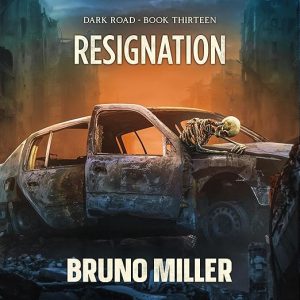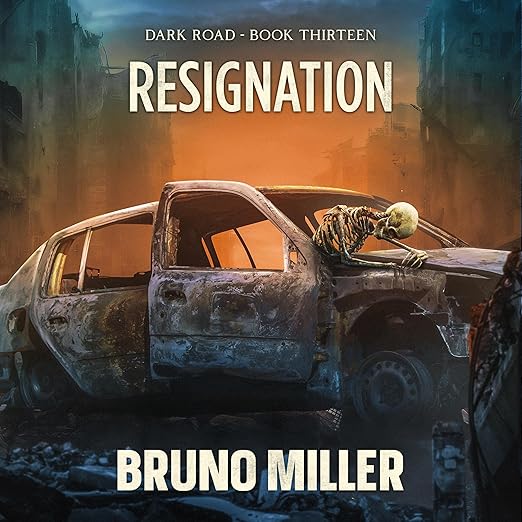
I picked up Resignation on a weeknight when I had exactly the right amount of tired for post-apocalyptic fiction: too worn out to read, not ready to sleep, wanting something that would carry me without requiring much emotional investment. That is almost exactly what Dark Road book 13 delivered, and I mean that as a qualified compliment. Bruno Miller writes survival fiction that earns its repetition through consistency rather than reinvention. By this deep into a thirteen-book series, you know what you are getting, and what you are getting is solid.
The premise of this particular installment centers on the fallout from Martin's midnight theft of the group's supplies, an act of cowardice that leaves Ben and the survivors with less food, less trust, and more ground to cover through a brutal heat wave on the road toward Durango. Miller's epigraph, that courage is going on without having the strength to go on, functions as both the book's thesis and its honest admission of what survival fiction is really about: repetitive, exhausting, unglamorous endurance rather than heroics.
What We Made of It
What Miller does well here, and what reviewers consistently praise across the series, is keeping the stakes grounded. There is no secret military compound, no convenient cache of perfectly maintained weapons, no ex-special-forces protagonist who can disarm five enemies with a shoelace. Ben is a regular guy making difficult decisions under worse circumstances, and reviewer Gerry put it clearly after binge-reading through book 13: this is the kind of post-apocalyptic fiction you can actually believe. One reviewer flagged that Miller's geographic details about Missouri feel occasionally off, which is a minor annoyance but not a dealbreaker for a series this invested in character over cartography.
The betrayal thread involving Martin is handled with psychological authenticity. Ben cannot simply let it go, and Miller does not pretend he can. The lingering resentment affects decisions, colors interactions, and creates the kind of friction that makes the group feel like actual people rather than an action-movie ensemble. That emotional realism is what separates Dark Road from the bulk of its genre neighbors. Miller earns his character dynamics across the long haul of thirteen books, and Resignation does not squander that earned capital.
Andrew Tell's narration is functional and consistent. He does not bring the kind of interpretive showmanship that transforms a good book into a great listening experience, but he also does not get in the way of it. For a series this long, that steadiness is genuinely valuable. You recognize voices, you settle into the rhythm, and the narration becomes part of the listening routine rather than a source of friction.
The clean-read approach Miller takes, noted explicitly by reviewer janice d, makes this accessible to listeners who want tension and survival drama without graphic violence or profanity. That is a meaningful editorial choice in a genre that often defaults to brutality as shorthand for stakes. Miller earns his stakes through scarcity and exhaustion instead, and the result is a series that carries a demographic range broader than most post-apocalyptic fiction.
What to Watch For in Resignation
The heat wave element is more than atmospheric texture. Miller uses the relentless heat to apply pressure on everything: the timeline, the group's physical condition, the rationing of water, the decision-making quality of tired, dehydrated people. It functions as a slow antagonist that makes every human encounter feel more desperate than it might otherwise be. New survivor encounters in this installment push into darker territory than earlier books. Miller allows the world's moral erosion to feel cumulative: the people Ben meets are not simply villains but people who have been ground down by the same circumstances and made choices Ben has not made yet. That moral gradient is more interesting than a clear-cut evil, and it keeps the ethical questions of the series alive without becoming preachy about them.
Best Suited For
If you have followed Ben and the crew from book one, this continues the story faithfully and does not disappoint. If you are looking for a grounded, family-focused post-apocalyptic series that rewards patience and long-form investment, start at the beginning. This is not a standalone entry and should not be approached as one. Listeners who want military thriller action or supernatural elements will not find either here. What you will find is a believable account of ordinary people discovering what they are capable of when the world offers them no better options.
- Narrator: Andrew Tell delivers a solid, workmanlike performance that suits the series' blue-collar survival tone without calling attention to itself.
- Subjects: Post-apocalyptic survival, betrayal and trust, family loyalty under pressure
- Tone: Tense and road-weary, with mounting dread as resources run thin
- Bottom line: Dark Road book 13 rewards committed series listeners with another credible chapter of survival fiction built on character rather than spectacle.
Frequently Asked Questions
Does Resignation work as a standalone listen, or do I need the previous Dark Road books?
You need the previous books. Resignation is book 13 in an ongoing series and drops you directly into established character dynamics and ongoing plot threads. Multiple reviewers stress starting from book one to properly appreciate the character development.
How does Andrew Tell's narration hold up across a 5.5-hour installment?
Tell is consistent and unobtrusive. He maintains character voices without theatrical flourishes, which suits the series' grounded tone. He is not a standout performer but is perfectly adequate for long-form series listening.
Is the Dark Road series appropriate for listeners who want clean survival fiction without graphic content?
Yes. Miller's series is explicitly noted by fans as a clean read: tense and action-filled without relying on graphic violence or explicit content. This makes it one of the more family-adjacent options in post-apocalyptic fiction.
Does the betrayal plotline involving Martin get resolved in Resignation?
The aftermath of Martin's theft and escape drives much of Resignation's emotional core, but the series continues beyond this installment. Resolution is partial, with consequences rippling forward rather than wrapping cleanly.