Quick Take
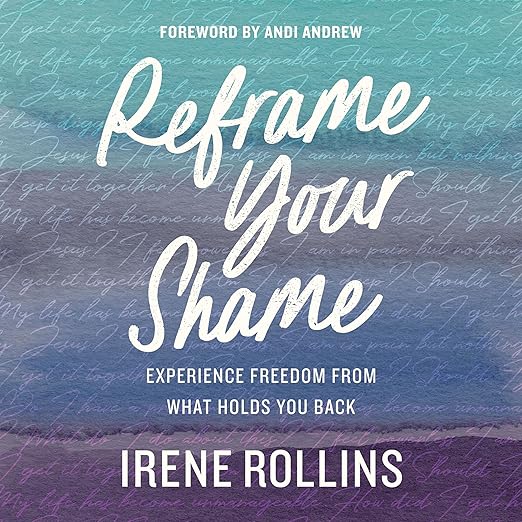
- Narration: Irene Rollins narrates her own book, and that decision is essential, her vulnerability as a megachurch leader describing her hidden alcohol addiction requires the author’s own voice to carry its full weight.
- Themes: Shame and addiction cycles, biblical teaching for recovery, emotional healing and relational repair
- Mood: Intimate and courageous, with a pastoral warmth that’s earned rather than assumed
- Verdict: Rollins’s combination of personal testimony, clinical recovery tools, and biblical framing is unusually well-integrated, this is faith-based recovery writing at its most honest.
There’s a very specific kind of courage in Irene Rollins’s premise, and it’s important to name it before anything else. She was leading a megachurch. She was the visible embodiment of spiritual health for a community of thousands. And she was hiding a serious alcohol addiction the entire time. That specific configuration, public spiritual authority, private shame, the double life that comes from the gap between them, is what makes Reframe Your Shame more than a recovery memoir dressed up in biblical language. It is, among other things, a book about what happens when the person everyone else turns to for help is the one who needs it most.
The self-narration is not optional here. When Rollins describes the moment her addiction was no longer containable, or the specific texture of shame that comes from knowing your private life contradicts your public identity, the authority in her voice is the authority of lived experience. A professional narrator reading the same words would create an unbridgeable distance between text and listener. The 4.8 rating across 160 reviews tells you this landing is landing for the audience it was built for.
The Framework: Shame and the Cycle
Rollins’s conceptual architecture rests on the difference between shame and guilt, and the specific way that shame drives and sustains addiction in a cycle that willpower alone cannot interrupt. This is well-supported by clinical research, the shame researcher Brene Brown has made similar arguments in secular contexts, but Rollins grounds it in biblical teaching about identity, grace, and the difference between condemnation and conviction. For listeners inside an evangelical framework, the integration feels coherent. For listeners outside it, the explicitly biblical framing will be the key deciding factor in whether this book reaches them.
The practical tools Rollins offers are substantial and specific. She covers warning signs of toxic shame, the process of accepting truth and taking responsibility (which she carefully distinguishes from self-flagellation), communication and connection strategies, and the day-to-day management of habits and relational patterns that keep the cycle of shame in motion. The companion PDF provides reflection prompts and Scripture references that extend the audio material, which Rollins mentions explicitly, this is another case where the written companion is genuinely integrated into the experience rather than added as an afterthought.
Written For Community, Not Just Individuals
Rollins notes explicitly that this book is written for those fighting a personal battle and for family members and counselors walking with them. That dual audience design is thoughtful. The chapters on communication and relational repair have a different address depending on whether you’re reading as the person in addiction or as someone who loves them. This makes it more broadly useful than most recovery titles, which tend to write exclusively in one direction.
One reviewer who ordered ten copies after reading the first eighty-six pages captures the book’s community function clearly: this is writing that people want to pass along, that they reach for when language has been failing them. The evangelical and charismatic recovery community is the natural home for this book, and within that context it’s among the most personally honest titles I’ve encountered in the genre.
Who Should Listen, Who Should Skip
Listeners who are inside an evangelical or broadly Christian framework and struggling with addiction, shame, or compulsive behavior, or who love someone in that position, will find Rollins a genuine guide. The biblical integration is structural, not decorative. This is not a secular wellness book with occasional Scripture dropped in. Listeners who need a secular recovery framework should look elsewhere, but they should understand what they’re setting aside: Rollins’s testimony is unusually honest, and her synthesis of faith and clinical recovery thinking is sophisticated in ways that aren’t common in either genre alone.
Frequently Asked Questions
Is the biblical content pervasive throughout, or is it focused in certain chapters?
The biblical framework is woven throughout the book, not confined to standalone chapters. Rollins integrates Scripture as part of the conceptual argument about identity, shame, and healing rather than using it as quotation decoration. Listeners who need secular framing throughout will find this challenging.
Does the companion PDF significantly add to the audiobook, or is it supplementary?
Rollins describes reflection prompts, additional resources, and Scripture references in the PDF. Given that the book is designed partly for counseling and community use, not just individual listening, the written companion is more load-bearing than typical audiobook PDFs.
Is this book appropriate for someone dealing with addiction other than alcohol?
Yes. Rollins frames the book around the broader cycle of shame and addiction rather than alcohol specifically, though her personal testimony is alcohol-focused. The tools and framework she describes are applicable to compulsive behavior and shame cycles more broadly.
How does this compare to other faith-based recovery books like Celebrate Recovery materials?
Reframe Your Shame shares Celebrate Recovery’s commitment to integrating Christian teaching with recovery principles but is more personal-narrative driven and less programmatic. It’s a complement to group recovery programs rather than a replacement for structured curriculum.