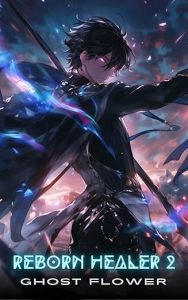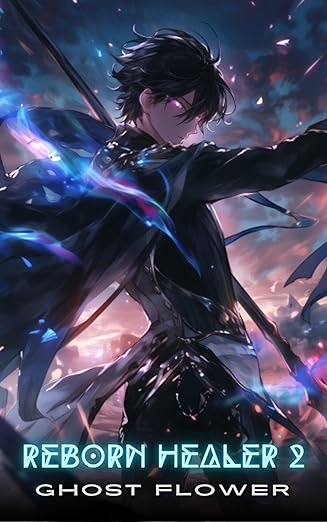
Twenty hours and thirty-four minutes is the runtime commitment for book two of ghost flower's healer-class isekai series, and that number alone tells returning listeners this is no quick side quest. Reborn Healer continues a progression fantasy built around a support-class protagonist rather than the sword-swinging strikers who dominate most litRPG audiobooks, and the verdict up front is simple: if the systems and the slow-burn power growth of book one worked, this sequel delivers more of the same world at the same unhurried pace. Almost nothing about the actual plot is confirmed in the listing itself, which is unusual for a series this far along, so most of what follows leans on genre convention, the narrator's approach, and what a strong rating from over a hundred listeners actually signals.
Healer-class protagonists are still the exception in progression fantasy, where the genre's default fantasy is usually about hitting harder, not keeping allies alive longer, and that distinction matters more than it sounds. A healer lead reframes the tension of nearly every encounter: instead of asking whether the protagonist can win a fight alone, the story keeps asking who might be lost if the healer falls behind, which is a structurally different kind of danger than the usual power-fantasy arc runs on. Ghost flower, publishing under a lowercase pen name common to the Royal Road and web-serial scene this genre grew out of, leans into that difference rather than smoothing it into a generic reincarnation story.
Zero written reviews accompany this listing despite a rating built from over a hundred listeners, which is worth reading honestly rather than as a red flag. LitRPG audiobooks this deep into a series often draw a small, loyal readership that rates quickly and moves straight on to the next volume without writing anything down, especially when a book functions as a direct continuation rather than a jumping-on point for new listeners. A 4.6 average from that many ratings is a genuinely strong signal on its own, even without testimonial detail to quote alongside it.
The Best Parts of Reborn Healer
The isekai setup, a modern person reborn or transported into a game-like world and forced to make sense of a new rule set, works best when the systems feel internally consistent rather than arbitrary, and that consistency is usually where this subgenre lives or dies for returning listeners. A healer build specifically rewards patience: skill trees built around support, restoration, and utility magic tend to unlock their satisfaction slowly, through better resource management and sharper timing in group encounters, rather than through one dramatic power spike. Listeners who already appreciated that pacing in book one know exactly what they are signing up for again here.
Twenty-plus hours also buys genuine world-building room: chapter after chapter to develop side characters, factions, and the mechanics of whatever magic or class system ghost flower has built, rather than compressing everything into a tight single-arc runtime. Long-running litRPG series tend to reward that kind of space, letting a world's internal logic accumulate detail the way an MMO's lore expands over patches, and a second volume is exactly where that accumulation typically starts paying off for readers who stuck around this long.
System depth is the specific promise genre readers look for in litRPG, and a healer-focused build usually means skill trees branching into buffs, debuffs, resource management, and battlefield positioning rather than a single damage stat climbing higher each level. That kind of complexity rewards listeners willing to track recurring mechanics across a twenty-hour runtime the way a strategy game rewards learning its systems, and series regulars already fluent in ghost flower's specific rule set are exactly the audience positioned to get the most out of that depth.
The title's own word choice signals a specific isekai subtype worth knowing: Reborn implies the protagonist actually died and returned in a new body or circumstance, a distinct convention from the more common transported-while-still-alive variant, and that death-and-return framing typically carries higher emotional stakes around identity and a second chance than a simple portal-fantasy setup does. Whether ghost flower leans into that heavier register or keeps things lighter is exactly the kind of detail a two-line synopsis can't answer, but it's worth knowing the title itself is making a specific genre promise.
Before You Commit to Reborn Healer
This is unambiguously a book two, and nothing in the listing suggests it works as a cold open for new listeners. Anyone who hasn't heard the first Reborn Healer audiobook should start there rather than here; the healer class, the world's rules, and whatever found-family structure the story has built will all be treated as assumed knowledge from the first page. Twenty and a half hours is also a serious ask in a genre that already skews toward long individual entries, so this is a poor pick for anyone testing whether litRPG audio works for them at all.
Christian J. Gilliland has no confirmed track record on file for this specific series, so any assessment of the performance itself has to stay honest about that gap. What genre fit does suggest is that a healer protagonist benefits more from a narrator who can hold restraint and warmth than one who leans on constant bombast, since so much of the character's function is protective rather than aggressive. Whether Gilliland delivers that particular balance is the open question a first-time listener is taking on with this purchase.
Litrpg as a format carries a built-in audio tension worth naming: status screens, level-up notifications, and stat blocks read naturally on a page but can turn repetitive by ear if a narrator doesn't vary pacing and emphasis around them. How Christian J. Gilliland handles that specific challenge, whether system text lands as punctuation or as a slog, will likely matter more to the actual listening experience than any single plot beat, and it's the one performance question worth testing with a sample before committing to twenty hours.
Should You Listen to Reborn Healer?
Reborn Healer is squarely for listeners already invested in ghost flower's world, people who finished book one wanting more of its systems, its healer-focused combat logic, and its slower isekai pacing. Progression fantasy fans who specifically enjoy support-class stories over the genre's more common damage-dealer power fantasies should find this a satisfying continuation, and the long runtime rewards exactly the kind of extended, immersive listening dedicated litRPG audiences tend to want from a series entry.
Skip this one if you haven't listened to the first Reborn Healer book, if you're brand new to litRPG and want an easier entry point into the genre, or if twenty-plus hours of stat-driven prose without a firm plot summary to go on sounds like more commitment than you want to make blind.