Quick Take
- Narration: James Marsters is the Dresden Files. His voice is the series at this point, sardonic, physically present, capable of making even the grimmer passages feel like something Dresden would survive.
- Themes: Power and accountability, fear as a weapon, institutional betrayal
- Mood: Fast, dark, layered, with humor that makes the darkness bearable
- Verdict: Book eight is where the Dresden Files series deepens into something more morally complex than it first appeared, a strong entry for established listeners and a reminder of why Marsters became essential to this series.
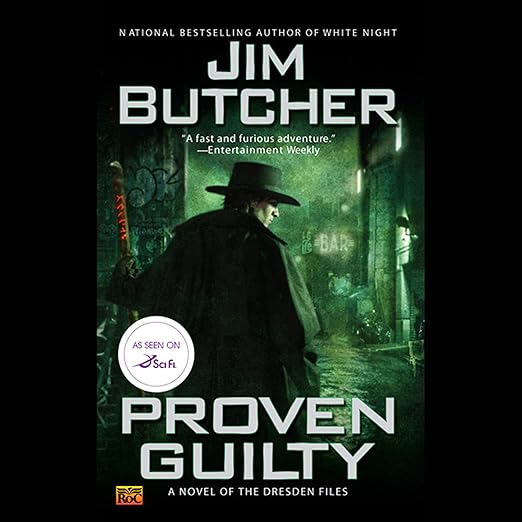
I was halfway through my morning commute when Dresden got formally drafted into the Wardens, and something in my chest tightened in that specific way that good fantasy series create, not quite dread, not quite excitement, but the feeling of stakes becoming real. I have been through the Dresden Files more than once, and Proven Guilty, the eighth installment, remains the point where Jim Butcher stops letting you read this as a fun urban fantasy series and starts asking you to take it seriously. James Marsters has been narrating since book one and by this point his performance is so embedded in the material that imagining another voice feels like imagining another Harry Dresden entirely.
The setup is characteristically layered. Harry, already an uneasy fit within the White Council, has been pressed into service as a Warden, enforcer of magical law, at the precise moment he is least equipped to be one. The vampire war has depleted the Council’s ranks, so they have drafted people they would previously have executed. Harry’s investigation into black magic in Chicago intersects with the return of Molly Carpenter, daughter of his old friend Michael, now tattooed, pierced, and already entangled with a suspect in what appears to be a supernatural horror-movie attack. Malevolent entities that feed on fear are loose in the city, and a horror convention in Chicago turns out to be exactly the kind of buffet they were looking for. It sounds like genre entertainment and it is, but Butcher is doing something more careful underneath it.
Our Take on Proven Guilty
One reviewer described this entry as peeling away layers like an onion. That is right. Proven Guilty is significantly more interested than earlier Dresden books in what it means to hold authority over others, and Harry’s new role as Warden puts that question into direct conflict with his established personality. He has always been the rebel against authority; now he is the authority, enforcing laws he has personal history with. Butcher does not let that irony sit quietly. The book also introduces what one reviewer calls Dresden’s darker side starting to creep in, which is the beginning of a thread that runs through the rest of the series with real consequence. If you have read the early books and found them entertaining but not essential, Proven Guilty is where the series earns a different level of commitment from its readers.
Why Listen to Proven Guilty
Marsters’ performance is the answer to this question. His Harry is sardonic but never cynical, physically present in the way the best action-fantasy narrators manage, and capable of something quieter and more troubled in this book than in earlier entries. The horror convention sequences, creatures manifesting as monsters from famous films, feeding on genuine crowd terror, are paced for maximum effect in audio, and Marsters’ control of the tempo through those sections is worth experiencing. At sixteen-plus hours, this is a substantial listen, but the pacing never sags in a way that makes you aware of the length.
What to Watch For in Proven Guilty
This is book eight of a long series, and starting here would be a significant mistake. The emotional weight of Harry’s relationship with the Carpenters, the history of his position within the White Council, and the vampire war context are all load-bearing for this book’s impact. New listeners should start with Storm Front and expect to invest time before reaching this level of payoff. The book is also considerably darker in tone than the early Dresden Files entries, the horror convention sequences involve genuine menace, and the themes around magical punishment and institutional justice carry real moral weight that the earlier, lighter entries did not attempt.
Who Should Listen to Proven Guilty
Dresden Files listeners who have been following Harry since book one will find this a high point. The series finds its deeper register here, and Marsters is at his best. If you have heard the early books and want to know if the series deepens, yes, and this is where it starts. Skip it if you are new to the series, if you object to urban fantasy’s genre conventions, or if the horror elements (entities feeding on fear, manifesting from film monsters) put you off. For established listeners, this is essential Dresden Files.
Frequently Asked Questions
Is book eight a reasonable starting point for someone new to the Dresden Files series?
No. Proven Guilty is deeply embedded in continuity going back to book one. The relationships, Harry’s history with the White Council, and the ongoing vampire war all carry significant emotional weight by this point. New listeners should start with Storm Front and work forward.
How does James Marsters handle the horror elements, the fear-feeding entities and the horror convention sequences?
Marsters is excellent in these sections. He modulates pace and intensity in a way that distinguishes the horror sequences from the standard action beats, giving the entities genuine menace without overplaying it. These passages are among the strongest in his performance across the series.
Does Harry becoming a Warden significantly change the tone and dynamics of the series from this point forward?
Yes. Proven Guilty is a turning point. Harry’s institutional role creates conflicts that the earlier books could not access, and Butcher uses it to push Harry into morally murkier territory. The darker undertone that begins here continues through the remainder of the series.
How graphic is the violence in Proven Guilty compared to earlier Dresden Files installments?
Somewhat darker. The horror-convention sequences and the investigation into magical crime involve more unsettling imagery than the early books. It remains firmly in the urban fantasy register rather than horror fiction, but listeners who found earlier books comfortable should be aware the stakes and the grimness have increased.