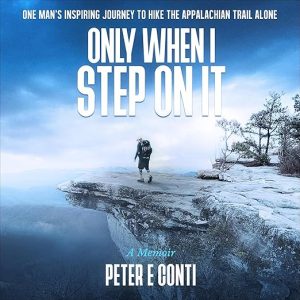
The last line of this description instructs you to scroll up and buy the audiobook now, which is an odd thing to find at the end of a memoir about chronic pain. What comes before it is odder still: a bulleted list of benefits promising the thrill of an epic voyage without leaving your home, the joy of the Appalachian Trail while wrapped in a blanket, and relief from your day to day concerns. Somewhere underneath all that marketing is Peter E. Conti's account of walking two thousand miles on a leg that would not stop hurting, and the book deserves better packaging than it got.
Our Take on Only When I Step on It
Nothing about the setup needs salesmanship. Twenty-three months after an accident, still in excruciating pain, having worked through dozens of doctors and a pile of medications that did nothing, Conti reasons his way to an unlikely proposition: if he could somehow hike two thousand miles on the Appalachian Trail, his leg would have to be better. He sets a start date three weeks out, assembles a novice's pack, and goes. The gap between that logic and the sensible thing to do is where the whole book lives. It is also, quietly, an argument about medicine: a man who had exhausted the professional options decided to run an experiment on himself, and the book is the write-up. Nobody in it pretends this was advisable.
One response from the year of release describes what the execution feels like: not a typical biography at all, closer to a diary, or to sitting in a cafe with a friend who is telling you the truth. That response comes from someone working through their own trauma and calls the book a balm, which is the register a great deal of this material occupies. Conti is not shaping his experience into a redemption arc. He is reporting the breakdowns alongside the ridiculous parts, and the reporting is what makes it credible.
Why Only When I Step on It Works as an Audiobook
Ten hours and fifty-two minutes of your own pain, read aloud in your own voice, is a peculiar assignment to take on, and Conti took it. The author credit and the narrator credit match here, which on this particular subject changes the transaction. A hired reader performing a description of nerve pain is acting; the person who had the nerve pain is remembering. The casting is the most defensible decision on this record, and it costs the book nothing, since the prose is conversational rather than literary and asks for plainness rather than range.
The trail material holds up as trail material, too. One response from a reader who has worked through several long-distance hiking memoirs rates this possibly the best of them, praising the candor about setbacks, the observations about people met along the way, and the pacing of the writing, and noting that Conti eventually devised an alternative way of walking the whole thing rather than abandoning it. That last detail is the structural surprise of the book and I will leave it there.
The comparisons the publisher reaches for are Cheryl Strayed, Bill Bryson and Grandma Gatewood, which is a wide net, and the truth sits between them. This is funnier than Strayed, less performed than Bryson, and closer than either to a straightforward account of a body that will not cooperate. At just under eleven hours it is a full-length hike rather than a highlight reel, which suits a book whose subject is endurance.
What to Watch For in Only When I Step on It
The retail apparatus is the first hurdle, and it may cost this book readers. Copy that asks whether listening to an audiobook can really change your life, then lists four ways it will, sets a self-help expectation the memoir does not meet and does not want to meet. The single four-star on the page reads like someone who arrived after that pitch and found something quieter: a nice thru-hiking book, a little different from the others, good rather than transformative. That is a fair verdict on the writing and a much more accurate description of the experience.
The numbers need a caution of a different kind. Two ratings produce the 4.5 on this page, and at that population only one arrangement gets you there, one four and one five, so the badge is honest as far as it goes. What it does not go is far: the readable column below runs to five detailed responses under a counter that has recorded two, which means the score you see rests on a sample smaller than the column below it. Treat it as a signal from two individuals rather than as a consensus. The trail's own figure wobbles as well: the copy rounds the distance to two thousand miles, while one response gives it as 2,189, which is the sort of small slippage that makes a careful buyer read the rest of the page twice.
The Right Listener for Only When I Step on It
Anyone living with chronic pain will recognize this book from the inside, and one response makes the case better than a critic can: a reader with nerve damage from a fall, constant pain from hip to heel, now off the destructive medications and able to walk two miles of moderate terrain on a good day, who took hope from Conti's account of continued healing. That is the readership. Hikers who like the genre honest rather than lyrical are the second group, and readers of trauma memoir the third.
Avoid it if you want a guide. Nothing here is a mile-by-mile handbook, gear list or planning resource, and the trail is the setting rather than the subject. Skip it too if depictions of pain, anxiety and depression are hard going for you at length, because the book stays with them rather than cutting away. Everyone else can safely ignore the sales pitch on the listing and start walking.
In Brief
- Narration: Conti reads his own account, which on a book about pain and its aftermath is the one casting choice that cannot be faked.
- Themes: Chronic pain and its treatment, thru-hiking the Appalachian Trail, anxiety and depression, stubbornness as therapy.
- Mood: Candid, funny in patches, quietly stubborn.
- Verdict: A genuine trauma memoir wearing a self-help costume; buy it for the honesty and ignore the pitch.
A Few Questions About Only When I Step on It
Is this audiobook a hiking guide or a memoir?
A memoir. The Appalachian Trail is the setting for an account of chronic pain after an accident, not a route description. Anyone planning a thru-hike will get atmosphere, encounters and hard-won practicalities, but no gear lists, mileage tables or logistics.
Who reads the audiobook?
Peter E. Conti reads his own book, so the author and narrator credits are the same. The record gives no other narration information, and the publisher is Adversity Press, on a file released in April 2022 running just under eleven hours.
How much of the book is about pain rather than walking?
The two are inseparable by design. The hike begins as an attempt to force a damaged leg to heal, and the copy names anxiety and depression alongside the physical pain, so the interior account runs continuously beside the trail narrative rather than appearing in isolated chapters.
Why does the description read like a sales page?
Because it partly is one. It ends by telling readers to scroll up and buy, an instruction aimed at a retail layout rather than at a listener, and frames the memoir with a benefits list. The book underneath is considerably less promotional than its packaging.