Quick Take
- Narration: Abby Craden is praised specifically by reviewers as a major reason to choose the audio format; her performance as Commander Storm Redfield is considered essential to the series experience.
- Themes: identity after trauma, found family in space, second chances and reinvention
- Mood: Fast-paced and energetic, with genuine emotional weight beneath the action
- Verdict: A space opera debut that earns its following through character depth and Craden’s standout narration, both working together rather than separately.
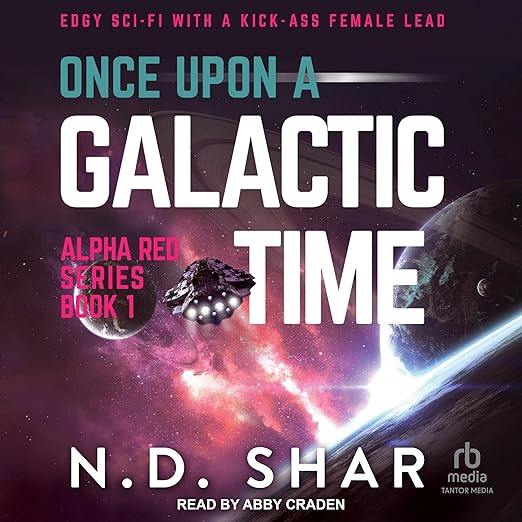
I was pointed toward Once Upon a Galactic Time by someone who described it as scratching the Mass Effect itch, which is one of the more specific recommendations I have received for a book. Having listened to the six-plus hours, I understand the comparison: N.D. Shar’s debut creates a world with the texture of a richly designed game universe, where the politics, the alien relations, and the human presence in space all feel like they existed before the story started. That density of implied history is something not every debut novelist manages.
Abby Craden narrates, and the reviews for this audiobook are unusually specific about her contribution. One listener owns both the Kindle and Audible versions specifically because Craden’s narration justifies the second purchase. Another hopes aloud that she will be retained for the remaining books in the Alpha Red series. That is the kind of reviewer attachment that tells you something real: Craden is not simply competent here, she is load-bearing.
Our Take on Once Upon a Galactic Time
Storm Redfield is a Navy Commander, Special Forces, born in 2057, who wakes up in the twenty-third century following what the synopsis describes only as the worst betrayal by her own people. The setup is a cryosleep premise familiar enough to genre readers, but Shar handles the disorientation of the rebirth with more psychological honesty than the formula usually gets. Storm does not simply adapt and move forward; she carries the weight of what she lost, and one reviewer specifically noted that her emotional trauma colors her actions throughout in a realistic and impactful way.
The world she wakes into is a spacefaring humanity that is no longer alone in the galaxy and has achieved something approaching peace. Storm, given a choice between retirement on a Martian beach or joining the civilian outfit that revived her, makes the choice that her name suggests she would make. The premise is uncomplicated, but the execution has enough character and world specificity to sustain six hours comfortably.
Why Listen to Once Upon a Galactic Time
Craden is the primary reason to choose the audio format over the print edition for this one. Her performance as Storm gives the character a physical and emotional presence that the first-person narration builds on. Reviewers describe characters as fleshed out and note that the action sequences land with the weight they need. That is largely a narration achievement.
The book also works as genuine comfort listening for readers who grew up on science fiction with specific emotional stakes, the kind of space opera where the found-family dynamics and the hero’s earned trust in new companions matter as much as the action plotting. The LGBTQ-plus categorization is present but not foregrounded in a way that overshadows the broader adventure narrative; this is space opera that happens to include queer characters rather than a book primarily about queerness.
What to Watch For in Once Upon a Galactic Time
The book is a series opener, and it functions as one: the ending leaves questions deliberately open. Multiple reviewers describe feeling compelled toward the sequel rather than satisfied within this volume, which means listeners should be prepared to invest in the series rather than expect a single complete arc. The worldbuilding is generous but may require patience in the early chapters as the twenty-third century geography and politics establish themselves.
One review mentions a brief romantic subplot alongside the action, which suggests the book is not purely action-focused. Listeners who prefer their space opera undiluted by interpersonal drama should note this, though the balance is described as light rather than dominant.
Who Should Listen to Once Upon a Galactic Time
Science fiction readers who have aged out of harder military SF and want space opera with genuine character investment. Also well-suited to readers who came to the genre through games like Mass Effect and are looking for prose fiction that creates similar emotional stakes. Craden’s narration makes this strongly preferable in audio format over print. Less recommended for listeners who need a standalone story arc; this is the first chapter of something longer, and it knows it.
Frequently Asked Questions
Why is Abby Craden’s narration so specifically praised for this audiobook?
Craden creates a version of Commander Storm Redfield that reviewers describe as giving the character physical and emotional presence beyond what the text alone provides. At least one listener owns both the print and audio editions specifically because of her performance, and multiple reviewers hope she continues with the series. The character’s trauma and agency land differently in Craden’s voice than they would on the page.
Is this a standalone book or do I need to commit to the full Alpha Red series?
This is a series opener, and the ending leaves the narrative explicitly open. Reviewers describe feeling pulled toward the sequel rather than satisfied within this volume. Expect a first chapter of something larger rather than a complete story arc.
How does the LGBTQ-plus element factor into the story?
The book is categorized as LGBTQ-plus, and the representation is present but not foregrounded as the primary narrative concern. This is space opera with queer characters rather than a book primarily about queer identity. The adventure and character drama are the main structural weight.
The synopsis mentions Storm was betrayed by her own people. How much of this backstory is explained?
The betrayal is established as the inciting event for Storm’s cryosleep but is not fully explained in this first volume. It functions as the emotional wound that shapes her trust patterns and decisions throughout, with full exposition presumably coming in later entries. The ambiguity is deliberate and creates one of the threads pulling listeners toward the next book.