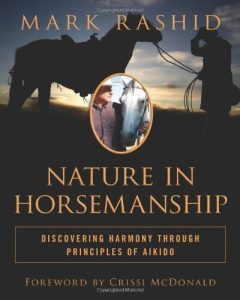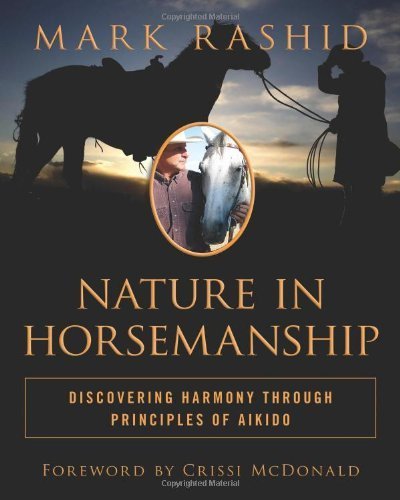
Publishers usually say something. Even a thin listing normally carries a paragraph of copy, a line about the author, some promise about what you will come away knowing. Nature in Horsemanship arrives with none of it. The description slot on this audiobook is empty, the release date is blank, and the entire written record left behind by buyers amounts to one sentence about a hardcover. Seven hours and seventeen minutes of Mark Rashid, read by Lily Barkley, and the page declines to tell you what is inside any of them.
A Hardcover Review Attached to an Audiobook
One written response exists, filed in November 2019 at the top grade, and its title is Description met expectations. The body reads, in full, that the book is hardcover and in excellent condition. On a page carrying no description whatsoever, a response confirming the description was accurate comes very close to a joke, and it is also proof of where that response traveled from. Somebody grading a hardcover for its physical condition is not grading a recording, and nothing else on the page attempts to.
Print-Only Clues Behind a Thin Three-Vote Rating
Look at the publisher line and the language line. Both begin with an invisible left-to-right mark, the character that survives a copy and paste out of a print product page and appears nowhere a person actually typed. Allworth Press takes the credit, the release date is missing entirely, and the runtime is abbreviated to hrs and mins where a natively assembled audio record spells the words out. This entry was built from a paper edition and then pointed at a recording afterwards.
Three votes have produced a 5.0 display, which sounds stronger than it is. Three votes is a sample small enough that one friendly buyer moves it a full third, only one of the three left any words behind, and those words were about the binding. What that adds up to is not a verdict on the listening experience. It amounts to three people who found no reason to complain about whatever it was they received in the post.
Lily Barkley Reads a Philosophy With No Details
What the title commits to is more than it first appears. Nature in Horsemanship puts the animal's own behavior at the center of the method rather than the rider's timetable, and four words on a cover can carry an entire training philosophy without spelling out a syllable of it. What four words cannot carry is the shape of the argument, the chapters that exist, the level it is pitched at, or whether any of it survives contact with a real horse on a cold morning. That part the listing withholds completely.
Horsemanship is a hands and eyes craft, and that is the honest difficulty with hearing it. A photograph of a rein position, a diagram of footfall, a clip of a horse shifting its weight a half second before it spooks, none of that reaches an ear at all. What audio carries better than print is the reasoning underneath: why a trainer waits instead of pushing, what a hesitation is telling you, how to name the difference between resistance and plain confusion. Seven hours is generous room for exactly that kind of talk.
Lily Barkley is credited as the reader, and that credit is the single production fact this page is willing to hand over. No sample length, no chapter list, no note about whether an appendix, a glossary or a set of photographs from the print edition made the crossing into audio. Anyone buying a practical book in this format wants to know what got left behind on paper, and here the answer is not reassuring so much as simply unavailable.
Miscategorized Shelving and a Blind Purchase Risk
Shelving is the smaller problem and still a real one. This sits under home and garden alongside sports and outdoors, tagged pets and animal care, which is where a listing ends up when nobody could decide what it was. Riders hunting for training material will not browse their way here in a hundred attempts. Anyone arriving from the pets shelf expecting something gentle about looking after animals will meet a working discipline instead, with its own vocabulary and its own arguments.
Buying blind is the real decision in front of you. With no description, no dated release, and not one buyer writing a word about the recording itself, the only evidence available is an author's name, a title, and a runtime a little over seven hours. That is enough for somebody who came looking for Rashid by name and wants the material in a format usable in a truck or a barn aisle. It is nowhere near enough for a first purchase in horsemanship.
Print editions of practical books carry things audio structurally cannot: an index that finds the chapter on loading in ten seconds, photographs of hands on reins, a glossary for the terms nobody defines twice. Whether this recording compensates with spoken summaries and clean chapter breaks, or simply reads the prose straight through from first page to last, is not stated anywhere. A recording with no navigation means a great deal of scrubbing back and forth to reach the one paragraph you actually wanted.
Right for Believers, Wrong for First-Timers
Riders who already work this way, who have decided that a horse's own logic is the starting point rather than the obstacle, have the least to lose here. They know the vocabulary, they can fill in from experience what audio cannot show them, and they are buying the reasoning rather than the technique. An afternoon of careful thinking about horses, from an author they went looking for on purpose, is a fair proposition even on a page as bare as this one.
Steer clear if you need pictures. Anything involving hand position, seat, or the exact moment a horse changes its mind is going to want an eye, and a recording cannot lend you one. This is also the wrong first horsemanship book, since the listing will not even confirm who it assumes you already are, and beginning a discipline on a blind purchase is an expensive and slow way to learn what you should have been told upfront.
What arrives instead of a description is a small lesson in how audio listings get assembled: a paper record, an invisible character or two, a review of a binding, and a credited reader the page never mentions twice. The book underneath may well be excellent. This page gives you nothing to go on before you pay.
- Performance: Lily Barkley takes the reader credit, and that credit is the only production detail this listing supplies.
- What it covers: Working with equine behavior rather than against it, patience as method, a physical craft taught by ear
- Feel: Unhurried and practical, as far as four words on a cover will admit
- Our call: Worth seven hours if you already know why you want this author, and a blind purchase for everybody else.
A Few Questions About Nature in Horsemanship
Why does the Nature in Horsemanship audiobook listing have no description at all?
The record appears to have been assembled from a print product page rather than an audio one. Both the publisher and language lines still carry an invisible formatting character from that paste, the release date never got filled in, and the description slot was left blank rather than written.
Can horsemanship really be taught through an audiobook without diagrams?
Partly. Reasoning transfers well: why you wait, what a hesitation means, how to distinguish resistance from confusion. Positioning does not. Rein and seat detail wants an eye, and no recording can supply one, so treat this as thinking material rather than instruction you can follow along with.