Quick Take
- Narration: Abby Craden handles the comedic timing with precision, making the shapeshifter mishaps genuinely funny rather than just described as such.
- Themes: Found family and shapeshifter domesticity, LGBTQ+ relationships in fantasy settings, humor as emotional glue
- Mood: Light, warm, and playful, a deliberate exhale after the drama of the first book
- Verdict: An enjoyable companion collection for fans of Second Nature, not a standalone, but a generous gift to readers who wanted more time with these characters.
There is a specific kind of audiobook I reach for on the Sunday evenings that follow difficult weeks, and it is almost never one that makes demands. What I want on those evenings is warmth, competence, and people I already like doing funny things in comfortable circumstances. Natural Family Disasters, Jae’s short story collection set in the world of Second Nature, is exactly that kind of audiobook, and I mean that with no condescension at all. Knowing what you need and finding something that delivers it precisely is its own pleasure.
At under two and a half hours, this collection is not attempting to expand the mythology of the Shape-Shifters series or introduce significant new narrative weight. It is doing something narrower and arguably more difficult: sustaining the warmth and comedy of established characters across five short stories without the plot scaffolding that a full novel provides. Jae manages this through a firm understanding of her own ensemble. Each of the five stories gives a different character or pairing the spotlight, and none of them feel like filler.
Our Take on Natural Family Disasters
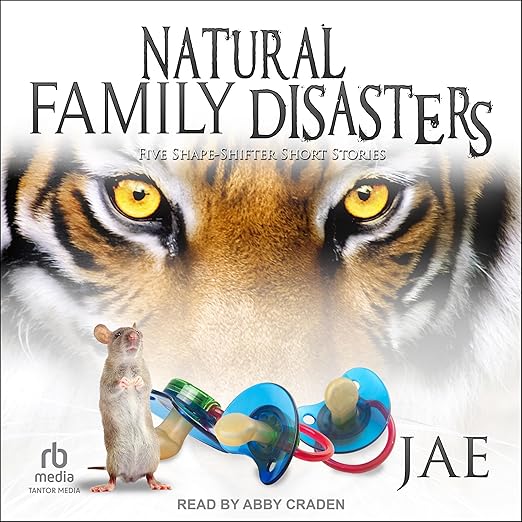
The setup for each story is light and familiar in the best sense. Griffin’s feline instincts versus her sister’s terrible timing. The shapeshifter extended family descending on a Christmas dinner with a human mother-in-law who is allergic to cats and does not believe shapeshifters exist. Kylin and Rufus’s gruff patriarch Brian, ruler of the pride, conscripted into babysitting infant triplets. Three full-grown cat-shifters hunting a mouse through Griffin and Jorie’s house with the absolute seriousness their predator nature demands. And the final story, set at a high school reunion, where mushroom-spiked food and shapeshifter biology create complications that play out with comic and emotional payoff in equal measure.
The babysitting story is singled out in multiple reviews as the collection’s high point, and it earns that. Jae’s comedic writing depends on playing supernatural abilities with complete internal consistency and then letting the results be absurd. Brian, a figure of considerable authority in the series, has no working framework for infants. The triplets have no working framework for authority. Abby Craden’s narration brings genuine comic timing to these scenes, and timing is everything in audio comedy: a beat held too long or dropped too early collapses what the writing sets up.
Why Listen to Natural Family Disasters
This collection exists for readers who finished Second Nature and found the ending satisfying but not quite sufficient. It provides access to the relationship between Jorie and Griffin in its settled, domestic, happily-complicated form rather than in the tension of courtship and stakes. The high school reunion story, in particular, gives Jorie’s past a dimension that the original novel touched on but did not fully develop, and seeing it through Griffin’s eyes adds the particular comedy of someone who loves you deeply and has no idea what your teenage years looked like.
Abby Craden’s performance also deserves specific mention for how it handles the ensemble. Short story collections in audio form require the narrator to shift registers quickly, and Craden moves between Griffin’s deadpan, Jorie’s warmer register, and the various family members’ distinct voices without losing the thread. The collection sounds like one cohesive listening experience rather than five disconnected readings.
What to Watch For in Natural Family Disasters
Reading Second Nature first is not a suggestion, it is a requirement. The emotional resonance of these stories depends entirely on knowing who these characters are and what they have been through. Griffin’s relationship with her fathers, Kylin and Rufus’s history, the dynamics of the pride’s social structure: none of this is re-explained here. Jae assumes fluency, and she is right to do so. The collection is designed for readers returning to a world they already inhabit, not for newcomers finding their bearings.
The runtime is also genuinely short. Listeners who prefer sustained narrative immersion over vignette-style storytelling may find the two and a half hours feels fragmentary. Each story reaches its comedic or emotional resolution quickly by design, and the collection does not build toward a cumulative climax. It is episodic in the way a good television comfort watch is episodic: satisfying in the moment, not architecturally ambitious.
Who Should Listen to Natural Family Disasters
Readers who have finished Second Nature and want more time with Griffin, Jorie, and the Warsa Pride’s extended ensemble. Those who enjoy paranormal romance with a strong comedic register and sapphic central relationships. Listeners looking for a short, warm listen that requires no emotional heavy lifting. Anyone who has not read Second Nature should start there first, without exception. If the supernatural domestic comedy premise sounds appealing but you have not met these characters yet, the first book is where the relationship begins.
Frequently Asked Questions
Can Natural Family Disasters be read as a standalone, or does Second Nature need to come first?
Second Nature must come first. The collection assumes complete familiarity with the characters, their relationships, and the mechanics of the shapeshifter world. Jae does not re-establish context, and the emotional payoffs depend entirely on knowing who these people are going in.
Which story in the collection do reviewers consider the strongest?
The babysitting story, in which Brian, the gruff ruler of the pride, is conscripted to watch Kylin and Rufus’s infant triplets, draws the most enthusiastic responses. The premise of a high-authority figure with no infant experience handling three babies draws on the series’ comedic logic in a particularly satisfying way.
How does Abby Craden handle the comedy and the shapeshifter ensemble in the audio version?
Very well. Craden brings genuine comic timing to the physical comedy scenes, particularly the mouse-hunting sequence, and maintains distinct character voices across the ensemble. The short story format requires quick register shifts between stories, and she navigates those transitions without losing coherence.
Does this collection add meaningful story content to the Shape-Shifters series or is it primarily comedic filler?
Primarily comedic, by design. The high school reunion story adds some dimension to Jorie’s past that has emotional substance, but the collection is not attempting to advance the series mythology. It is an affectionate expansion of a world and cast that readers already love, and it delivers that without pretending to be more.