Quick Take
- Narration: This title uses a Virtual Voice (AI-generated) narrator rather than a human performer. Listeners who find synthesized narration disruptive to their listening experience should check the Audible product page before purchasing.
- Themes: Gnostic theology and early Christianity, hidden and suppressed texts, the difference between orthodox and Gnostic approaches to salvation
- Mood: Accessible and introductory, designed for curious non-specialists
- Verdict: A serviceable entry point to the Nag Hammadi texts for listeners with no background in Gnostic Christianity, though the AI narration limits the experience and serious students will want Elaine Pagels or Marvin Meyer alongside it.
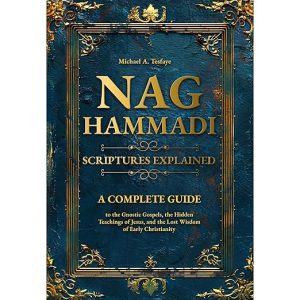
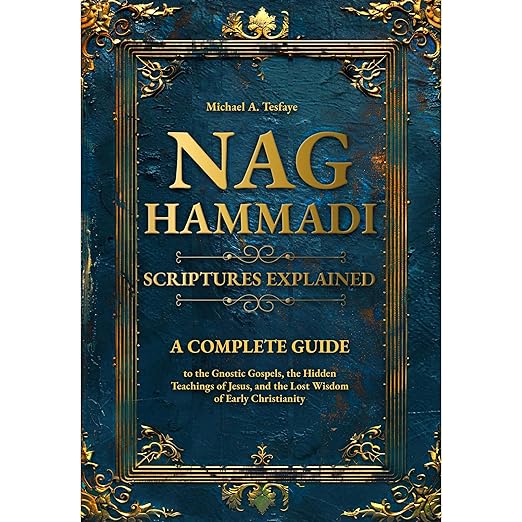
I want to be upfront about something before we get into the substance here. Nag Hammadi Scriptures Explained uses a Virtual Voice narrator, which is Audible’s term for AI-generated audio. This is not a human performer reading the text. Listeners who find synthesized narration disruptive to a sustained listening experience, and there are many of us, should know that before spending time or money on this audiobook. With that said, the underlying book has a clear purpose and serves it reasonably well, so it is worth considering what that purpose is and whether it matches what you need.
The Nag Hammadi texts are among the most significant archaeological and theological discoveries of the twentieth century. Unearthed in Egypt in 1945, these early Christian and Gnostic writings were excluded from the biblical canon, some suppressed by early orthodox Christianity, and their recovery fundamentally changed how scholars understand the diversity of early Christian thought. The Gospel of Thomas, the Gospel of Philip, and dozens of other texts in the collection offer perspectives on Jesus, salvation, and divine knowledge that diverge substantially from what became mainstream Christianity. This is genuinely fascinating material, and books that make it accessible to non-specialists serve a real function.
Our Take on Nag Hammadi Scriptures Explained
Michael A. Tesfaye’s approach is explicitly aimed at beginners. The synopsis describes the book as bridging history, theology, and spiritual insight without academic overload, and reviewers confirm that this is largely achieved. One reviewer noted that Tesfaye takes complex, ancient texts and explains them in a way that is clear and deeply insightful without losing their original depth, which is a reasonable description of what accessible theological writing should do. Another described it as organized and readable, making difficult material less intimidating, which is precisely the target outcome for introductory theological writing.
The structure covers the historical discovery of the Nag Hammadi Library, the core Gnostic beliefs about Jesus and salvation, the theological differences between orthodox Christianity and Gnosticism, and the philosophical and historical significance of the texts as a collection. At just under four hours, this is a short listen, and the brevity reflects the introductory scope. This is a gateway, not a destination.
Why Listen to Nag Hammadi Scriptures Explained
The practical case for this audiobook is that the Nag Hammadi texts are genuinely difficult to approach without a guide. The Coptic origins, the layered allegorical language, the theological framework that assumes a very different cosmology from mainstream Christianity: all of these create real obstacles for readers who encounter primary sources without context. Tesfaye provides that context in plain modern English, which is a useful service even if the treatment is necessarily introductory in depth.
For listeners who are curious about the historical Jesus debates, the formation of the biblical canon, or the diversity of early Christianity more broadly, this is a functional starting point. The book does not pretend to be more than that. One reviewer described it as a first encounter with texts usually reserved for specialists, which is an accurate characterization of the book’s ambition and its achievement.
What to Watch For in Nag Hammadi Scriptures Explained
The AI narration is the primary limitation. Virtual Voice technology has improved considerably, but it remains a different experience from a skilled human narrator, particularly for theological and philosophical material where rhythm and emphasis matter to comprehension. The flat delivery that characterizes most AI narration can make dense conceptual passages harder to parse than they would be with a reader who understands the argument. For a nearly four-hour listen at an introductory level, this is manageable; for longer or more complex material it would be more problematic.
The book’s scholarly depth is also limited by its scope. Listeners who want to seriously engage with the Nag Hammadi texts will need Elaine Pagels’s The Gnostic Gospels for more sophisticated theological analysis, or Marvin Meyer’s scholarly editions of the texts themselves. Tesfaye’s book is a primer, not a study guide, and treating it as anything more comprehensive than that will lead to frustration.
Who Should Listen to Nag Hammadi Scriptures Explained
Listeners who are encountering Gnostic Christianity for the first time and want a brief, accessible orientation before diving into more substantial sources will find this useful within its limitations. The AI narration means that listeners who prioritize performance quality should proceed with awareness. Anyone already familiar with Elaine Pagels or Bart Ehrman will find the depth here insufficient for their needs, but as an introduction for the genuinely uninitiated, it does what it sets out to do.
Frequently Asked Questions
Does Nag Hammadi Scriptures Explained use a human narrator or an AI voice?
This title uses Audible’s Virtual Voice technology, which is AI-generated narration rather than a human performer. Listeners who are sensitive to synthesized audio should check the Audible product page before purchasing.
Does the book cover the actual content of the Nag Hammadi texts, or just their history and discovery?
Tesfaye covers both the historical discovery and the theological content of key texts, including core Gnostic beliefs about Jesus, salvation, and divine knowledge. The treatment is introductory rather than exhaustive, with the goal of making the texts approachable for readers with no prior background.
How does this compare to Elaine Pagels’s The Gnostic Gospels for listeners interested in the same subject?
Pagels’s book is substantially more rigorous in theological and historical analysis, having been written by one of the leading academic scholars of Gnosticism. Tesfaye’s book is shorter, more accessible, and explicitly aimed at beginners. If you want a serious scholarly engagement, Pagels is the better choice; if you want a brief orientation before diving deeper, Tesfaye works as a starting point.
Is this book suitable for listeners who are approaching the Nag Hammadi texts from a faith perspective rather than a purely historical one?
Yes. The synopsis explicitly addresses spiritually curious readers alongside history and theology students, and reviewers describe the book as welcoming rather than academic in tone. Tesfaye engages the spiritual significance of the texts as well as their historical context, making it accessible for faith-oriented readers as well as secular ones.