Quick Take
- Narration: Matt Haynes is a reliable choice for Lanyon’s cozy LGBTQ+ mysteries; his reading of Ellery’s wry interiority has a dry, self-aware charm that suits the series well.
- Themes: Slow-burn romantic tension, amateur detection in a contained community, the complications of desire when circumstances keep changing the terms
- Mood: Warm, gently witty, and pleasingly atmospheric with its seaside New England Gothic setting
- Verdict: A satisfying third entry in the Secrets and Scrabble series for established fans; newcomers should start with book one for full emotional effect.
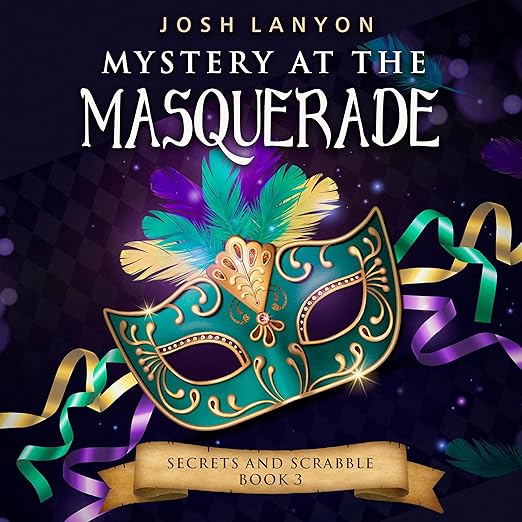
I listen to cozy mysteries the way some people watch procedural television: for the atmosphere as much as the puzzle, for the pleasure of a familiar community and its recurring tensions more than the shock of the crime. Josh Lanyon understands this, which is why the Secrets and Scrabble series has built the devoted following it has. Mystery at the Masquerade is the third book, picking up Ellery Page in his increasingly complicated life as owner of the Crow’s Nest mystery bookstore in the quaint, pirate-haunted village of Pirate’s Cove, Rhode Island, navigating yet another suspicious death in the community and yet more unresolved tension with the exasperating Police Chief Carson.
I listened to this one on a quiet October evening with the window open and the sound of distant traffic, which was exactly the right atmospheric condition for a story set at a masquerade in a coastal village with ancestral cemeteries and a family descended from a pirate named Tom Blood. The setting is doing considerable work here. Lanyon uses Pirate’s Cove as Agatha Christie used St. Mary Mead: as a contained theatrical space where everyone knows everyone, the crime operates within an established web of relationships, and the amateur detective’s access to information is limited by social standing in ways that create productive complications.
The Romantic Triangle That Drives This Entry
The structural engine of Mystery at the Masquerade is a romantic situation that the series has been building across three books. Ellery’s relationship with Police Chief Carson has hit what appears to be a permanent wall, which opens space for Julian Bloodworth, the wealthy mystery enthusiast and son of the Masquerade’s host, Marguerite Bloodworth-Ainsley, who has been quietly buying books at the Crow’s Nest without ever quite working up the nerve to ask Ellery out. Julian is handsome, rich, and genuinely interested, and Ellery finds himself responding to the attention more warmly than he expected.
When Julian’s mother’s unlikable second husband turns up dead in the family’s spooky cemetery during the Masquerade’s annual ghost hunt, the social situation becomes logistically complicated. Ellery wants to help Julian, who has been accused of the murder, but cannot entirely rule him out. Lanyon handles this dynamic with the kind of careful restraint that distinguishes his better work. Reviewer Marilyn Hay’s observation that the relationships feel genuine, that they need working through, and that they reveal vulnerabilities and courage is accurate. Ellery is genuinely uncertain about what he wants, and that uncertainty makes his choices feel like character expression rather than plot machinery. Matt Haynes reads that interiority with a dry, wry quality that suits the first-person voice throughout.
What Established Series Readers Should Know About This Entry
The honest note for fans coming from books one and two is that reviewer SZ, a self-described devotee of the series, found this installment slightly less satisfying on the mystery side than its predecessors. The crime’s setup is elaborate and atmospheric: a masquerade, a ghost hunt, a family cemetery, a victim who apparently had enemies in multiple directions. The solution, however, feels somewhat compressed compared to the promise of the setup, as though Lanyon was more interested in the romantic and social complications than in the mechanics of the crime itself. For readers who come to the series primarily for the mystery, that imbalance will be noticeable.
For readers who come primarily for the character dynamics and the Pirate’s Cove atmosphere, the balance is exactly right. Reviewer buddysgirl1’s description of the looooong drawn-out love/hate relationship between Ellery and Jack as the series’ central pleasure captures what most Secrets and Scrabble readers are actually here for, and on that front this entry delivers, moves the situation forward, and sets up genuine anticipation for where the series goes next.
Who Should Stay in Pirate’s Cove
Listeners who have followed Ellery Page from the Crow’s Nest opening will find Mystery at the Masquerade a comfortable and enjoyable continuation with enough forward movement on the romantic arc and enough atmosphere to justify the investment. At 6 hours and 15 minutes, it is a light listen that earns its runtime without overstaying its welcome. Matt Haynes’s narration is consistent with the series’ established feel, and the Bloodworth family setting, with its pirate ancestry and atmospheric cemetery, gives the cozy-with-a-twist tone that Lanyon does best.
Those coming to this as a standalone mystery should be warned that the character relationships, particularly the Ellery-Carson dynamic and all of its accumulated history, carry more weight than the crime itself in this entry. New listeners will follow the surface plot but miss the emotional stakes that make the romantic developments meaningful. The Secrets and Scrabble series is best experienced from the beginning. And if the LGBTQ+ cozy mystery subgenre is new territory and this description sounds appealing, Lanyon’s Adrien English series remains the deeper introduction to his work at its most fully realized.
The Cozy Mystery as Comfort Listening
It is worth saying something about the format itself, because cozy mysteries in audio are a specific kind of listening experience that this series handles particularly well. The 6-hour runtime means you can finish Mystery at the Masquerade in an evening or two long commutes, which suits the episodic, contained nature of the genre. Lanyon’s Pirate’s Cove has the quality of a place you return to rather than discover anew each time, and Haynes’s consistent narration across the series reinforces that familiarity. The cozy mystery format, when it works, creates a specific relationship between listener and world that is not quite like any other audiobook experience: you are not gripped by suspense so much as comfortably held by situation.
For listeners who find that relationship valuable, the Secrets and Scrabble series in audio is one of the better available options in the LGBTQ+ cozy subgenre. Lanyon has been building this particular world with care across multiple entries, and the accumulation of detail, of community relationships, of Ellery’s particular history and particular anxieties, gives the series a texture that standalone cozies cannot match.
Frequently Asked Questions
Can Mystery at the Masquerade be listened to as a standalone, or is the Secrets and Scrabble series too heavily serial?
The series is significantly serial. The romantic tension between Ellery and Carson and its current impasse, which is central to this entry’s emotional stakes, has been developing across two previous books. New listeners will follow the mystery plot but miss considerable context for the relationship dynamics that drive the story.
Does Matt Haynes’s narration suit Lanyon’s particular style of cozy mystery writing?
Yes. Lanyon’s first-person voice has a dry, self-aware quality that Haynes captures effectively. His reading of Ellery’s wry interiority gives the character more dimension than a flatter narration would, and his comic timing in the lighter scenes is well-calibrated to the cozy register.
How prominently does the LGBTQ+ romance element feature compared to the mystery plot in this specific entry?
In this particular installment, the romantic ambiguity and the introduction of Julian Bloodworth as a potential love interest are arguably more central than the murder investigation. The mystery is present and resolved, but the series’ emotional core here is the shifting romantic landscape rather than the crime.
Is the Bloodworth family’s pirate ancestry a significant plot element, or primarily atmospheric backdrop?
Primarily atmospheric backdrop in this entry, though Lanyon uses the family history and the masquerade setting effectively to create the Gothic seaside atmosphere the cozy-mystery form requires. The pirate heritage does not resolve into a major plot element, but it gives the setting a specific and enjoyable character that makes Pirate’s Cove feel lived-in and particular.