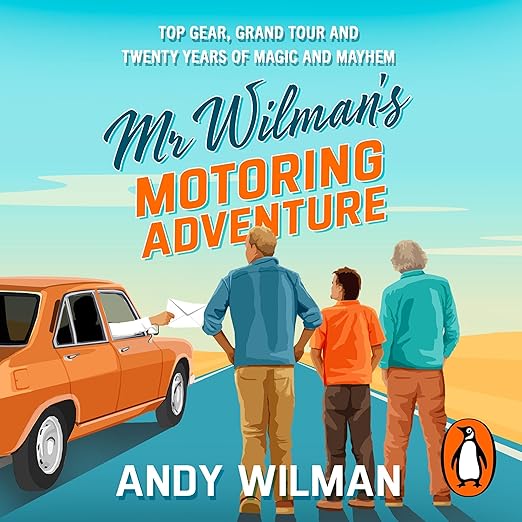
Wilman Narrates the Twenty Invisible Years
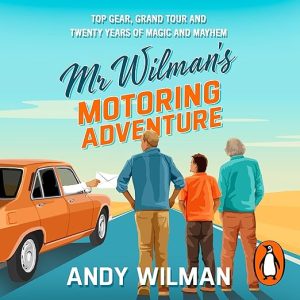
Picture the moment just before the Top Gear theme music hits and the studio audience loses its collective mind. That feeling of anticipatory joy is what this audiobook is actually about, even if it never quite puts it in those terms. Andy Wilman narrates his own memoir, and the decision to have him read it himself turns out to be close to essential. He was the man in the shadows for over twenty years, the co-creator who shaped everything while remaining almost invisible to the audience. Hearing him tell it in his own voice, with the comic timing and the barely-suppressed outrage of someone who lived every moment of it, transforms what could have been a conventional insider account into something genuinely alive and specific.
I started this one on a quiet afternoon, which felt appropriate given the book's own observation that Top Gear transformed gloomy Sunday nights into celebratory Friday nights. By the time I had reached the chapter covering the early years of the revamp, I had gone from casual listener to someone who needed to know what happened next. Wilman has a gift for framing chaos as comedy, which given what he was managing behind the scenes for two decades, is the only framework that could possibly hold.
A Bird's-Eye View That Reads Like Confession
The book's real subject is how an unlikely creative partnership between a producer and a trio of presenters built something genuinely unprecedented. Wilman knew Jeremy Clarkson before Top Gear existed, and that personal history gives this account a texture that no outside journalist could have replicated. He writes about the chemistry between Clarkson, Hammond, and May with the precision of someone who spent years engineering and protecting it. The buddy movie antics that audiences loved were not accidents; they were the product of decisions, arguments, late-night rewrites, and a shared understanding of what the show was actually doing underneath the cars and stunts.
The behind-the-scenes architecture of how Top Gear worked, how ideas moved from pitch to production, how the chemistry was calibrated without being manufactured, how the global audience was thought about and then not thought about because the show's refusal to second-guess itself was half of what made it work, is what Wilman handles best. Reviewer Cathy Cole called it a bird's-eye view of what was happening behind the scenes, and that description is accurate but undersells the intimacy. It reads less like oversight and more like confession at the points where the material demands it.
The Story Behind the Real Life Story
The section covering the end of the original Top Gear and the subsequent birth of The Grand Tour is handled with a candor that feels earned. Wilman does not editorialize excessively, but he lets the facts carry the weight they deserve, and the emotional tone shifts noticeably in those chapters. The rise, the fall, and the resurrection across to streaming are treated as a single continuous story about people who could not stop doing the thing they loved, even when the circumstances became objectively difficult.
Reviewer Rick Gank's note that 'the story behind the real life story is fascinating' captures something true: the public mythology around Top Gear was always vivid, but the production reality was stranger and more interesting than any of it. Wilman's access to that reality, and his willingness to narrate it in his own voice with his own particular comic sensibility, is what makes this a genuinely distinctive addition to television memoir writing.
A British Register Non-UK Ears May Miss
The book is irreverent in a very specific British register that non-UK audiences may occasionally need to calibrate for. Some of the humor relies on a cultural shared understanding of how British television, British masculinity, and British motoring culture intersect, and listeners without that context will follow the story but might miss some of the specific comic beats. That said, Wilman is a skilled enough writer that the fundamental warmth and wit translate across those gaps without requiring a glossary.
Shows That Almost Never Got Made
At eleven hours, the book earns its length, but the pacing is not entirely even. Some production-history chapters move at a pace that feels like Wilman warming up to tell a story he has been waiting years to tell. Others race through significant moments because the events themselves had that quality. That unevenness is, paradoxically, part of what makes it feel authentic rather than packaged for a general audience.
The book also works as an inadvertent document of how British commercial television changed across a specific two-decade window. The culture that produced Top Gear, its particular mixture of anti-establishment irreverence and mainstream popularity, was not inevitable, and Wilman's account makes clear how easily it could have failed at multiple points. The shows that almost did not get made, the episodes that nearly ended everything, the specific decisions that look obvious in retrospect but were anything but at the time, all of this gives Mr Wilman's Motoring Adventure a texture beyond memoir. It is, unexpectedly, a useful account of how creative institutions survive their own success.
Richer Than the Surface, for Returning Viewers
If you grew up watching Top Gear or The Grand Tour and have ever wondered what was actually happening on the other side of the camera, this audiobook will reward you considerably. You do not need to be a car enthusiast. The vehicles were always secondary to the relationships and the storytelling, and Wilman's memoir reflects that hierarchy throughout. Skip it if you have no prior connection to the shows and no interest in television-making as a craft. Return to it if you have ever rewatched an episode and noticed something you missed the first time, because that is exactly the kind of listening experience on offer here: richer than the surface, full of things that were always present but never explained until now.
Frequently Asked Questions
Do you need to be a car enthusiast to enjoy this audiobook?
Not at all. The cars are context rather than content. Wilman's memoir is really about creative partnerships, television production, and the unlikely longevity of something that probably should not have worked as well as it did for as long as it did.
Does Andy Wilman narrating his own audiobook work well in practice?
Exceptionally well. His natural comic timing, his self-awareness about his own role behind the scenes, and the occasional audible pleasure he takes in telling a particularly good story make this a case where self-narration is genuinely the right call.
Does the audiobook cover the end of Top Gear and the transition to The Grand Tour in detail?
Yes. Both the collapse of the original show and the subsequent reinvention across streaming are covered with notable candor. These chapters carry a different emotional weight from the rest of the book and are among the most compelling sections in the full run.
Is this audiobook suitable for listeners who are not familiar with British television culture?
Largely yes, with some caveats. The humor operates in a distinctly British register, and some cultural references will land harder for UK audiences. However, the core story about creative collaboration and building something beloved translates regardless of background.