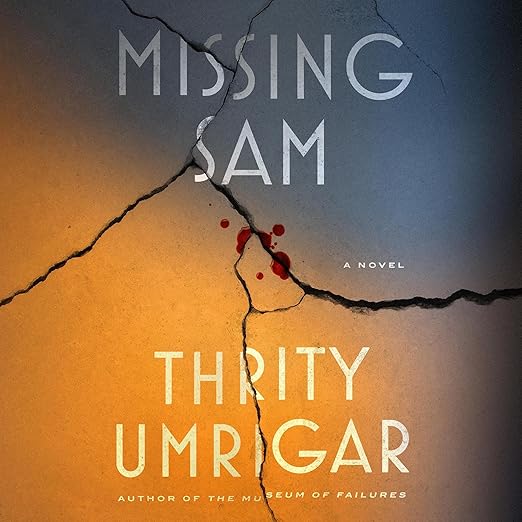
Quick Take
- Narration: Reena Dutt’s performance as Aliya is measured and emotionally precise, capturing the layered exhaustion of someone fighting suspicion while terrified for her wife.
- Themes: Racism and homophobia in suburban America, the fragility of belonging, the violence of public suspicion
- Mood: Tense and politically charged, with an undercurrent of genuine grief
- Verdict: Thrity Umrigar brings her literary precision to the thriller genre and the result is a book that uses the missing-person format to say something specific and urgent about who gets the benefit of the doubt in America.
Thrity Umrigar has spent her career writing about the invisible boundaries that govern who belongs where, who is seen as trustworthy, and what it costs to exist at the intersection of multiple marginalized identities. Her novel Honor, which won the 2023 American Library Association Carnegie Medal for Fiction, worked through honor violence and immigrant experience with an unflinching specificity that established her as one of the most important voices in contemporary literary fiction. Missing Sam is a departure in genre terms, her first thriller, and the question worth asking is whether the genre serves the material or constrains it.
The setup is deliberately familiar: a woman goes missing after a morning run following a heated argument with her wife. The wife becomes a suspect. The investigation escalates. But Umrigar is not interested in the genre machinery for its own sake. One of the most perceptive reviewers of this book put it well: Missing Sam is not really interested in twists. The disappearance drives the plot, but the real story is the same-sex marriage between Samantha, who is Irish-American, and Aliya, who is Indian-American and Muslim, and the cracks that were already there.
Our Take on Missing Sam
Aliya is not a sympathetic protagonist in the conventional thriller sense. She makes wrong choices under pressure. She withholds information. She operates from a place of deep-seated mistrust that the novel argues is entirely earned by her experience of being brown, queer, and Muslim in contemporary suburban America. The investigation that follows Sam’s disappearance does not simply exert external pressure on Aliya. It exposes, as one reviewer noted, what she wants her relationship to look like as opposed to what it actually is. Police interviews become a form of accidental confession. Social media commentary becomes a mirror that reflects back what the community actually thinks of her.
That is a genuinely literary use of the thriller format. Umrigar is using the investigation as a diagnostic tool rather than as a plot mechanism, and it mostly works. The political climate of the novel is explicitly named. Aliya’s fear is not abstract. The specific danger of being visibly Muslim in a moment of heightened suspicion is rendered concretely rather than theoretically.
Why Listen to Missing Sam
Reena Dutt’s narration is the right choice for this material. She navigates Aliya’s constrained affect, the way a person in genuine fear performs composure for survival, with precision. The moments when Aliya’s control fractures land harder because Dutt has held the register so carefully before them. At nearly eleven hours, the pacing requires patience in the middle third, where the investigation circles without resolution and the tension is sustained through accumulation rather than incident. That pacing is a deliberate literary choice, but some listeners expecting a conventional thriller arc may feel the friction.
Umrigar’s prose translates well to audio. Her sentences carry the kind of clarity that does not depend on visual re-reading to parse, and the emotional precision of her character work is, if anything, amplified by Dutt’s performance. The sections from Sam’s perspective, as she processes her captivity and her past, provide necessary counterweight to Aliya’s confined experience and work better in audio than they might on the page.
What to Watch For in Missing Sam
Listeners who come to this primarily for thriller mechanics will find the pace uneven and the resolution less twisty than the genre typically promises. Umrigar is deliberately refusing the satisfactions of the conventional missing-person narrative, which means the ending resolves the crime but does not resolve the larger tensions the book has been building. That is a purposeful choice and, I think, the right one for what this novel is actually about. But it will frustrate readers who measure thriller quality by the clean release of the final reveal.
The political content is not subtle. The novel is explicit about what it is examining and why it matters now. Listeners who prefer fiction that keeps its political concerns at a remove will find this book confrontational in ways they did not expect from a genre entry.
Who Should Listen to Missing Sam
Best suited for readers who enjoyed Honor and want to see Umrigar work in a different mode, for literary fiction readers who engage with the thriller genre when it is operating at a level of character and cultural specificity above genre average, and for listeners interested in how race, sexuality, and religion interact in contemporary American institutional settings. Less suited to genre thriller readers seeking plot-driven twists or clean procedural satisfaction.
Frequently Asked Questions
Is Missing Sam primarily a thriller or primarily a literary novel in thriller form?
The distinction matters for expectation-setting. Umrigar uses the missing-person format as a structural frame, but the novel’s central concerns are literary: the dynamics of a marriage under strain, the specific experience of being brown and queer in suburban America, and what the investigation exposes about the community around Aliya and Sam. Plot-forward thriller readers will find it slower and more character-focused than the genre typically promises.
Do I need to have read Thrity Umrigar’s previous work, particularly Honor, to appreciate this book?
No prior knowledge is required. Missing Sam is a standalone novel. That said, readers familiar with Honor will recognize Umrigar’s consistent preoccupations with identity, belonging, and the invisible boundaries that govern who is trusted by whom, and will find the thriller format an interesting new lens on those concerns.
How does Reena Dutt handle the dual perspective between Aliya and Sam?
Dutt’s performance is strongest in Aliya’s perspective, where the controlled exterior over barely managed fear creates a sustained tension. The Sam sections, where Sam processes her captivity from isolation, benefit from Dutt’s ability to shift into a more interior, reflective register. The tonal contrast between the two perspectives works well in audio.
Does the novel offer a resolution to the mystery, or is it deliberately ambiguous?
The crime resolves. What does not resolve is the larger question of safety and belonging that the novel is really about. Several reviewers noted that the ending is not a conventional thriller release but something more complicated. Umrigar is explicit that the danger Aliya and Sam face is not contained by the resolution of the specific incident.