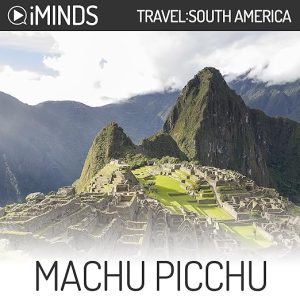
Machu Picchu, the ancient Incan citadel hidden in the Peruvian jungle, is among the most documented archaeological sites in the Americas, the subject of serious scholarship across multiple disciplines. This audiobook, produced by iMinds as part of their fast-knowledge travel series and narrated by Joel Richards, runs six minutes. That is the essential fact any potential listener needs to know before purchasing, and it is the fact that existing reviewers, rating the product at 1.9 out of 5, most directly address in their frustration.
The iMinds format is a real product category, and for what it is, this entry is competently assembled. The audiobook covers the basic outline of Machu Picchu's history: its existence as an Incan architectural achievement that escaped Spanish destruction in the sixteenth century, its location in the vast Peruvian jungle, and the 1911 expedition by American historian Hiram Bingham, who was actually searching for Vilcabamba, the last refuge of the Inca people, and stumbled onto something else entirely. That distinction, between what Bingham was looking for and what he found, is precisely the kind of historical irony that a compact format handles reasonably well.
Our Take on Machu Picchu
Joel Richards reads with clarity and appropriate pacing for the format. In six minutes, the narration has to move quickly, and Richards does not stumble or rush through the material. The production quality is clean. The problem is not the execution of the format; it is the fundamental mismatch between the format and the scale of the subject.
Machu Picchu is a site whose complexity, architectural, historical, cultural, and archaeological, requires more than a brief overview to convey with any genuine illumination. The questions that make the site genuinely fascinating, why was it built, for whom, why was it abandoned, what does the astronomical alignment of its structures suggest about Incan cosmology, are not questions that six minutes can begin to address. Reviewers noted that the content is 'very short and not as extensive as I would have liked' and that it provides 'only a few sentences on the area, with no details about the town nearby, climate, or current conditions.' These are fair observations about a genuine mismatch between listener expectations and product scope.
The Hiram Bingham story is the audiobook's strongest element precisely because it is compact and self-contained. A Yale historian sets out for one destination, stumbles upon something the Spanish never found, and what he discovers turns out to be more significant than what he was looking for. That story compresses well. The broader question of what Machu Picchu actually is, as a piece of Incan urban planning, as a sacred site, as a mystery whose purpose historians still debate, does not compress at all.
Why Listen to Machu Picchu
If your use case is extremely specific, a quick audio refresher before a visit, a basic orientation to the historical facts before a longer read, or something to share with a child who has just encountered the site in a school lesson, this audiobook can serve that limited function. Richards delivers the key facts clearly: the site's preservation from Spanish conquest, the jungle setting, and the basic outline of Bingham's discovery. For six minutes of listening, that is a coherent package.
The iMinds series positions itself as fast knowledge for people who want to learn something quickly before a longer dive. In that framing, this entry works as a starting point that should prompt further research rather than function as a destination. But that framing requires the listener to understand upfront that six minutes is all they are getting, and the low ratings from the existing reviews suggest that many listeners did not have that expectation calibrated correctly before purchasing the title.
What to Watch For in Machu Picchu
The practical information that travelers actually need before visiting Machu Picchu, how to get there from Cusco, the mandatory guided tour policy that one reviewer specifically flagged as absent, altitude considerations for visitors coming from sea level, best seasons, and current access restrictions, is entirely absent here. This audiobook provides a narrow slice of historical context, not travel guidance, and it provides that historical context in the most introductory possible way.
The 1.9 average rating from the available reviews reflects the gap between what listeners expected and what was delivered. It does not mean the six minutes are badly made, only that six minutes cannot satisfy a listener who came to understand one of the most significant archaeological sites in the Western Hemisphere. The site deserves more, and the listener who wants more should seek out a book-length treatment before or after this one.
Who Should Listen to Machu Picchu
Listeners who understand the iMinds fast-knowledge format and specifically want a brief historical sketch in audio form will find this does what it says. Those who want it as a brief introduction to be supplemented immediately by longer reading or listening may find the format fits that narrow use. Parents looking for a quick, clean introduction to the subject for younger children may also find the brevity appropriate for a young listener's attention span.
Anyone who expects a genuine exploration of Machu Picchu's history, architecture, or current significance should choose a full-length history or documentary audiobook instead. Kim MacQuarrie's work on the Inca, or any of the longer documentary-format audiobooks on pre-Columbian South American history, will serve that purpose far better than six minutes of summary can. The runtime is honest, and it is the most important thing to know about this audiobook before purchasing it.
Quick Take
- Performance: Joel Richards delivers the iMinds fast-knowledge format crisply, though six minutes leaves almost no room to distinguish a narrator's range.
- What it covers: Incan archaeology, Hiram Bingham's 1911 rediscovery, mystery and colonial history
- Feel: Brisk and introductory
- Our call: A six-minute audio overview of Machu Picchu that serves as a micro-introduction only; listeners seeking genuine depth on the site will need a substantially longer source.