Quick Take
- Narration: Joel Leslie is outstanding, he brings Mouse’s sardonic interiority fully to life, handles the range of secondary characters with real distinction, and makes nine hours pass faster than they should.
- Themes: Reluctant heroism, identity outside societal expectation, trust built through shared danger
- Mood: Fast-paced and irreverent, with genuine warmth underneath the heist-fantasy action
- Verdict: A confident, propulsive start to a MM fantasy series, Joel Leslie’s narration elevates already entertaining source material into one of the more fun listens in the genre.
I came to Lord Mouse through a recommendation that described it as the kind of fantasy novel where the main character is genuinely smarter than you expect and the author trusts that intelligence to carry the plot. That framing stuck with me. I started it on a Friday evening and finished it the following afternoon, which is about as definitive a recommendation as listening habits can provide.
Mason Thomas is not a name with enormous mainstream recognition outside the MM fantasy community, which means this book tends to find readers through word of mouth and genre recommendation rather than major review coverage. That is its loss. Lord Mouse is a tighter, more confident fantasy debut than many novels that receive considerably more attention.
Our Take on Lord Mouse
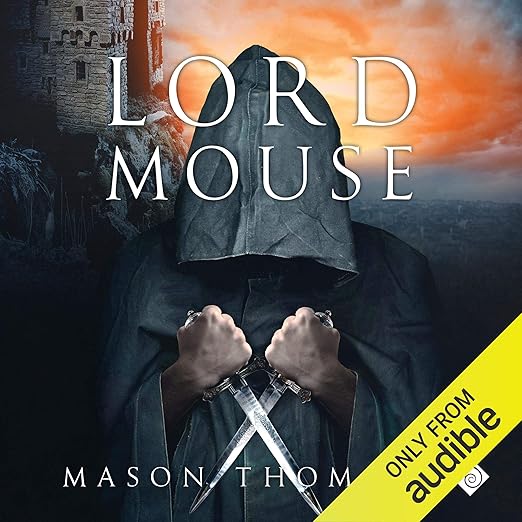
Mouse is a thief. A very good one. He works alone because working with people introduces variables he cannot control, and he has never failed a job. The premise that gets him into trouble is economically neat: a stranger with enough gold hires him to break Lord Garron out of a tower prison. Mouse does not do rescues, does not do altruism, and immediately senses something is wrong with the arrangement. He takes the job anyway because the pay would cover the murder charge following him around, and from there the novel becomes a sustained high-stakes escape narrative threaded through with the developing dynamic between a self-identified amoral thief and a nobleman with unyielding integrity.
What separates Lord Mouse from the broader field of fantasy heist fiction is Mouse himself. Multiple reviewers flagged the same quality: he is clever without being insufferable about it, self-aware about his own violence without using that self-awareness to excuse it, and genuinely funny in ways that feel like character rather than authorial performance. The snark is built in rather than applied from outside.
Why Listen to Lord Mouse
Joel Leslie is the reason to seek out the audio version rather than the ebook, if you are choosing between them. His performance is one of the best genre narrations I have encountered recently, he handles Mouse’s sardonic internal voice with precision, finding the dry wit without telegraphing it, and he differentiates the secondary cast with enough range that the action sequences, which involve a lot of moving parts, stay spatially coherent. When Mouse is being clever in real time, improvising, deflecting, observing, Leslie’s pacing makes that intelligence legible. When the novel shifts into genuine emotional terrain in its third act, he does not oversell it.
One reviewer described the book as having “the perfect mix of fantasy, action, adventure, sass, snark, intrigue, betrayal, and romance,” which is accurate in its taxonomy if not its elegance as criticism. Thomas is genuinely juggling several genres here, heist narrative, political thriller, fantasy adventure, romance, and manages to keep all of them moving without sacrificing any to the others.
What to Watch For in Lord Mouse
A careful reader noted what they saw as a tension in Mouse’s characterization in the final sections of the novel. Mouse throughout the book is defined by his self-possession, he knows who he is, accepts his own violence, does not seek approval. In the ending sequences, particularly in his dynamic with Garron, some readers felt he wallowed in a self-pity that did not quite fit the character they had come to know. That criticism has some validity. The third act demands that Mouse become vulnerable, and the transition is not quite as seamless as the setup deserves.
This is also the first book in the Lords of Davenia series, and some threads are clearly established for future volumes rather than resolved here. The main narrative arc, the escape, the conspiracy behind it, the developing relationship, concludes. But the world Thomas has built and the political implications of Garron’s situation extend beyond what a single book can contain.
Who Should Listen to Lord Mouse
Readers of Megan Derr’s work, which was specifically mentioned by one reviewer as the comparison that sent them to Lord Mouse, will find an immediately congenial sensibility here. The book shares that tradition’s interest in characters who are competent, self-defined, and not particularly interested in performing virtue, while still finding themselves caring about specific people in ways that complicate their self-image.
Fantasy readers who enjoy heist narratives, political intrigue, and MM romance woven together will find Thomas gives all three genuine attention. Listeners who want their fantasy romance built primarily on emotional intimacy and slow burn will find the romance here is more situational, built through shared danger rather than domestic proximity, which is its own pleasures but a different register than some readers expect. Joel Leslie makes the whole thing work beautifully in audio, and for fans of the genre this is a very easy recommendation.
Frequently Asked Questions
Is Lord Mouse primarily a fantasy adventure or a romance, and how does the MM relationship develop?
It is primarily a fantasy adventure heist novel with a MM romance threaded through it. The relationship between Mouse and Garron develops through proximity and shared danger rather than through romantic setup, Mouse is reluctant, Garron is persistent in his integrity, and the emotional development is gradual rather than the central focus. Romance readers who want the relationship front and center may find the action framing dominant.
Is Joel Leslie’s narration suited to this kind of sardonic first-person fantasy voice?
Exceptionally so. Leslie captures Mouse’s dry interiority precisely, the sardonic surface, the genuine competence underneath, the moments of unexpected feeling that Mouse does not quite know how to process. This is one of the stronger MM fantasy narrations in recent memory.
Does Lord Mouse work as a standalone or does it require the subsequent series books?
The main story arc, the prison break, the conspiracy, the developing relationship, concludes within this book. Political threads are established for the series, but the experience is complete without continuing. That said, most listeners who finish this one look for the next book.
Is this book appropriate for listeners who are new to MM fantasy as a genre?
Yes. The genre conventions are handled with enough confidence that readers unfamiliar with MM fantasy do not need specialized knowledge to enjoy the book. The romance element is integrated into the plot rather than dominating it, and the fantasy world is competently built without requiring extensive genre literacy.