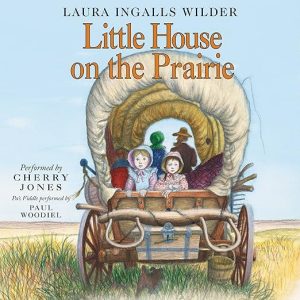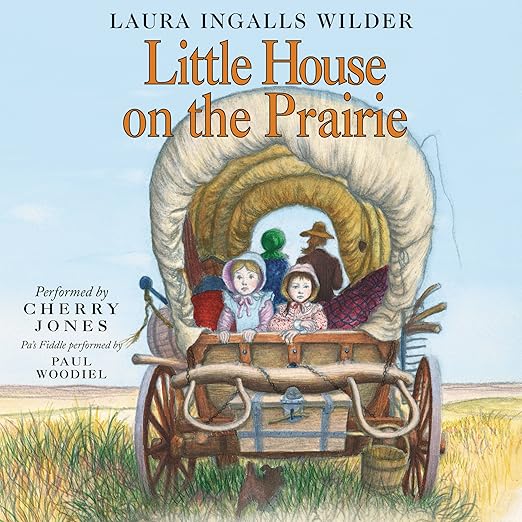
One listener, Christina, makes a specific claim in a review of this audiobook: despite being the third entry in Laura Ingalls Wilder's Little House series, 'you can read this one first without having any problems missing any back story.' That is a useful data point for anyone who stumbled onto this title without realizing eight other books exist around it, since the synopsis itself confirms this is one of nine Little House books in total, all of them, per that same synopsis, 'cherished by generations of readers.'
Wilder's synopsis frames the plot simply: the Ingalls family leaves their house in the Big Woods of Wisconsin for the Kansas Territory, travels by covered wagon, and eventually settles in to plant, hunt, and build a new home from nothing. What that summary leaves out, and what reviewer Masumi brings up directly, is the conflict that follows once the family realizes the land they have settled is not empty: 'there lives the Indians,' as the review puts it, and the story grows what that same reviewer calls 'a little bit political' from there.
None of Five Reviews Discuss Cherry Jones's Reading
Laura's own perspective anchors the book, and the synopsis is explicit that the whole Little House series draws on Wilder's own childhood rather than pure invention, which gives the family's hardships, the long wagon journey, the scramble to build shelter before winter, a documentary weight beyond ordinary historical fiction for children. Reviewer Christina calls it 'a real story of a family who went to settle out west and all the challenges they met along the way,' a description that undersells how much of this particular entry is about labor: planting, plowing, hunting wild ducks and turkeys, and gathering grass for the family's cows, page after page of people building a life with their hands rather than simply surviving one.
Three ratings sit in the counter on this listing, yet five separate written reviews appear below it, a gap the record itself does not explain. Whatever convention would make 4.7 emerge from only three votes cannot be confirmed from what's visible here, so this review will not attempt further arithmetic on a number the page does not fully account for. What is clear, regardless of the math, is that four of the five written accounts award a perfect five stars, with only Masumi's four-star review breaking the pattern.
Cherry Jones narrates a five-hour-and-forty-five-minute listen, considerably shorter than some entries in this series, though none of the five reviews weigh in on the reading itself. All five instead discuss the book's content directly: the wagon journey, the physical work of settling new land, and, in Masumi's case, the family's encounters with the region's original inhabitants. For a narrator carrying an entire family's voice, parents included, that silence leaves the actual listening experience open for whoever presses play next to judge on their own.
Frontier Chores Double as a History Lesson
Families already partway through the Little House series will recognize reviewer Christina's endorsement as about as direct as it gets: 'I highly recommend this book and the rest of the series for anyone who hasn't read them,' with a personal note about first reading these as a child and still enjoying them as an adult. That kind of return listener, someone who grew up with Wilder's family and comes back with a household of their own years later, is exactly who a nine-book series like this is built to reward.
Two of the five reviews here run remarkably short: Lynn Hughes offers just 'Awesome!!!' and Roxanne Couture offers only 'As described,' both far shorter than the other three accounts but still landing on the same five-star score as Christina's more detailed praise. Between the brief and the extensive, the pattern across every rating on this page is uniformly positive, whatever the actual vote count above them turns out to mean.
Published through HarperCollins at $8.95, the audiobook runs just under six hours, short enough to fit into a single long car trip or a few consecutive bedtime sessions rather than a sprawling multi-week commitment. Beyond the plot itself, the book doubles as a practical education in frontier life: building a house from nothing, hunting wild ducks and turkeys for food, and gathering grass to feed the family's cows are treated as everyday problem-solving rather than background color. For a listener treating this as much as a history lesson as a story, that level of procedural detail, drawn straight from the synopsis's own account of the family's days, is where the book earns its keep.
Masumi's Account Is the Only Political Preview
One review here, from Mieshka, is worth reading skeptically: dated October 2013, it predates this particular audiobook's own release by more than three years, and the content confirms it has nothing to do with listening at all. Mieshka describes buying a paperback of a different book in the series, borrowing hardcover editions from a library, and eventually purchasing a 'full color' illustrated hardcover alongside 'the original version with the sketches,' a review entirely about print formats that landed on an audio listing years before that listing existed.
Reviewer Masumi's observations deserve real attention before deciding whether this is right for a younger listener: the review describes the family settling onto land already home to Native communities, and states plainly that the book gets 'into a little bit political' territory as a result. Neither the synopsis nor any of the other four reviews mention this dimension of the story at all, which makes Masumi's account the only real preview of how the book handles that part of its history.
Parents Should Read Masumi's Review First
Anyone already invested in Laura's story, or looking to start the series partway through per Christina's own suggestion, is the clearest audience: at under six hours, this is a manageable entry point even for a household new to Wilder's world. Listeners drawn to frontier history told through a child's eyes, the physical work of settling land rather than adventure for its own sake, will find exactly what the synopsis promises.
Parents previewing this for young children should read Masumi's review first: the handling of conflict with Native communities is real and worth knowing about ahead of time, since nothing in the official synopsis prepares a listener for that part of the story.
Key Details
- Voice: Cherry Jones reads a five-hour, forty-five-minute entry; no reviewer comments on the performance, all five keeping their attention on the story itself.
- Big ideas: frontier settlement and physical labor, family resilience, an unflinching look at conflict with Native communities.
- Atmosphere: Steady, warm, and matter-of-fact about hardship.
- Worth it?: A strong entry point into the Little House series even out of order, though parents should preview the conflict with Native communities first.
Good to Know
Does this audiobook work as a starting point for listeners new to the Little House series?
Reviewer Christina says yes directly: despite this being the third entry in the series, newcomers do not need the first two books to follow the plot or enjoy the story on its own terms. The synopsis backs that up by treating the wagon journey and the family's arrival in Kansas Territory as a self-contained arc, even though eight other books exist in the wider series.
Why does the rating counter on this audiobook show three votes when five people wrote reviews?
The listing itself offers no explanation for the gap: the counter above the reviews reads three, but five separate people left written accounts below it, each with its own star rating attached. This review will not attempt to reconcile that difference, since nothing visible on the page resolves it either way.
Can parents rely on this audiobook to introduce younger kids to the Little House series?
Largely yes, based on reviewer Christina's experience reading the series as a child and returning to it as an adult, but reviewer Masumi's account is worth reading first: the story includes real tension with Native communities as the Ingalls family settles new land, described as getting 'a little bit political.' Previewing that content ahead of time will help parents decide how to frame it.