Quick Take
- Narration: Alexandra Matthew brings clarity and appropriate atmosphere to Gill McKnight’s 1970s Oregon setting; her handling of the paranormal tension is steady without veering into melodrama.
- Themes: Paranormal romance, community outsider dynamics, forbidden attraction
- Mood: Atmospheric and slow-building, with patches of dry McKnight humor breaking through the tension
- Verdict: A satisfying prequel for established Garoul Series readers; those new to the series should start at book one rather than jumping to this origin story.
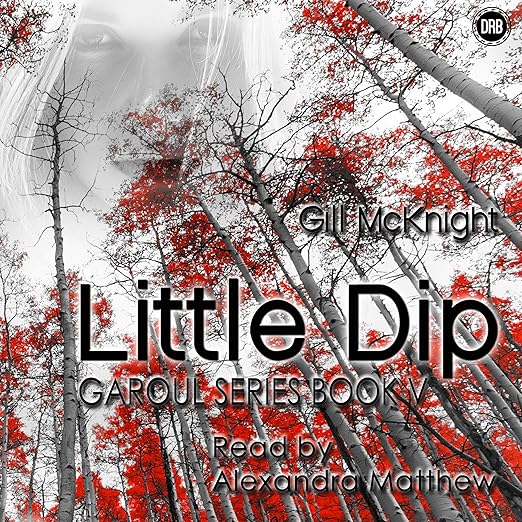
I came to Little Dip from the middle of the Garoul Series rather than from the beginning, which is probably not the recommended approach, but it gave me an interesting angle on what Gill McKnight is doing with this fifth installment. Reading it as a prequel after having met the Garoul family as adults is a genuinely different experience from encountering it as an introduction, and McKnight appears to have written it with that layered readership in mind. There are pleasures here that are invisible to newcomers and deeply resonant for those who already know how the family story unfolds.
The setup is 1977, rural Oregon. Connie Fortune, a wildlife photographer and illustrator with a relaxed, freewheeling approach to life, takes on a contract to track a rare bird in the Little Dip valley. The valley is private property belonging to Sylvie Garoul and her daughter Marie, and Connie’s initial visit ends in a clash that ruins the deal. She returns the following year to find the neighboring community of Lost Creek actively blaming the Garouls for a series of strange occurrences. McKnight deploys the werewolf premise with considerable restraint; the paranormal is present from early on but is never used as a shortcut to avoid developing the character dynamics that actually drive the narrative.
Our Take on Little Dip
The central tension is the pull between Connie’s journalistic instinct to observe and document and her growing entanglement with a community and a family that exist outside any frame she brought with her. Her attraction to Marie Garoul is complicated by genuine uncertainty about whose side she is on, which gives the romance something more interesting to work against than a simple obstacle. McKnight is one of the more skilled writers in the paranormal sapphic romance space precisely because she understands that attraction is most compelling when it arrives alongside genuine ambivalence. Connie’s photography work also provides a natural metaphor for observation versus participation that runs quietly through the narrative without being overworked.
Why Listen to Little Dip
Alexandra Matthew’s narration suits the material. She navigates the 1970s Oregon atmosphere without affectation and handles the paranormal elements with steady credibility rather than heightened dramatics. McKnight’s prose has a dry wit that Matthew allows to surface without overselling it, which is the right instinct for an author whose humor works best when it arrives without announcement. The eight and a half hour runtime feels appropriate for a story that earns its reveals gradually rather than front-loading them. The period setting is rendered with enough specific texture to feel grounded without becoming a costume drama.
What to Watch For in Little Dip
One reviewer flagged small continuity discrepancies between this prequel and earlier series entries, specifically around Amy’s schooling arrangements, which appear differently here than in the book called Goldenseal. For readers who pay close attention to series consistency, those gaps exist. McKnight wrote this after the earlier books, so the continuity is not always airtight. The more significant caveat is the placement question. This is technically book five in the Garoul Series but functions as a prequel to books one through four. Reading it first, as a newcomer, is not recommended by reviewers or by the series logic. The weight of meeting the young Marie and Sylvie Garoul depends heavily on knowing who they become, and that knowledge only comes from reading the earlier books first.
Who Should Listen to Little Dip
Existing Garoul Series readers are the primary audience and will find this essential. Fans of paranormal sapphic romance who have not encountered McKnight’s work should start with book one rather than this entry. Alexandra Matthew’s narration makes this an easy listen, and if you have spent any time with the Garoul family across the other entries, seeing them young, before the dynamics that define the later books have calcified, is exactly as rewarding as the devoted fanbase suggests. The community dynamics of Lost Creek versus Little Dip also add a dimension of external conflict that distinguishes this entry from a straightforward origin story.
Frequently Asked Questions
Can Little Dip be read as a standalone, or is prior knowledge of the Garoul Series essential?
Reviewers and the series structure strongly suggest reading the earlier books first. This is the fifth book but functions as a prequel to books one through four. Its emotional weight depends on knowing the adult versions of characters you meet here as younger people.
How explicit is the paranormal element, and does the werewolf premise require suspension of disbelief?
McKnight builds the paranormal gradually and grounds it in community dynamics and character behavior before making it explicit. The werewolf premise is handled as a believable aspect of the world rather than a sensational device, which is a consistent strength of the series according to reviewers.
Are there continuity issues in Little Dip that affect the reading experience for series followers?
One reviewer identified a specific discrepancy around Amy’s schooling between this book and Goldenseal. These are minor enough not to disrupt the narrative, but detail-oriented series readers may notice them.
Does Alexandra Matthew’s narration carry the dual tone of romance and paranormal tension effectively?
Based on available reviews and the nature of her work on this title, Matthew handles the atmospheric elements steadily. She allows McKnight’s dry humor to land without overselling it, which suits the author’s style.