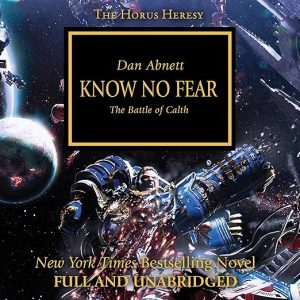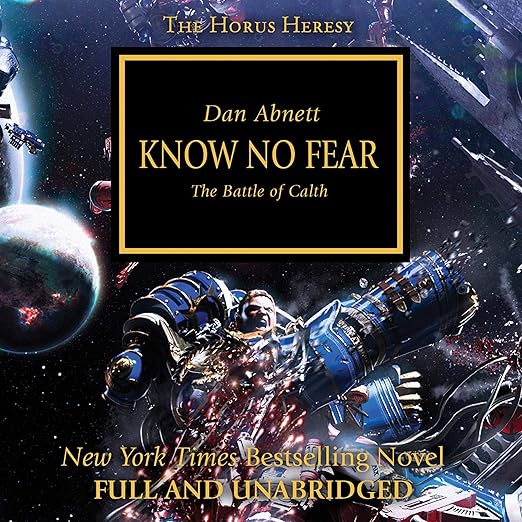
I came to Know No Fear later than most Warhammer 40K readers, picking it up on the recommendation of a friend who insisted it was the entry that finally made the scale of the Horus Heresy feel emotionally real rather than mythologically abstract. He was right. I finished it on a quiet Saturday, the kind of day where you tell yourself you are going to do several other things and then do not. Dan Abnett has a way of writing military catastrophe that feels genuinely tragic rather than operatically violent, and this book is the fullest expression of that quality in the Horus Heresy series.
Book nineteen in the Horus Heresy, Know No Fear covers the Battle of Calth: the moment the Word Bearers Legion, Lorgar's traitors, launch a surprise assault on the Ultramarines while both sides are supposedly allied under the Warmaster's command. Roboute Guilliman has no idea what is coming. His Legion is mustering for a completely different war. The ambush, when it arrives, is one of the most effectively paced pieces of military fiction writing I have encountered in this genre, Abnett deploys a countdown device from the opening pages that creates a sense of mounting dread that he then pays off completely.
What Dan Abnett Delivers
Multiple reviewers, including long-term Horus Heresy readers, call this the best book in the series. One described it as possibly the best book they had read in a long time in any genre, which is the kind of hyperbole that actually lands when you read the book and understand what provoked it. The key is Abnett's economy. He does not waste words on setup that the reader already knows or on action that does not carry weight. Every sequence serves the tragic argument at the heart of the narrative: that the Ultramarines represent something worth losing, and that the scale of the betrayal is measured precisely in how much they did not deserve it.
One reviewer offered a more measured take, noting that the tragic dimension relies heavily on the reader arriving with prior knowledge of who these Legions are and what their rivalry means. That is a fair point. If you have not read the earlier Horus Heresy entries, the emotional weight of certain reveals will be contextless. Abnett writes for readers who are already invested.
Gareth Armstrong's narration is a precise fit for this material. The Ultramarines are, among all Space Marine Legions, the ones defined by discipline and systemic thinking. Armstrong's delivery reflects that quality. He is measured and authoritative without being cold, which is the exact tone the Ultramarines' POV sections require. When the chaos and daemonic horror begin to intrude on that order, his restraint makes the contrast more disturbing rather than less.
At eleven hours and twenty-eight minutes the book is substantial but not overlong. Abnett's economy means there is no bloat, and the audiobook format works well with the countdown structure, heard rather than read, the ticking quality of the opening chapters carries an almost cinematic tension.
Where Dan Abnett Loses Some Ground
The daemonic elements in the second half are handled with more restraint than some Warhammer fiction. Abnett is more interested in the horror of what is happening to people he has made you care about than in the spectacle of the daemons themselves. Readers who want chaos marines to be maximally theatrical may find the approach understated. That restraint is what makes it stick.
The book does have a structural shift in its final third that some readers found less compelling than the early catastrophe. One reviewer noted they had to push to finish the last portion after being riveted by the first eighty percent. That is a real observation, though the resolution felt earned on my listen, if not as kinetically exciting as the initial assault.
Who Should Pick Up Know No Fear
Horus Heresy completists and those who have been building toward Calth through earlier volumes will get the most from this. Warhammer newcomers can enter here if they are patient with the political context, but the emotional gut-punch is calibrated for readers who already know what the Ultramarines represent. Military fiction fans outside the Warhammer universe who appreciate tragedy-structured war narratives may also find this accessible, it reads as a complete story, even if its largest meanings require context.
Can I read Know No Fear without having read the first 18 Horus Heresy books?
You can follow the plot of the Battle of Calth without all prior context, but the tragic weight of the Word Bearers betrayal and Guilliman's situation is richest for readers who know the earlier series. Abnett does not spend time recapping the larger Heresy.
How does Abnett's countdown structure work, and does it translate to audio?
Abnett opens with a countdown from the moment of the ambush and sustains it through the opening acts, creating mounting dread. On audio, this ticking quality is even more effective, Gareth Armstrong's measured delivery makes each chapter feel like a clock running down.
Is this book primarily about Guilliman or does it follow multiple perspectives?
Know No Fear follows multiple characters across the Ultramarines and the Word Bearers assault, though Guilliman is the gravitational center. The multi-perspective approach allows Abnett to capture the full scale of the ambush and its immediate consequences.
How does Know No Fear compare to other Dan Abnett Horus Heresy entries like Horus Rising?
Know No Fear is generally considered Abnett's strongest Horus Heresy contribution. It is more concentrated and tragic than Horus Rising, which was a broader scene-setting novel. The economy of prose and the countdown device make it distinctively structured among his Heresy work.