Quick Take
- Narration: Robyn Holdaway delivers the material with a calm, inclusive warmth that matches the book’s non-judgmental approach to a sensitive subject.
- Themes: Gender identity exploration, deconstruction of the gender binary, reflection activities for personal understanding
- Mood: Grounded and accessible, like a knowledgeable friend walking you through something you weren’t sure how to ask about
- Verdict: An accessible entry point into gender identity as a concept, equally useful for those questioning their own identity and those trying to understand someone else’s.
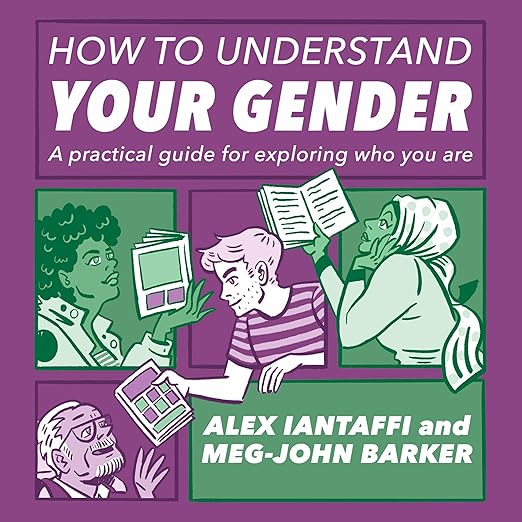
I picked up How to Understand Your Gender by Alex Iantaffi and Meg-John Barker because a friend asked me to recommend something she could share with her parents, people in their sixties who wanted to understand their child’s non-binary identity but found most available resources either too academic or too politically charged to be useful in a family conversation. I listened to the whole thing in a day and a half, and I came away thinking it was exactly the right book for that purpose: clear, humane, specific, and genuinely non-judgmental toward everyone in the room, including people who are starting from confusion.
The book’s framing is inclusive in a way that feels deliberate rather than performative. The opening question, “Have you ever questioned your own gender identity?”, is addressed to everyone, not just to people who already identify outside the binary. That broadens the potential audience considerably and removes the implicit segregation that plagues a lot of LGBTQ+ educational material, which often reads as written for people already inside the conversation rather than people approaching it from outside.
Our Take on How to Understand Your Gender
Iantaffi and Barker cover ground that ranges from biology and history to sociology and lived experience. The biological section is careful to distinguish between sex and gender without oversimplifying either, which is where many similar books stumble. The historical dimension, tracing how different cultures and time periods have constructed and understood gender differently, does useful work against the assumption that the Western gender binary is simply “natural” rather than historically specific. One reviewer who identified as a straight cis man described the book as helping him see the arbitrariness of the system in a way that had previously been invisible to him, which is a reasonable summary of what the historical section achieves.
The activities and reflection points scattered throughout the book are a structural choice that works better in print than in audio. Listeners who want to engage with the exercises will need to pause and write, the audio format doesn’t stop for you, and some of the deeper personal reflection the book encourages requires the kind of attention that’s hard to sustain while driving or folding laundry. This is material that rewards active engagement, which means the audiobook works best for listeners who treat it as an active listening experience rather than background content.
Why Listen to How to Understand Your Gender
Robyn Holdaway’s narration is well-calibrated to the material. The book’s tone is gentle and exploratory rather than didactic, and Holdaway’s delivery matches that register. There’s no urgency or advocacy in the narration, just a steady, knowledgeable voice working through material that some listeners will find personally significant. That steadiness matters for content that can feel vulnerable for some people to engage with, and it also makes the book accessible for listeners who are approaching it from a more distant, intellectually curious position.
The structure, biology, history, sociology, personal expression, relationships, family dynamics, is logical and progressive without being rigid. Each section builds on the previous one, which gives the audiobook a coherence that phrasebook-style LGBTQ+ resources often lack. The book treats gender as a phenomenon worth understanding seriously, not a trend to be either celebrated or pathologized.
What to Watch For in How to Understand Your Gender
Listeners who come from a perspective that views the book’s premises as contested, who do not accept, for instance, the distinction between biological sex and gender identity as described here, or who hold traditional views on gender as binary and fixed, will find the book’s framework incompatible with their starting assumptions. The book does not spend significant time engaging with or refuting these perspectives directly; it proceeds from its own framework and builds from there. This is not a defect in the book, it’s simply a book with a point of view, but it’s worth knowing before you recommend it in a context where those assumptions are actively debated.
The runtime of seven hours and fifteen minutes is appropriate to the content depth. Reviewers consistently describe the book as accessible without being superficial, and that balance, making complex ideas approachable without flattening them, takes space to achieve.
Who Should Listen to How to Understand Your Gender
People questioning their own gender identity who want a non-clinical, non-judgmental entry point to the conversation. Parents, partners, friends, or family members of someone who identifies as transgender or non-binary, who want to understand rather than debate. Educators and healthcare workers who encounter gender diversity in their practice and want a foundational resource that their clients or students might also be able to engage with. Curious readers who have encountered gender identity as a cultural topic and want to understand it more carefully. The book is genuinely useful across all of these contexts, which is a harder achievement than it appears.
Frequently Asked Questions
Is this book written specifically for LGBTQ+ readers, or is it accessible to people outside that community?
Both. The book explicitly addresses itself to anyone curious about gender, those questioning their own identity and those trying to understand someone else’s. One reviewer specifically noted its value for straight cis readers who wanted to understand the subject from the outside.
How do the reflection activities and exercises work in audio format?
They require active engagement, the audiobook doesn’t pause for them. Listeners who want to work through the exercises will need to pause, write, and return. The book is more rewarding as an active listening experience than as background audio.
Does How to Understand Your Gender engage with religious or traditional perspectives on gender?
The book proceeds from its own framework around gender as distinct from biological sex and as existing on a spectrum. It does not spend significant time engaging with or refuting perspectives that view gender as binary and fixed. Readers holding those views should know the book doesn’t operate from that starting point.
Is this appropriate to share with someone who is newly questioning their gender identity?
Reviewers who were in that position found it helpful and non-judgmental. The book is explicitly written to be accessible without prior knowledge and to support personal exploration without prescribing specific identities or conclusions.