Quick Take
- Voice: Stephen Bel Davies handles Michael Wigge's self-deprecating adventure diary with an appropriately light touch, keeping the humor readable without overpitching the comedic moments.
- Big ideas: Radical resourcefulness, the psychology of money and generosity, adventure as absurdist performance
- Atmosphere: Breezy and anecdotal, more armchair entertainment than practical travel guide
- Worth it?: A lively listen for travelers who want vicarious adventure without practical instruction, though the polarized reviews signal this is a distinctly acquired taste.
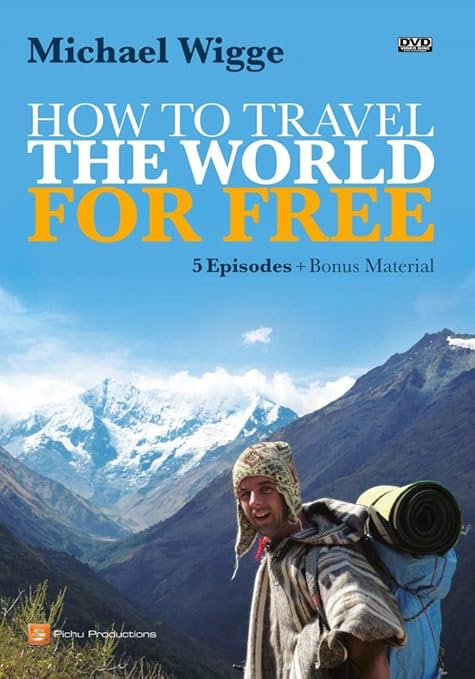
Michael Wigge's premise for How to Travel the World for Free is the kind of concept that sounds either compelling or ridiculous depending on your relationship with money and travel: cross 25,000 miles from Europe to Antarctica over 150 days, across four continents and eleven countries, without spending a single euro or dollar. Wigge is an award-winning German comedian, and this audiobook, narrated by Stephen Bel Davies, is the account of what actually happened when he attempted it. The result is more documentary of human generosity and absurdist persistence than travel guide, and the distinction matters.
The craft element that defines the audiobook is Wigge's method of immersion. He does not simply barter rides and meals. He sleeps on the street with homeless communities, eats flowers when no other food is available, and conducts insightful interviews along the way about people's relationship with money. Over 100 people helped him over the 150-day journey, and the accounts of those encounters are the most interesting material in the book. Wigge is better at capturing the texture of human encounter than at providing any framework for replication.
First, the Big Picture
The polarized reviews for this audiobook are instructive. Carl Harris described it as perfect for those not fortunate to travel, as armchair access to adventure, while reviewer romur1 found it neither practically useful nor comedically satisfying. Both responses are accurate reflections of what the book delivers. Wigge is not writing a guide to free travel in any instructional sense. The methods he uses, sleeping rough, eating foliage, depending entirely on the generosity of strangers, are not replicable as a travel strategy. They are the constraints of a deliberately absurd experiment, and the book's value is in the experiment rather than the instruction.
The Antarctica destination functions as an audacity marker more than as a destination with narrative depth. Wigge's account of reaching South America and eventually making his way to Antarctica is episodic rather than structured, with the individual encounters along the way carrying more interest than the journey's geography. The subcultures he immerses himself in, homeless communities, generous strangers, people with strong opinions about money and exchange, are where the book's actual curiosity lives.
The Best Parts of How to Travel the World for Free
Stephen Bel Davies narrates the audiobook with a light, dry quality that suits Wigge's comedy-adjacent voice. The material benefits from this measured delivery: the humor is more effective when it is underplayed, and Davies does not oversell the comedic moments. At two hours and thirty minutes, this is a short listen that functions well for a single sitting, perhaps on a long commute or flight, where the episodic structure and breezy pacing fit the format naturally.
The interview material scattered through the journey is where this audiobook has the most to offer. Wigge's conversations with people about their relationship with money, conducted across four continents, accumulate into an impressionistic portrait of how differently people conceive of exchange, generosity, and need. That thread is less developed than it could be, but it gives the book a layer of genuine curiosity beyond the adventure logistics.
The audio format suits this material better than a print reading might, partly because Wigge's voice as rendered by Davies is conversational rather than literary, and that informality benefits from being heard rather than read. The anecdotes land with more rhythm in audio, and the tone of self-deprecating disbelief at what he was actually doing translates well.
A Few Reservations
The title is more ambitious than the practical content. Listeners who come to this audiobook hoping for a guide to budget or resourceful travel will leave disappointed. Wigge's methods are not strategies: they are stunts performed in the service of a specific creative experiment, and he does not present them as replicable. The rating of 2.1 from the broader review pool reflects listeners who expected something closer to a travel how-to and found instead a comedy-travelogue hybrid that prioritizes the experience over any useful instruction.
The humor is German in sensibility, which is to say it is deadpan and slightly absurdist rather than broadly comedic. Listeners expecting laugh-out-loud travel comedy in the mode of Bill Bryson may find the tone understated. Those who enjoy the quiet comedy of someone doing something genuinely preposterous with complete seriousness will connect with it more naturally.
Reviewer Absprung's description of the book as awakening the spirit of adventure is perhaps the most accurate encapsulation of what it does at its best. The practical information is minimal. The invitation to consider what it would mean to move through the world without money, dependent entirely on human goodwill, is genuinely interesting. Whether that invitation is worth the runtime depends almost entirely on your prior relationship with adventure-as-idea versus adventure-as-instruction.
Who Should Pick Up How to Travel the World for Free
Listeners who want vicarious adventure, anecdotes about human generosity across cultures, and a comedic experiment taken to its logical extreme will find this satisfying at its two-and-a-half hour length. Anyone looking for practical budget travel tips, country-by-country logistics, or transferable money-saving strategies should look elsewhere. The low average rating reflects the gap between expectation and delivery rather than a failure of the book on its own terms. Those who approach it as an absurdist travel documentary rather than a guide will get more from it. Stephen Bel Davies's narration is a good match for the tone, and the short runtime makes it a low-risk choice for curious listeners.
Common Questions
Is How to Travel the World for Free audiobook a practical guide to budget travel, or something else entirely?
It is something else entirely. Wigge's methods, including sleeping rough, eating flowers, and depending on the generosity of strangers, are not replicable travel strategies. The book documents an absurdist experiment rather than offering transferable advice. Listeners wanting practical budget travel instruction should seek a different title.
Does the low average rating reflect problems with the book itself, or a mismatch of expectations?
Primarily an expectations mismatch. Listeners who approached it as a travel how-to were disappointed by the lack of practical content. Those who came for vicarious adventure and a comedic travelogue found it more satisfying. The book delivers exactly what its premise promises: an account of one man's attempt to cross the world without money, not a guide for doing the same.
How does Stephen Bel Davies handle the comedic material in this audiobook?
Davies narrates with a dry, measured delivery that suits Wigge's deadpan humor. He does not oversell the comedic moments, which is the right call for material that works best when played straight. The understated approach preserves the absurdist quality of the source material.
At two and a half hours, is this audiobook substantive enough to be worth the time?
At that length it functions best as a single-sitting listen for a specific mood: light, episodic, and self-aware about its own absurdity. It is not a deep or demanding listen, and the brevity is appropriate to the material. For the right listener in the right moment, two and a half hours is an efficient investment.