In Brief
- Performance: Sarah Kennedy brings atmospheric control to this dual-timeline gothic mystery, holding the Victorian and contemporary strands apart with clear vocal distinction.
- What it covers: Ancestral mystery and inherited secrets, the supernatural versus rational explanation, a woman uncovering suppressed family history
- Feel: Slow-burn and atmospheric, romantic with a gothic undertow
- Our call: A satisfying gothic mystery audiobook for listeners who enjoy English country house atmospherics, dual-timeline structure, and a supernatural mystery that keeps its cards close until the final chapters.
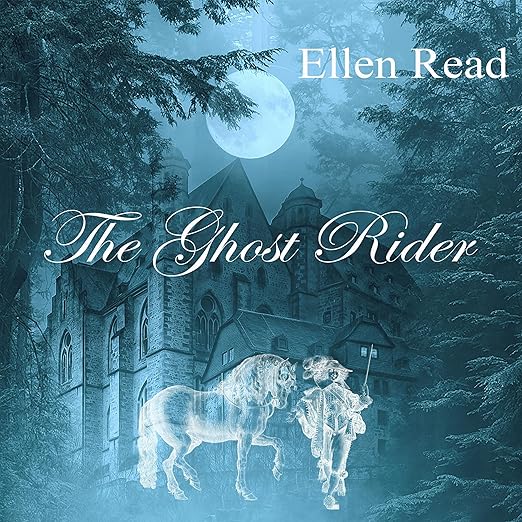
Ghost Rider by Ellen Read is a dual-timeline gothic mystery built around a disappearance and a haunting that may or may not be the same thing. The story opens in 1879 with Sophie, whose sister Catherine has vanished from the family home, and pivots to 2019 where Australian Kate Dalton, Catherine's three-times-great-granddaughter, travels to Lacey Hall in England to find out what happened. This audiobook deploys the classic ingredients of the English gothic with evident deliberateness: the cursed estate, the forbidding owner, the restricted woods, the ghost rider who appears at the lake each night and vanishes. What distinguishes it is the care with which Read withholds and reveals information across the century-and-a-half gap between the two timelines.
A Closer Look at Ghost Rider
The 1879 backstory - the first Sir Giles Lacey winning Lacey Hall in a card game in 1676 and then reclaiming village land to build a lake, only to be murdered for it - is one of those foundational injustices that English gothic uses to explain why a place refuses to be at peace. Read constructs the present-day mystery so that Kate must essentially do what any good investigator does in this genre: ingratiate herself into a suspicious household, be warned off from the very things she needs to investigate, and piece together a history that multiple people at Lacey Hall have reasons to keep obscured. The romance strand is present but subordinate to the mystery, which reviewers specifically noted as an asset: the supernatural investigation drives the book and the romance develops within that frame rather than overtaking it. One reviewer described the unfolding as luscious slow-burn, and the pacing observation is accurate - this is a book that allows atmosphere to accumulate before it resolves.
What Makes Ghost Rider Worth Hearing
Sarah Kennedy's narration handles the dual-timeline structure with clear vocal differentiation. The 1879 sections and the 2019 sections require distinct registers - one more formal and contained, the other more contemporary - and Kennedy moves between them without jarring the listener. The gothic atmosphere of Lacey Hall, the Old Widcombe Woods, and the dilapidated cottage in their midst is material that rewards careful narration, and Kennedy's control of pacing in the atmospheric scenes gives the description room to work. A story that depends heavily on a location and its accumulated history needs a narrator who trusts the descriptive passages rather than pushing through them to get back to dialogue, and Kennedy does. The accidents that befall Kate as the investigation intensifies - the head injuries, the near-misses that may or may not be mishaps - are delivered with appropriate ambiguity about whether the danger is human or supernatural.
Things to Know Before Starting Ghost Rider
One reviewer noted the reveal in the final act feels slightly rushed relative to the careful build of the preceding chapters, a structural criticism that applies to many gothic mysteries that invest heavily in atmosphere at the expense of resolution time. The book's slow-burn pacing is a deliberate choice that serves the atmosphere, but it means the final act carries significant weight that some listeners may find the ending resolves too quickly. The supernatural element is ambiguous for much of the book in a way that the gothic genre typically manages: Kate sees the ghost rider, she encounters a second apparition, but the text keeps open the question of whether these are real phenomena or the result of the head injuries she has sustained. Listeners who want their supernatural elements definitively resolved rather than lingered over should know the book maintains this ambiguity as a design feature rather than a narrative gap. This book markets and reads as gothic romance rather than thriller, and the pace reflects that orientation throughout.
The history embedded in Lacey Hall - the first Sir Giles winning the estate in a 1676 card game, his reclamation of village land to build the lake, his subsequent murder - is the kind of foundational injustice that the English gothic does particularly well. Read understands that the best gothic estates are not simply spooky locations but places where specific historical wrongs have not been resolved, and where the present inherits that unresolution whether it wants to or not. Kate Dalton, arriving from Australia with a letter from her three-times-great-grandmother and a congenital heart condition that has just been treated, is an outsider in every sense the genre requires: she has no ownership stake in Lacey Hall, no established relationships with anyone who lives there, and no reason to believe that what she is looking for still exists in any recoverable form. Her persistence in the face of warnings from the present Sir Giles, the cursed woods, and the escalating accidents that may or may not be intentional is what drives the narrative through its atmospheric middle sections and toward the resolution that Read has been patiently building. The final danger Kate fails to see coming is the kind of twist the gothic promises from its earliest pages while concealing the specific form it will take.
Who Neil Peart Is Writing For
Listeners who love English country house gothic - the combination of old injustice, inherited mystery, slow atmospheric build, and a protagonist in real danger she cannot fully see - will find this audiobook a reliable and well-executed example of the form. The dual-timeline structure will appeal to readers who enjoy historical mystery alongside contemporary investigation. The romance is present but secondary, which makes it more accessible to listeners who want gothic atmosphere without the genre tipping primarily into romance territory. Readers who need fast pacing or who prefer their mysteries plot-driven rather than atmosphere-driven should look elsewhere.
Questions Listeners Ask
Is Ghost Rider a standalone audiobook or part of a series?
Based on the available information, Ghost Rider appears to be a standalone novel by Ellen Read. The story concludes within this single audiobook, resolving both the 1879 and 2019 timelines and the central mystery of what happened to Catherine at Lacey Hall.
How does the Ghost Rider audiobook handle the dual 1879 and 2019 timelines?
Sarah Kennedy's narration differentiates the two timelines through vocal register and pacing, with the Victorian sections carrying a more formal tone and the contemporary sections moving with a slightly more modern cadence. The structural alternation between Sophie's 1879 account and Kate's 2019 investigation gives the audiobook a mystery-within-mystery architecture that holds the listener's attention across both strands.
Is the supernatural element in Ghost Rider resolved or left ambiguous?
The book maintains ambiguity about the nature of the ghost rider and the second apparition Kate encounters for much of its runtime, which is characteristic of the gothic mystery genre. The ending resolves the central historical mystery, but listeners who want a definitive explanation of every supernatural element will find the book more interested in atmosphere and suggestion than in closing all the doors it opens.
How clean or explicit is the romance in the Ghost Rider audiobook?
Reviewers describe the romance as fairly clean and not the primary focus of the book. The mystery and gothic atmosphere drive the narrative, with the romantic development between Kate and the present Sir Giles unfolding within that frame. Listeners looking for clean gothic romance where the supernatural investigation takes precedence will find this audiobook meets that expectation.