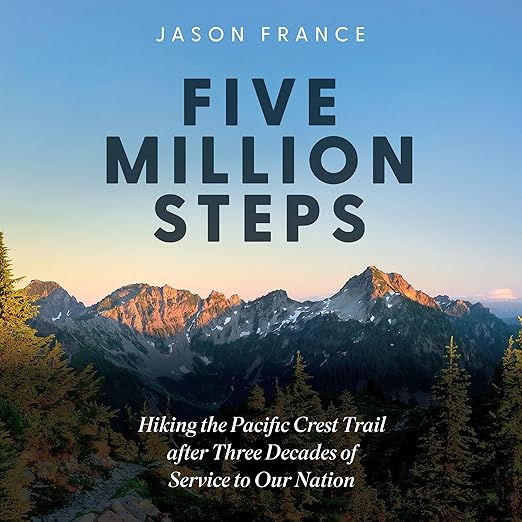
Five months on the Pacific Crest Trail, 2,650 miles of it, compressed into a six-hour audiobook that Jason France wrote, read and published himself. That last detail is not incidental. The publisher line on this release carries his own name, which means no studio, no house style and no producer stood between the writing and the recording. What a buyer gets is one man's account of his own walk, shaped entirely by the person who took it and answerable to nobody else's judgment about what mattered along the way or what deserved cutting.
The Review
France's route to the trailhead separates this from the rest of the Pacific Crest Trail shelf. He spent more than three decades in the United States Air Force and retired from one of the most senior enlisted posts in the United States military, which is a particular kind of exit: a life organized around structure, rank and other people's requirements, ending on a fixed date. The hike is what he does with the space that leaves behind, and the description is blunt that a rough childhood preceded the whole career. Two hard beginnings bracket the story, and the walk sits between them as the only stretch he chose for himself.
Walking supplies this book's spine and its problems in roughly equal measure. Forest fires and record temperatures appear in the description as physical obstacles, while solitude appears as the thing that amplifies everything else. Memories of war come back on the trail because nothing else is competing for his attention, and France is explicit that struggles with mental health and the sacrifices of military service are part of the terrain being crossed. Nobody should expect a gear-and-mileage account with a scenic payoff at the end. The trail is a setting and a pressure, not the destination the title implies.
Self-publication shapes what arrives on the other end. Nothing here has been smoothed into a house voice, which cuts in both directions: the account keeps its own vocabulary and its own sense of proportion, and it also carries whatever structural habits an unedited manuscript brings with it. Six hours is brief for a five-month journey, so a great deal has been left out, and the cutting was done by the one person least able to judge which parts a stranger would need most.
Military transition is a subject the outdoor memoir shelf handles badly and rarely. Most thru-hiking books come from people walking away from an office, a marriage or a diagnosis. This one comes from someone walking away from an institution that supplied identity, hierarchy and purpose simultaneously for over thirty years. The particular loneliness in that, leaving a structure that told you who you were every single morning, gives the solitude out on the trail a weight the genre does not usually reach. Five months alone is punishing for anyone; five months alone immediately after three decades inside a chain of command is a different experiment entirely.
Geography does structural work here as well. Desert, forest and mountain arriving in sequence across a single season means the physical experience keeps changing while the internal one accumulates, and the description follows both: gratitude building alongside exhaustion, strangers from around the world appearing and vanishing, the past showing up uninvited in the quiet stretches. That pattern suits listening. Each new section of trail hands the recording a natural break without any authorial effort.
Directness about the harder material is the strongest promise the description makes. It names haunting memories of war and struggles with mental health outright rather than gesturing vaguely at hardship, and a retired senior enlisted leader putting that in writing carries weight beyond the book itself. Anyone in a military family will recognize how seldom that admission arrives from somebody who held that kind of rank, which alone justifies a look at the sample.
Before You Commit to Five Million Steps
Ten ratings and a single written response make up the entire visible evidence on this release, and that response runs two words long: Great read. Nothing further. Saying so plainly beats working around it. Nobody has publicly described how this recording is paced, how the author handles his own hardest passages aloud, or whether the delivery suits the material, so a buyer is working from the description, the credit and personal judgment alone.
That lone response also reached for a print word. Great read, on a release with no printed edition listed anywhere on the page and an author-narrator credit attached, is a small thing, but it is the only verdict on record and it never confirms that anyone listened. A pool this thin cannot be averaged, weighted or interpreted with any confidence. It can only be reported accurately and then set aside.
Marketing copy closes the description with a blanket promise, addressing anyone seeking adventure, self-discovery and the strength to overcome their own challenges. Marketing copy on self-published releases tends to run hotter than the book underneath it, and a claim pitched that wide deserves discounting before purchase. The genuine audience for this account is considerably narrower than the universal one being advertised, and considerably better served by it.
Who It's For
Veterans and service families are the clearest buyers. Anyone who has watched a long career end and then wondered what fills the silence afterward will find their own question being worked through in real time, and the thirty-year frame makes the stakes legible without demanding any military knowledge from the listener. That is the audience this account was effectively written for, whether or not the description says so.
Pacific Crest Trail listeners who have already worked through the famous accounts of that walk get a different reason for being out there, which is most of this book's value against its competition. Anyone planning the route themselves should treat it as a psychological preview rather than a logistical one, since what the description promises is interior weather rather than resupply strategy, permit advice or anything resembling trail notes.
Hikers after route detail, gear breakdowns or a day-by-day chronicle should buy a guide instead of this. Anyone who needs a polished production with a studio behind it should weigh the self-published credit carefully before committing money to it. Everyone else gets something the outdoor shelf is genuinely short of: a long walk taken by a person with a specific reason to keep walking, told by the only person who was actually there.
Good to Know
How much military content is in this audiobook?
Enough to matter, not enough to make it a war memoir. The description sets a thirty-year Air Force career and a senior enlisted leadership post as the starting condition, then places the memories of war out on the trail rather than in flashback chapters. Service is the cargo France carries, not the subject he writes about.
Will this audiobook work for a listener with no military background?
Yes. Nothing in the description leans on rank structure or service jargon, the career is summarized in plain terms, and the central problem needs no translation: who a person becomes once the institution stops telling them. Civilians leaving a long career of any kind will recognize the shape of it immediately.