Five Holes in a Burger, Explained at Last
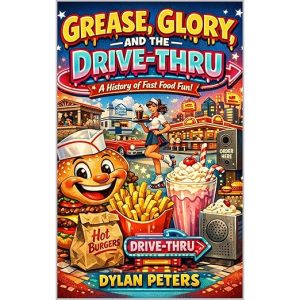
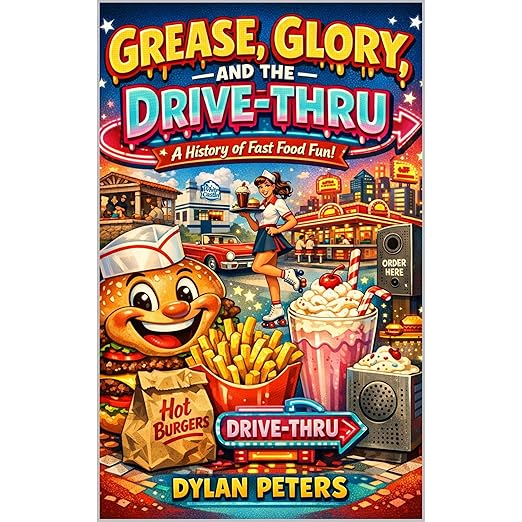
Dylan Peters's Grease, Glory, and the Drive-Thru is the kind of audiobook that rewards idle curiosity without demanding it stay idle. The premise, that fast food has a history stretching back through Roman snack bars and medieval street vendors to the railroad lunch counters that preceded the first drive-thru, turns out to be more engaging than a casual summary suggests. Peters is not a historian in the academic sense, and this audiobook does not pretend to be Smithsonian scholarship. It is a well-researched collection of compelling facts assembled into a coherent story about how eating quickly became a defining feature of modern life, and at four hours and eleven minutes narrated by Virtual Voice, it makes a comfortable companion for a long afternoon or a multiday commute.
The book covers terrain that most people have never thought to question. Why did White Castle punch five holes in their burgers? How did a milkshake machine salesman named Ray Kroc end up building the largest restaurant empire in history? What military invention transformed the way billions of people eat every single day? What was the fast food item originally designed to accommodate Catholics during Lent? These are genuine questions with genuinely surprising answers, and Peters delivers them with enough wit that the format reads closer to informed storytelling than dry recitation.
Cold War Geography Meets Narration That Can't Time Jokes
The structural strength of this audiobook is its threading of large historical forces through small, specific details. Peters connects the explosion of drive-thru culture to Cold War geography without making the argument feel strained. He traces the invention of fast food items that were designed for Catholic Lent observance and shows how those practical accommodations became permanent menu fixtures across the entire industry. The through-line from ancient Roman thermopolia to modern Taco Bell is not a lazy analogy but a genuinely argued arc about urbanization, mobility, and the human appetite for food that is cheap, consistent, and available without effort or planning.
The Virtual Voice narration is a mixed proposition for this material. Peters writes with comedic intent, and the AI delivery renders the jokes technically but does not quite time them. There are moments where a human narrator with comedic instincts would land a punchline with a pause or a dip in register that the AI reading simply misses. That said, the informational density carries the audiobook through those limitations. The facts are interesting enough that the delivery mechanism becomes less distracting as the listen progresses. The book works best as accompaniment to a task that allows divided attention, since the trivia-based structure does not require the kind of sustained concentration that argument-driven nonfiction demands, and Peters's pacing keeps each section short enough that no single topic outstays its welcome in the listening experience.
Corporate Warfare Gets More Than a Populist Gloss
Peters is at his most interesting when he gets into the competitive history of the fast food industry: the rivalries between McDonald's and Burger King, the corporate maneuvering that shaped global expansion, the advertising wars that turned children into brand loyalists before they could read. The subtitle promises a wild history, and the corporate warfare chapters deliver on that. The book is also more culturally ambitious than its populist packaging suggests. Peters is genuinely interested in what the global spread of fast food means, how it changed not just eating habits but land use, labor practices, and the relationship between food and identity in communities that gained these chains as their first consistent affordable dining option.
At roughly four hours, the book moves briskly through several thousand years of culinary history. Some topics that merit more attention, such as the labor economics of the fast food industry or the specific story of how individual international markets adapted the American fast food formula, get brief treatment before Peters moves to the next compelling fact. This is a deliberate trade-off: the audiobook is selling pace and entertainment, and it delivers both. The secret science behind fast food's engineered smell, the bizarre origin stories of menu items that are now global staples, and the survival strategies of chains that competed with McDonald's across multiple decades are covered with enough color to stay engaging throughout. Listeners who want deeper treatment of any individual thread will find this a useful entry point that points toward more specialized reading on the subject.
Engineered Smell Treated as Real Industrial Craft
Peters is also good on the chemistry of fast food's sensory appeal, covering the engineered components that make fast food smell and taste irresistible in ways that have no analogue in home cooking. This material is more substantive than a simple debunking exercise. It treats the science of palatability as a genuine industrial achievement while honestly acknowledging its effects on consumer behavior and public health. The audiobook earns its entertainment credentials without pretending that the story of fast food is a simple triumph narrative.
Road-Trip History for Listeners Who Skip Footnotes
This audiobook is for listeners who enjoy popular history delivered at a conversational clip and who want to understand the forces that shaped one of the most globally pervasive industries of the twentieth century. It is an excellent choice for road trips, commutes, or any listening context where you want engaging content that does not demand full concentration. Listeners who need detailed citation or academic rigor should look elsewhere. Those who enjoyed popular food history and business origin narratives will find Peters a good match. The Virtual Voice narration is a real limitation for comedy-inflected content, but the underlying material is strong enough to recommend the audiobook on the strength of its substance and its unusually wide historical scope for a book of this length.
- Read by: Virtual Voice handles Dylan Peters's conversational, trivia-dense prose at a serviceable clip, though the AI delivery flattens some of the comedic timing that the material clearly invites.
- At its heart: Food history, cultural capitalism, the rise of the restaurant franchise industry
- Vibe: Breezy and entertaining
- Short version: Dylan Peters's fast food history audiobook is a genuinely entertaining facts-forward listen that earns its place as a companion for curious listeners who want the deep history behind institutions they eat at without thinking.