LitRPG lives and dies on its interface. Stat blocks, level-up notifications, item descriptions and system messages are the furniture of the genre, and on a page they sit inside boxes so the eye knows instantly that the story has paused. This audiobook holds sixteen and a half hours of that material and not one box. How a recording deals with its own machine text is the first question worth asking of anything on this shelf.
Where This One Lands
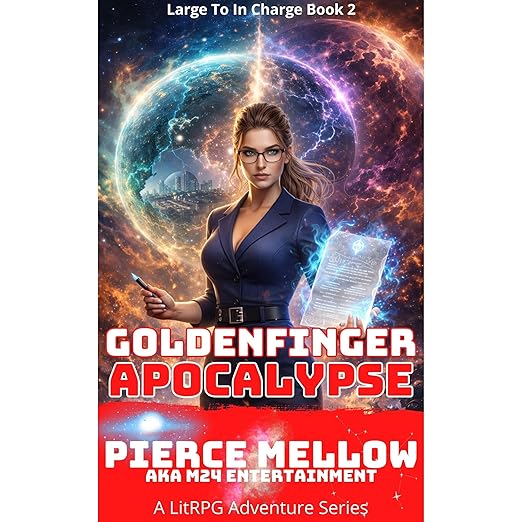
Travis weighs 298 pounds when the book opens, and the copy is refreshingly direct about why that matters. He moved from the West Coast to a college where nobody knew his name, specifically to stop being the campus punching bag, and it did not take. The apocalypse arrives immediately after a public humiliation that leaves him stranded in a bathroom. Pierce Mellow has built a power fantasy whose starting condition is being large and cornered, and the title states it twice.
System messages start dropping around the same time the monsters do. The mechanic explains itself in a single line, which is a virtue in this genre: every monster Travis eliminates drops loot, and the loot is absurd, unfair and relentless. The description calls it an easy-living, high-loot apocalypse and concedes that most of the remaining doom exists because the bully survived. That is an honest account of a book with the difficulty dial deliberately turned down.
Series numbering on this listing is doubled and then doubled again. The displayed title ends in Book 2, the series field repeats that entire title with the word Series appended to it, and the series number field also reads 2. Nowhere does anything give the title of book one or say whether it exists in audio. A buyer arriving cold is being sold the middle of a story with no route back to its beginning.
What Makes GoldenFinger Apocalypse Large To In Charge Book 2 Worth Hearing
Loot fantasy this unembarrassed is rarer than it sounds. Most apocalypse progression spends its opening hours on scarcity and dread; this one hands the protagonist a newbie gift package inside the first act and gets straight on with it. The copy promises a scrappy underdog, ridiculous rewards and a main character who is finished being the joke, which is a perfectly legitimate thing to want across a long shift or a week of dishes.
Comedy is the register throughout, and the description performs it rather than reporting it: bullies compared to cockroaches, a closing instruction to keep your hands and feet inside the loot window at all times, a parenthetical noting that Travis is already out of dignity so survival will have to do instead. Whatever else about this listing is uncertain, the tone is not. What the copy sounds like is what the book sounds like.
Text-to-speech handles the whole recording. The narrator field reads Virtual Voice, so nobody sat in a booth for any of it, and in this genre the absence costs more than usual. A synthetic reader gives a system notification, a stat line and a line of dialogue identical weight and identical pauses, so the boxes a page would have drawn quietly disappear. Sample a combat scene rather than a conversation before committing to this one.
What Gives Us Pause
Three days after release, the lone written verdict on this page landed squarely on the flaw that hurts most in audio. That four-star calls the pacing acceptable and genuinely appreciates how the antagonists think, entitled and twisting common sense to suit their own whim, then reports that the sheer wordiness sometimes stopped the story from progressing. Sixteen and a half hours of machine-read prose is a punishing place to meet that particular problem.
Continuity gets flagged in the same response: buildings referenced after they should have been torched, and a job-changing item whose mechanics get swept under the rug. Both are described as minor and not a big deal, which is a fair-minded thing to say about a self-published volume two. On a page a reader can flip back and check. By ear, a mechanic that has quietly vanished just becomes something you assume you missed.
A single rating stands behind the 4.0 shown here, and it belongs to the one person who also wrote. Hardly scandalous for a book that reached the shelf in March 2026, but it does mean the average carries no information whatsoever: it is one reader's opinion with a number attached. Anyone reading four stars as a consensus is reading a sample of one, on a book long enough to make a wrong purchase expensive.
Fourteen terrified mouths to feed is the crew Travis acquires, and the copy piles a campus full of problems, a surviving bully and a planet-wide zombie horde on top of them. That is a great deal of named presence for a format with no cast and no visible dialogue tags. Books that lean on an ensemble ask more of a reader than books that do not, and this one has no reader to ask.
Who Should Listen to GoldenFinger Apocalypse Large To In Charge Book 2
Fans of light apocalypse progression who already know the shorthand are the target, and the copy is unusually straight about saying so: if you like light LitRPG apocalypse stories with a scrappy underdog, ridiculous rewards and a main character done being the joke, come ride with Travis. That sentence works as a filter. Anyone wanting grim survival, resource anxiety or a rigorous magic system is being told plainly to look elsewhere.
Listeners who came for the underdog rather than the numbers may do better than genre veterans will. The emotional engine is a bullied kid turning into the person everyone suddenly needs, and it runs perfectly well without any interest in build optimization. Whether it survives the full length depends entirely on how much patience you have for the joke register once the novelty of the premise has worn off.
Pass on it if you have not met book one, because nothing on this page will help you find it. Pass on it as well if synthetic narration is a dealbreaker, since this is a genre that needs a reader more than most and does not have one here. If neither applies, what you get is a generous, deliberately unserious apocalypse with a protagonist worth rooting for.