Quick Take
- Narration: Rita Miceli self-narrates in a voice that carries the particular texture of someone recounting events that are still unfinished, raw at the right moments, steady when it counts.
- Themes: Autism and motherhood, identity transformation, faith and cultural identity in Canada
- Mood: Intimate and searching, with hard-won hope rather than easy resolution
- Verdict: A memoir that earns its emotional register through specificity and cultural depth, particularly resonant for parents navigating autism in communities where silence is the default.
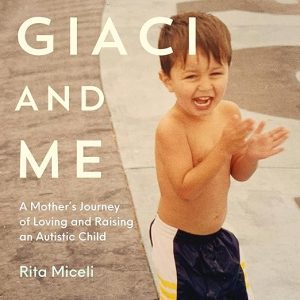
I came to Giaci and Me on a weekday evening when I had set aside time for something quiet, and it turned out to be the right choice in a way I didn’t anticipate. Rita Miceli has written a memoir that doesn’t behave like most autism parenting books. There is no tidy arc of problem and solution, no moment where the right intervention changes everything. What there is instead is a mother’s honest account of the long, slow process of becoming, of learning to be someone different than the person you expected to be, alongside a child who is different than you expected.
That framing, unusual in this genre, is what makes this audiobook worth seeking out. Miceli announces early that this is not a story about overcoming autism. It is a story about transformation. Her son Giaci doesn’t change who he is; she changes how she sees. The book tracks that change across sleepless nights and advocacy battles, through the specific texture of Canada’s autism support landscape, through the cultural and spiritual layers that come from Miceli’s own Italian-Canadian background. The result is more memoir than manual, more literary than clinical.
The Texture of Ambiguous Loss
Miceli uses a term, ambiguous loss, that recurs in the literature on parenting children with significant diagnoses, and she gives it more emotional specificity here than most books in this space manage. The grief she describes is not the grief of death or departure. It is the grief of a life that was imagined and then had to be reimagined entirely: the expectations you didn’t know you were carrying until they became untenable, the version of your child’s future you had half-formed without ever making it conscious.
She is equally honest about what this does to a marriage, to an identity, to a relationship with faith. These threads run through the memoir without becoming the dominant subject, Giaci is always the center, and the relationship between mother and son is what the book ultimately tracks. But Miceli doesn’t pretend that caring for a child with autism exists in isolation from everything else in a life. The cultural depth she brings, the Italian-Canadian context and the Catholic faith that shapes her understanding of suffering and resilience, adds texture that makes this feel specific rather than universal in the hollow sense.
Self-Narration as Documentary Intimacy
Miceli’s own voice on the recording is central to the experience this audiobook offers. She narrates with the quality of someone who has told parts of this story many times, to doctors, to teachers, to other parents, and who is now attempting something different: a complete account, offered without the protective distance of performance. The raw sections are genuinely raw. The sections describing Giaci’s progress and the small victories she has learned to recognize have a particular quality: not triumphalism, but something quieter, the pleasure of someone who has learned to find joy in places she wasn’t looking for it before.
For professionals in the autism space, occupational therapists, early intervention specialists, school psychologists, this memoir offers something case studies and research papers cannot: the interior experience of a parent navigating all the systems designed to help, from the inside. One reviewer who encountered Miceli at a conference described buying the book before she’d finished speaking. That impulse makes sense. Giaci and Me provides the kind of context that changes how professionals hear the parents sitting across from them.
What the Length Asks and What It Returns
At just under nine hours, this is a substantial listen for a memoir. Miceli’s prose, and her narration, is not spare. She is a writer who stays with moments, who gives emotional content room to unfold. Readers accustomed to faster-paced narrative nonfiction may find this requires patience, particularly in the middle sections where the advocacy battles and institutional confrontations dominate. These chapters are less immediately dramatic than the more personal ones, but they are honest about what the work of autism parenting actually looks like day to day, and that honesty is worth something.
Giaci and Me will mean most to parents who are somewhere in the middle of the journey Miceli describes, past the initial shock of diagnosis, but not yet certain what the future looks like or who they are becoming in the process. It offers not a roadmap but a companion: someone who has been in those sleepless nights and emerged with something intact.
Frequently Asked Questions
Does this memoir offer practical strategies for autism parenting, or is it primarily a personal narrative?
It is primarily a personal narrative. Miceli does address the Canadian autism support landscape, advocacy battles, and the experience of navigating institutional systems, and these sections have practical resonance for parents in similar situations. But the book’s primary offering is emotional and experiential rather than strategic. Parents looking for research-based interventions or behavioral frameworks should look to books like Prizant’s Uniquely Human alongside this one.
Is the cultural and faith content specific to Italian-Canadian or Catholic experience, or is it accessible more broadly?
The Canadian context is specific, Miceli writes about Canada’s autism support systems and funding landscape, most immediately useful to Canadian readers. The faith and cultural elements are drawn from her Italian-Canadian background and Catholic tradition. Neither requires shared background to appreciate, these layers enrich the memoir’s texture rather than restricting its accessibility, but readers from similar communities will find particular resonance.
Does Miceli address her son’s perspective, or is this entirely from the mother’s point of view?
The memoir is told entirely from Miceli’s perspective as a mother. This is an important distinction, it is not an account of what it is like to be Giaci, but of what it is like to be his mother. Readers who want autistic first-person narratives or perspectives centered on the autistic person’s experience should look to other resources alongside this one.
Is this audiobook appropriate for grandparents or extended family members?
Yes, and perhaps particularly so. The memoir’s focus on the emotional and relational dimensions of raising a child with autism, rather than on clinical detail, makes it accessible to family members who may not be involved in the day-to-day therapeutic work. It provides the kind of inside context that extended family often most needs but rarely gets.