Quick Take
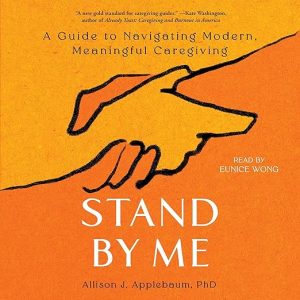
- Narration: Eunice Wong delivers a performance that matches the book’s tonal range, compassionate in the personal passages, clinically clear in the practical sections, never maudlin.
- Themes: Family caregiving, navigating healthcare systems, finding meaning in the caregiving experience
- Mood: Compassionate, precise, and emotionally honest without being overwhelming
- Verdict: The most practically and emotionally complete guide to family caregiving currently available in audio, essential for anyone who is caregiving now or preparing to.
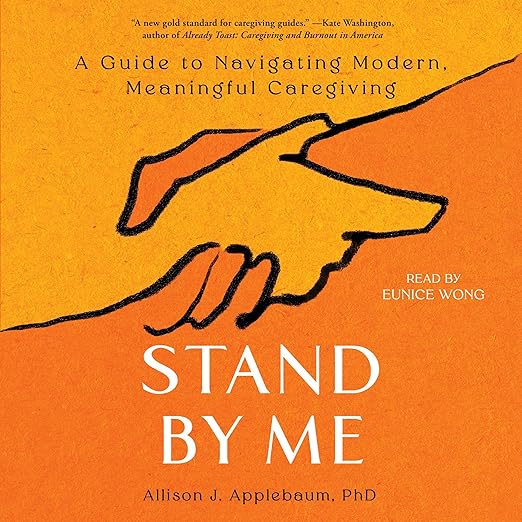
There’s a particular kind of wakefulness that happens at 2 a.m. when you’ve been lying awake worrying about a parent in another city and your list of things you don’t know is longer than the things you do. That’s the audience for Stand By Me, and Dr. Allison Applebaum writes as though she has sat with that specific 2 a.m. feeling many times, which, as the founder of the only devoted Caregivers Clinic in the country and the former primary caregiver for her own father, she has.
What makes this book different from the general eldercare literature is the precision of Applebaum’s clinical lens and the rare willingness to bring her own grief into the frame. Her father was Stanley Applebaum, a legendary musician; her account of caring for him as his health declined is woven throughout the book not as celebrity anecdote but as specific instance of the universal experience of watching someone you love become someone you also have to manage, advocate for, and eventually let go. That integration of the personal and the clinical, her own experience as a lens for understanding what her patients’ families experience, is the book’s defining structural achievement.
Making the Caregiver Visible in the Healthcare System
The central argument of Stand By Me is one that Applebaum has been making in clinical and academic contexts for over a decade: that family caregivers are not peripheral to the patient’s care, they are among the most important variables in its outcome, and they are almost entirely unsupported by the healthcare system. They show up at appointments without being trained for the role, navigate administrative complexity without guidance, absorb emotional labor that professionals receive training and supervision to manage, and then go home to their own lives without debriefing or care. Applebaum’s Caregivers Clinic was built on the recognition that this gap is not incidental but structural, and Stand By Me brings the clinic’s approach to listeners who cannot access it directly.
The practical chapters are dense with tools: how to get the most from interactions with the healthcare system, what advance care planning conversations actually need to cover and how to have them, how to navigate the changing relational dynamics when a parent or partner becomes dependent. The sections on finding meaning and purpose in caregiving are the most unexpectedly powerful, Applebaum does not romanticize care, but she argues compellingly that meaning is accessible even in the most exhausting circumstances, and the exercises she provides for locating it are drawn from validated clinical interventions rather than inspirational thinking.
Eunice Wong and the Emotional Register of This Material
Eunice Wong’s narration is worth noting specifically. This is technically demanding material, the book moves between personal grief narrative, clinical case study, practical instruction, and philosophical reflection, sometimes within the same chapter, and Wong navigates those transitions without stumbling. The composure she brings to Applebaum’s account of her father’s final months is exactly right: present, dignified, not suppressing the emotion but not performing it either. The practical sections benefit from her clarity and measured pacing. At nine hours and ten minutes, the listening experience is consistent and never becomes a burden, which reflects well on both the writing and the narration.
What This Offers Beyond Other Caregiving Books
Kate Washington’s Already Toast, which documented one writer’s experience of caring for a seriously ill spouse, is a useful point of comparison. Washington’s book is more narrative memoir; Applebaum’s is more structured guide with memoir woven through. For listeners who have read Washington and want to move from emotional recognition to practical tools, Stand By Me is the logical next step. The endorsement from Dr. Kathleen Foley of Weill Cornell and a reviewer who cited working alongside Applebaum at Memorial Sloan Kettering both suggest that the clinical community finds this book as valuable as general readers do. That convergence is rare and worth noting.
Frequently Asked Questions
Is Stand By Me useful only if you’re caring for someone with cancer, or does it apply to other conditions?
The book draws heavily on Applebaum’s work at Memorial Sloan Kettering, where the caregiving context is primarily oncology, but the framework she presents applies to family caregiving across conditions. The challenges of navigating healthcare systems, managing changing relationship dynamics, and finding meaning in care are not cancer-specific, and Applebaum is careful to frame her guidance for general applicability.
Does the book address the specific legal and financial dimensions of caregiving, like power of attorney and healthcare proxies?
Applebaum covers advance care planning in substantive detail, including the conversations around healthcare proxies and end-of-life preferences. The book is not a legal guide, and listeners dealing with specific estate planning questions should consult appropriate professionals, but the framework for having these conversations, what to discuss, when, and how, is among the book’s most practically valuable sections.
Is this book appropriate for professional caregivers and healthcare workers, or is it written only for family members?
While primarily written for family caregivers, multiple reviewers with clinical backgrounds, including a clinical psychologist and a Memorial Sloan Kettering colleague, have praised the book’s accuracy and depth. The sections on healthcare system navigation and advance care planning will be familiar terrain for professionals but may still offer useful language for working with families. The primary audience is clearly the family caregiver, but the clinical rigor holds up to professional scrutiny.
How does Dr. Applebaum’s personal caregiving experience affect the book’s tone and usefulness?
Applebaum’s experience caring for her father, legendary musician Stanley Applebaum, is woven through the text as specific illustration of the psychological and logistical challenges she describes clinically. Rather than creating a confessional tone, this integration gives the practical guidance a grounding in lived experience that purely clinical manuals lack. Reviewers consistently cite this combination of personal vulnerability and professional precision as the book’s defining quality.