Quick Take
- Voice: Erin Moon brings warmth and emotional range to Laurie Zaleski's story, shifting naturally between the grief of loss and the absurd comedy of managing hundreds of rescued animals.
- Big ideas: Animal rescue and advocacy, mother-daughter bonds, grief and promise-keeping
- Atmosphere: Heartbreaking and heartwarming in equal measure
- Worth it?: Anyone who has ever loved an animal will find something deeply personal in Zaleski's account of building a rescue from the ruins of grief.
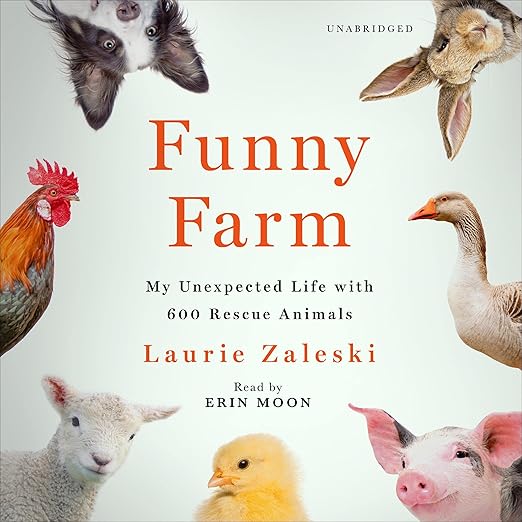
Laurie Zaleski's audiobook Funny Farm asks the kind of question that only grief can generate: when the person whose dream you were carrying suddenly disappears, do you carry it anyway? That is the engine beneath this memoir, narrated by Erin Moon, and it runs for eight hours and ten minutes without losing power. This is a 2022 Audible Best in Bios and Memoirs pick, and it earns that recognition not through sentimentality but through the specific, earned detail of one woman's life lived in the service of a promise. The setup is deceptively simple. Zaleski, a successful businesswoman, had spent decades building toward the moment she could buy land and relocate her mother Annie McNulty's informal animal menagerie to a proper rescue farm in the Pinelands of South Jersey.
Annie died two weeks before moving day. Zaleski moved the animals anyway, and in 2001, founded the Funny Farm Animal Rescue outside Mays Landing, New Jersey. What unfolds in the telling is not just a story about that decision but a layered portrait of the woman who made it possible, and of the daughter who watched and learned across decades of chaos, poverty, and accumulated animals that most people would never have taken on in the first place.
What Makes Funny Farm Worth Hearing
Erin Moon's narration is a significant part of why this audiobook works as well as it does. She handles the tonal variation that the material demands, because this book is not just sad and it is not just funny. It covers Zaleski's childhood alongside a mother who accumulated cast-off animals the way other families accumulate furniture, in an environment shaped by a violent, unstable father. Those sections carry genuine weight, and Moon does not soften them. She lets the darkness sit. Then, when the story pivots to the absurdist logistics of running a farm that takes in horses and goats alongside dogs, cats, chickens, and pigs, Moon adjusts with the material. The result is narration that feels like a companion to the book rather than a delivery mechanism for it.
One reviewer noted being completely unprepared for how heartbreaking the author's own story turned out to be, having expected primarily animal hardship. That surprise is telling. This is not, at heart, an animal rescue book with a human interest subplot. It is a memoir about survival, about a woman who fled a nightmarish marriage with three children and no resources, who built a life and a mission from almost nothing, and whose daughter absorbed every lesson across those formative years of watching Annie refuse to give up on any creature that needed saving.
The Caveats
The structural choice to alternate between Zaleski's life narrative and individual animal stories is worth noting, because it is not simply a pacing device. Each rescued animal carries a specific history of neglect or abuse, and placing those chapters alongside the account of Annie's own hardship creates an implicit argument about what rescue actually means and why the human impulse toward it persists even when the costs are extraordinary. The book does not state this outright. It trusts the structure to do the work.
Zaleski is also honest about the business realities of running a nonprofit rescue operation. The Funny Farm is not presented as a fairy tale; the work is relentless, the financial pressures are real, and not every animal story ends well. That honesty distinguishes this from more polished animal-rescue narratives aimed at a general feel-good audience. Readers who visited the actual Funny Farm in Mays Landing before encountering the book have noted how the text fills in the institutional history behind what they observed in person, which suggests the level of detail and authenticity Zaleski brought to the project. The running time of eight hours and ten minutes feels appropriate for the scope: this is a life story covering decades, moving between childhood, early adulthood, the founding years of the rescue, and the ongoing present of Annie's mission carried forward.
Moon sustains the forward momentum throughout, which in a book this structurally layered requires real skill. The audiobook format does particular justice to the animal anecdotes, which depend on comic timing and affectionate specificity that land well in oral delivery. Several of these stories arrived in the book already half-formed as set pieces, and Moon gives them the rhythm they need.
The book's title does some work that warrants unpacking. "Funny Farm" is the affectionate colloquial name Annie gave to her collection of misfit animals long before the formal nonprofit existed, and Zaleski uses it with the same mixture of wry acknowledgment and genuine pride. There is something specifically right about this title for an audiobook: spoken aloud, it has the warmth and the faint absurdity that defines the whole enterprise. Moon's delivery of the name in context carries exactly that double register, and it sets the tone for how the book handles its own contradictions.
Who Should Listen to Funny Farm
This audiobook connects most directly with listeners who have worked in or around animal rescue, who have experienced the death of a parent before a shared goal was fully realized, or who are drawn to working-class memoirs about people who built something significant from difficult starting points. It is not a light listen in the emotional sense, but the payoff is genuine rather than manufactured. Listeners who prefer animal stories that stay clear of human darkness should be prepared for a more complex experience than the title might suggest. Those willing to follow Zaleski into the harder chapters will find an audiobook that earns its warmth on every page and delivers a portrait of Annie McNulty that lingers well past the final chapter.