Quick Take
- Narration: James Marsters is the reason the Dresden Files audiobooks became a phenomenon, his Rincewind-inflected, noir-detective cadence is inseparable from how Harry Dresden sounds in most listeners’ heads.
- Themes: Urban fantasy noir, power and moral temptation, the cost of working outside the system
- Mood: Propulsive and dark, with deadpan comedy running through the danger like a fault line
- Verdict: A stronger outing than Storm Front in several respects, and essential listening for anyone already committed to the Dresden Files journey.
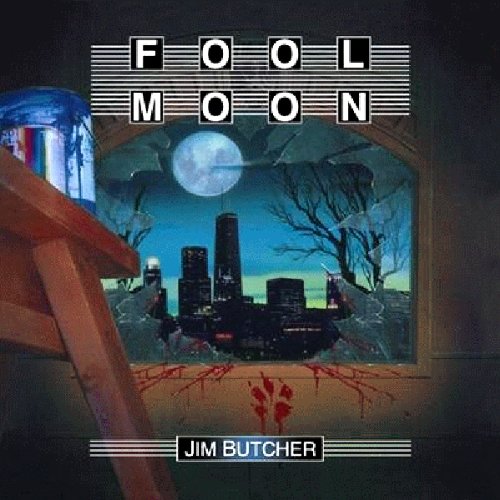
I was about halfway through my second listen to Fool Moon when I realized I was doing exactly what I had done the first time: staying in the car in the parking lot because I couldn’t get out with James Marsters mid-sentence. That is not the response of a casual relationship with a book. The Dresden Files series creates genuine attachment, and Fool Moon is where that attachment begins to deepen.
The premise of the series is familiar to anyone who has spent time in urban fantasy: Harry Dresden is Chicago’s only openly practicing wizard, a private investigator who works the cases that the Chicago Police Department’s Special Investigations Unit cannot explain through normal channels. Book two drops him into a werewolf plot that is more complex than it initially appears. Several distinct werewolf varieties are at play, there is an FBI subplot, a mob boss, a biker gang with shape-shifting abilities, and environmental activists, and Jim Butcher weaves them together with enough genuine mystery that the solution does not feel obvious in the early chapters.
Our Take on Fool Moon
What the reviews consistently emphasize is Harry Dresden’s character, and that is correct. Reviewer Wkonsunshine’s observation that Harry has “a high level of self-awareness” and knows “when he is at risk for temptation to the Dark side” captures something essential about why the series works. Dresden is a noir protagonist in the classic mold: damaged, principled, capable of more than he shows, and aware of his own limitations in ways that make his moments of courage feel earned rather than convenient. Fool Moon deepens this characterization through a subplot about magical temptation and the specific form of power he is offered and refuses.
Reviewer Duck MD noted the book’s werewolf lore as a highlight, and Butcher does indeed bring genuine variety to what could have been a single-note monster-of-the-book concept. The distinctions between loup-garou, hexenwolves, and the werewolves who change voluntarily matter to the plot in specific ways, and Butcher does not treat the mythology as decoration.
Why Listen to Fool Moon
James Marsters is the complete answer to the question of why you should hear this book rather than read it. His narration is one of the genuinely acclaimed audiobook performances in genre fiction, and it is not hard to hear why. He pitches Dresden at the exact intersection of weary and sardonic that the first-person voice demands, with a kind of suppressed physical energy that makes the action sequences land. The character is funnier in audio than in print because Marsters finds the timing in Dresden’s internal commentary that silent reading can miss.
Reviewer ellen sf noted that the Dresden Files are “great fantasy reading with humor and complex plot lines” and that you can listen in any order, though starting from the beginning is recommended. The series builds relationships and backstory that reward sequential listening.
What to Watch For in Fool Moon
Reviewer Sneaky Burrito, reading the series sequentially, noted that Fool Moon “stands out less than some of the others” and that later books are stronger. That is honest and probably true. This is still a relatively early Butcher novel, and the tonal confidence and worldbuilding complexity that characterize the series in its middle period are still developing. The female characters, particularly Murphy, are more functional than nuanced at this stage, a point some reviewers have flagged as an evolution point from the first book.
The plot occasionally resolves through physical confrontation at moments when a little more narrative architecture would have served better. Butcher is a plot-engine writer rather than a stylist, and Fool Moon reflects the series at a stage where the engine is running but not yet at full speed. That is not a reason to avoid the book. It is a reason to keep going.
Who Should Listen to Fool Moon
If you listened to Storm Front and want to continue, this is non-negotiable. The characters and relationships that Butcher introduces in Fool Moon matter significantly to the later books, and skipping it leaves gaps. For first-time Dresden listeners, Storm Front is the proper starting point, but Fool Moon is the book where many readers find their commitment to the series solidifying. If you prefer urban fantasy with more mystery-puzzle architecture and less physical action, the Dresden Files are not an ideal fit. But if you want a first-person noir protagonist operating in a world where magic is real and everything costs something, Butcher and Marsters together offer one of the genre’s most durable and satisfying listening experiences.
Frequently Asked Questions
Do I need to listen to Storm Front before Fool Moon, or can I start with book two?
Starting with Storm Front is strongly recommended. Fool Moon assumes familiarity with Harry’s abilities, his relationship with Murphy, and the broader magical world Butcher has established. Beginning with book two means missing context that affects both plot comprehension and emotional investment.
How does James Marsters distinguish between the multiple werewolf characters in a cast with many voices?
Marsters differentiates through rhythm and register rather than exaggerated accent work. He is especially effective with Dresden’s internal voice, and the supporting characters are distinct enough to track without becoming caricatures. The biker gang scenes and FBI interrogations are handled particularly well.
Is the werewolf lore in Fool Moon consistent with established mythology, or does Butcher invent his own system?
Butcher uses multiple werewolf traditions, including the loup-garou from French folklore, the hexenwolf from German tradition, and his own additions. He creates a taxonomy of types and keeps them consistent within the book. Familiarity with folklore traditions adds texture but is not required.
Does Fool Moon work as a standalone mystery, or is the plot resolution dependent on series knowledge?
The central mystery of this book resolves within the book. The series-level threads, particularly around Harry’s mentor relationship and his police connections, are ongoing, but a listener who finished Fool Moon and never continued would have a complete plot experience from this volume.