Quick Take
- Narration: Joe McCall reads his own material with the direct, unpolished confidence of a practitioner rather than a performer, which suits the content well.
- Themes: Vacant land investing, passive income systems, low-competition real estate niches.
- Mood: Practical and energizing, pitched at aspiring investors rather than skeptics.
- Verdict: At under two and a half hours, this is a focused, no-filler introduction to land flipping that delivers its system clearly, though serious investors will need additional resources to fill the gaps.
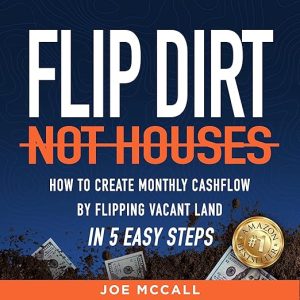
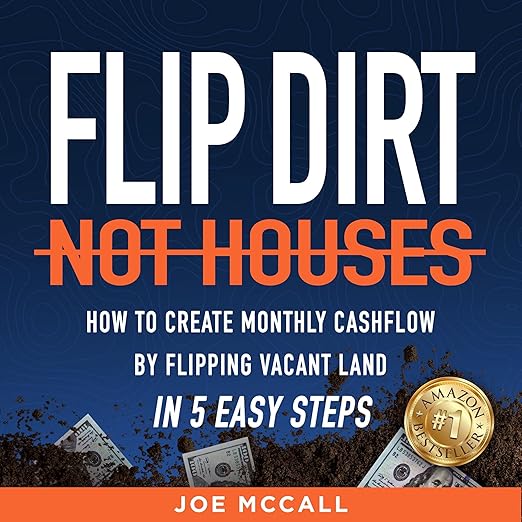
I come to real estate investing titles with the particular wariness of someone who has reviewed enough of them to recognize the patterns: the inflated promises, the vague systems, the testimonials from the author’s business partners. So when I picked up Flip Dirt, Not Houses, I was prepared for the usual. What I found instead was something closer to a compressed, practical overview of a genuinely underexplored niche, delivered by someone who clearly has skin in the game. Joe McCall is not polished in the way a professional narrator would be, but that roughness is part of what makes this audiobook easier to trust.
The premise is straightforward: house flipping is competitive, capital-intensive, and operationally demanding. Vacant land flipping is quieter, requires less capital, and can be conducted entirely remotely. McCall’s claim that he and his teenage sons earned over $150,000 flipping land part-time over eighteen months is the kind of figure that demands scrutiny, but the mechanics he describes are verifiable and consistent with what practitioners in this niche report. The five-step system he outlines, from identifying motivated sellers to closing deals without site visits, is the kind of framework that rewards action rather than analysis.
Our Take on Flip Dirt, Not Houses
The audiobook does what it says it will do. It introduces the land flipping concept, explains why it offers structural advantages over traditional house flipping, and walks through the operational steps with enough specificity to be useful. Reviewers here describe it as having "clear and precise" instructions and being "encouraging without being scammy," which is a meaningful distinction in a genre that frequently crosses that line. The comparison to other real estate investing books McCall implicitly invites is flattering to him: he stays in his lane, focuses on land, and does not promise outcomes he cannot support with at least anecdotal evidence.
Why Listen to Joe McCall Read His Own System
Author narration in this genre either adds credibility or undermines it, and McCall falls on the credibility side. He sounds like someone who has done this repeatedly rather than someone selling an idea he read about. The audio is produced cleanly for an independently published title, which is not always the case with this category. At two hours and twenty-one minutes, it does not overstay its welcome. One reviewer called it "short and sweet," which is accurate. Another described it as "a road map," which is the right framing: this is orientation material, not a comprehensive manual.
What to Watch For in This Audiobook
The runtime is the most significant caveat. At under two and a half hours, Flip Dirt, Not Houses cannot cover everything a new investor would need to execute a land deal from start to finish. It gestures toward due diligence, motivated seller outreach, and market identification using free online tools, but the depth varies. Listeners expecting a comprehensive operations manual will be disappointed. This is a strong introduction to the concept and a convincing argument for why land flipping is worth investigating further. The follow-up research and deal mechanics will require additional resources, whether McCall’s own courses and materials or other practitioner guides in the niche.
It is also worth noting that the land flipping niche is not completely without competition. McCall describes it as "less competitive" than house flipping, which is true, but the gap has narrowed as the strategy has gained visibility through books like this one and through social media. The due diligence steps he describes, particularly around identifying motivated sellers and verifying title issues, are areas where a listener new to land transactions will want to supplement this guide with additional research before committing capital to their first deal.
Who Should Listen to This Audiobook
This works well for listeners who are curious about real estate investing but have been deterred by the capital requirements and operational complexity of house flipping. It is particularly useful as a first exposure to the land niche, given how little mainstream coverage this category receives. Skip it if you are already active in land investing and looking for advanced strategies. Come to it if you want a clear-eyed, energizing introduction to why vacant land might be worth your attention, delivered by someone who has built a working system around it.
Frequently Asked Questions
Is this audiobook suitable for complete real estate beginners?
Yes. McCall pitches the content at both beginners and seasoned investors, but the foundational framing makes it especially useful for listeners with no prior real estate investing experience.
Does the system require visiting properties in person?
McCall specifically emphasizes that land deals can be closed remotely, with no need to visit the property. This is one of the structural advantages he highlights over house flipping.
At two hours and twenty-one minutes, is there enough content to act on?
Enough to understand the system and evaluate whether land flipping is worth pursuing. Not enough to replace hands-on research, market analysis, and additional practitioner resources before executing your first deal.
How credible is the $150,000 in 18 months claim?
McCall presents it as a personal result achieved part-time with his teenage sons. Individual results in any investing niche vary significantly based on market, capital, and time commitment. Treat it as a data point, not a guarantee.